
Argentinian President "Riding Off into the Sunset" with Over a Billion Dollars, Why Can't You Earn Money from LIBRA?


The 7 AM Golden Dog Law struck again, but this was the first time someone was grateful they didn't wake up.

The reason is that the well-known Argentine "Bitcoin" president in the crypto community stood up for a meme coin called LIBRA. Although it is not a namesake token like TRUMP, because everyone was eagerly waiting for a president who could bring about wealth creation similar to TRUMP, LIBRA was still equated with the same level of significance as TRUMP's coin issuance.
Related Reading: "Timeline | Argentine President "Issues Coin," Behind-the-Scenes Team Cashes Out $100 Million in 4 Hours"
However, despite it also being an early Saturday morning, LIBRA did not share the same fate as TRUMP. Wallets with significant losses were exposed one after another, with even Solayer founder Chaofan Shou and Solayer engineer losing over $2 million on LIBRA. They even captioned it, "Let's see what two hackers and a free weekend can bring us."
With all the elements in place – a president, Moonshot, a large pool – why did LIBRA end up with such a script? Why couldn't we make money from LIBRA?
Presidential Endorsement, Team Harvesting
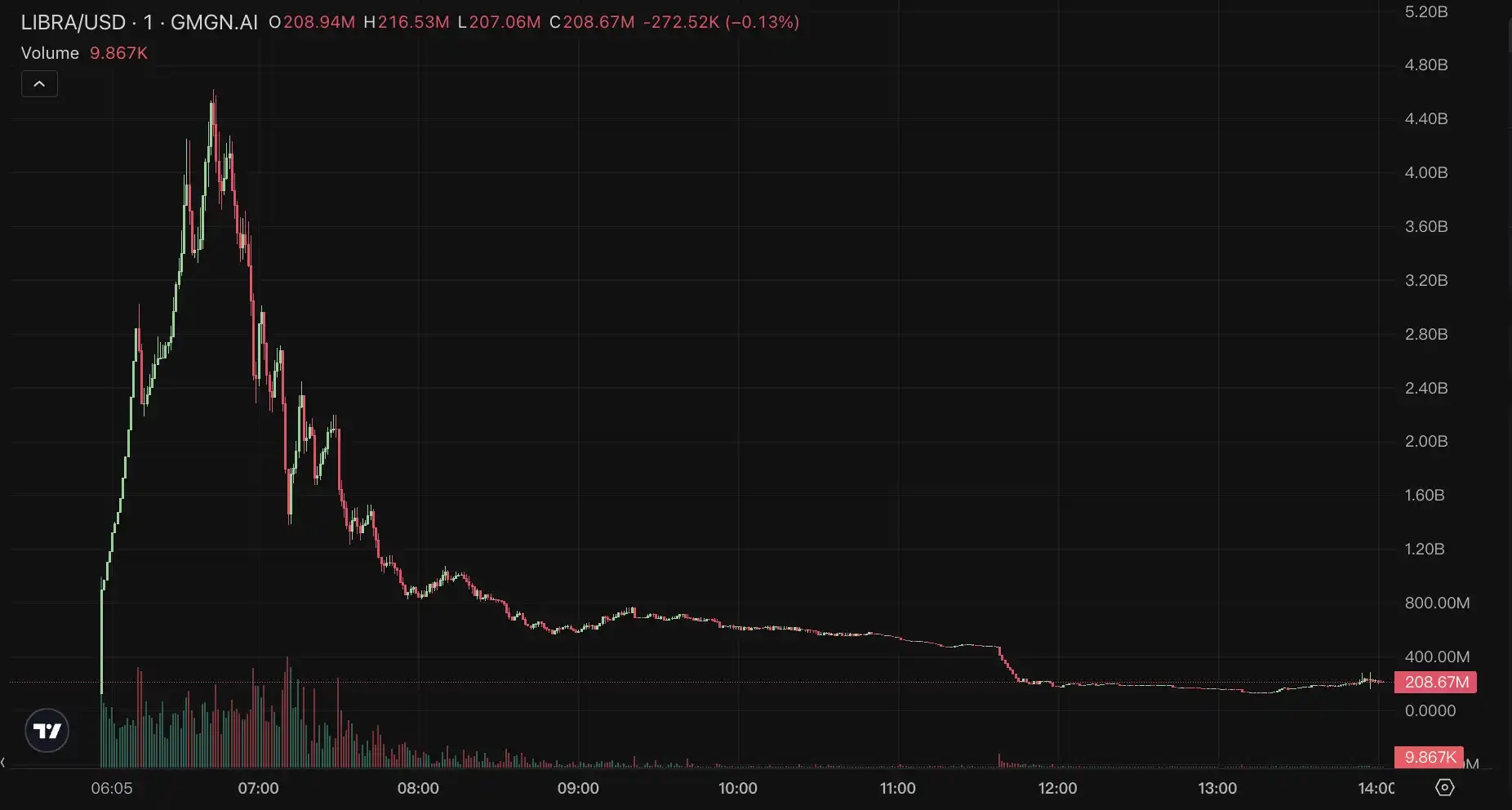
It can be said that Milei's endorsement of LIBRA with his CA and official website link in a tweet was the main reason that led to the sudden surge in LIBRA's market capitalization. Just like chanting slogans, after confirming there was no hacking, the market cap soared to $4 billion.
In the tweet, Milei wrote, "This private project will be dedicated to promoting the growth of the Argentine economy by providing funding support to small businesses and entrepreneurial projects in Argentina."

However, the situation gradually took a wrong turn. Less than two hours before the coin issuance of LIBRA, after the market cap had just exceeded $4.4 billion, large sell-offs of LIBRA began. Initially, group members thought it was profit-taking, but the sharp drop continued, only then realizing that a group of addresses had started draining the pool.
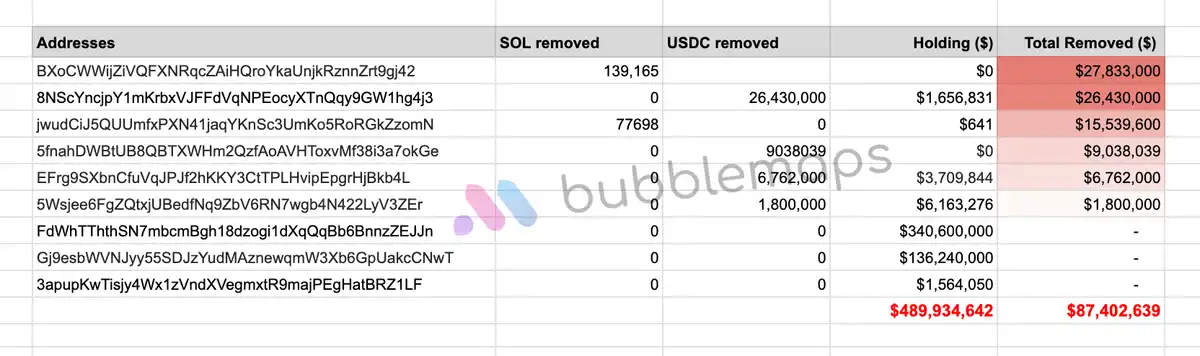
At 9 AM, according to Bubblemaps analysis, the LIBRA issuance team had already profited over $87 million through draining multiple addresses.
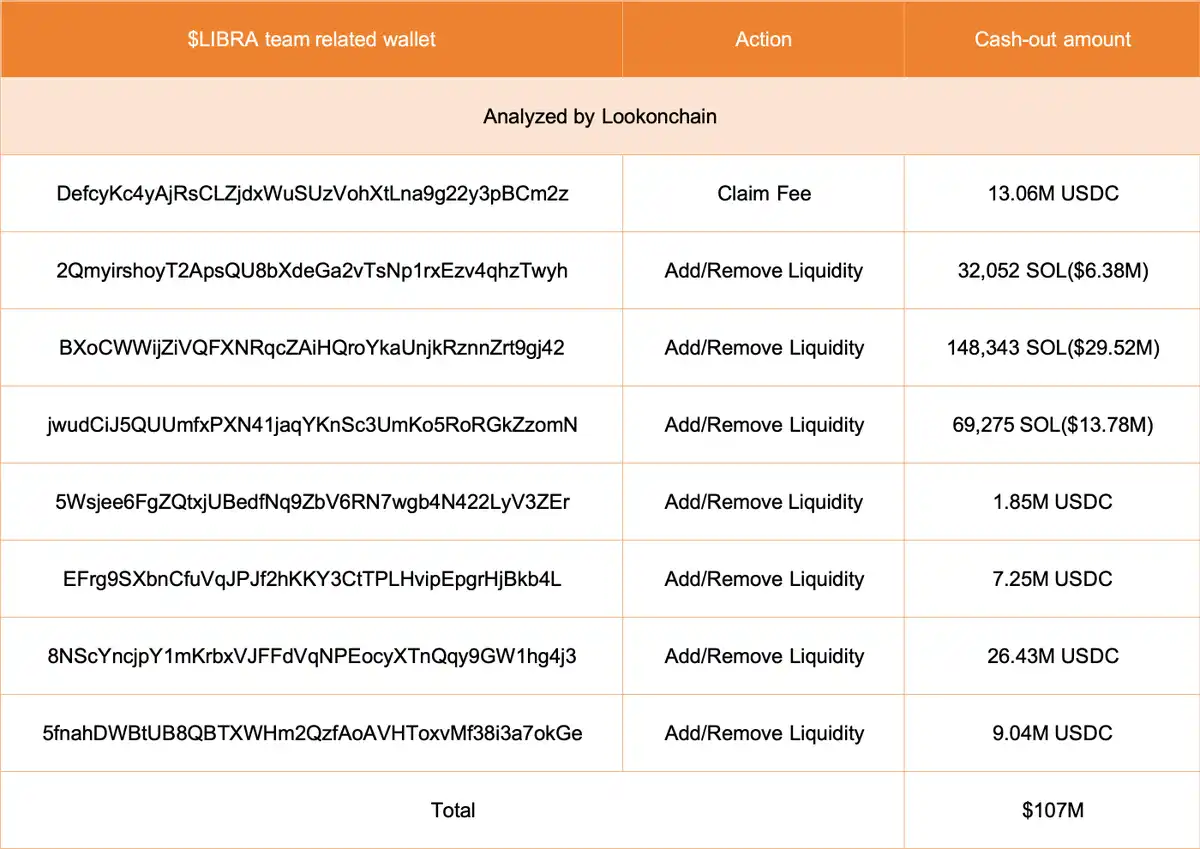
As of noon, according to Lookonchain monitoring, 8 wallets related to the LIBRA team obtained 57.6 million USDC and 249,671 SOL (worth about $49.7 million) through liquidity addition, removal, and fee collection, totaling a cash-out of approximately $107 million.
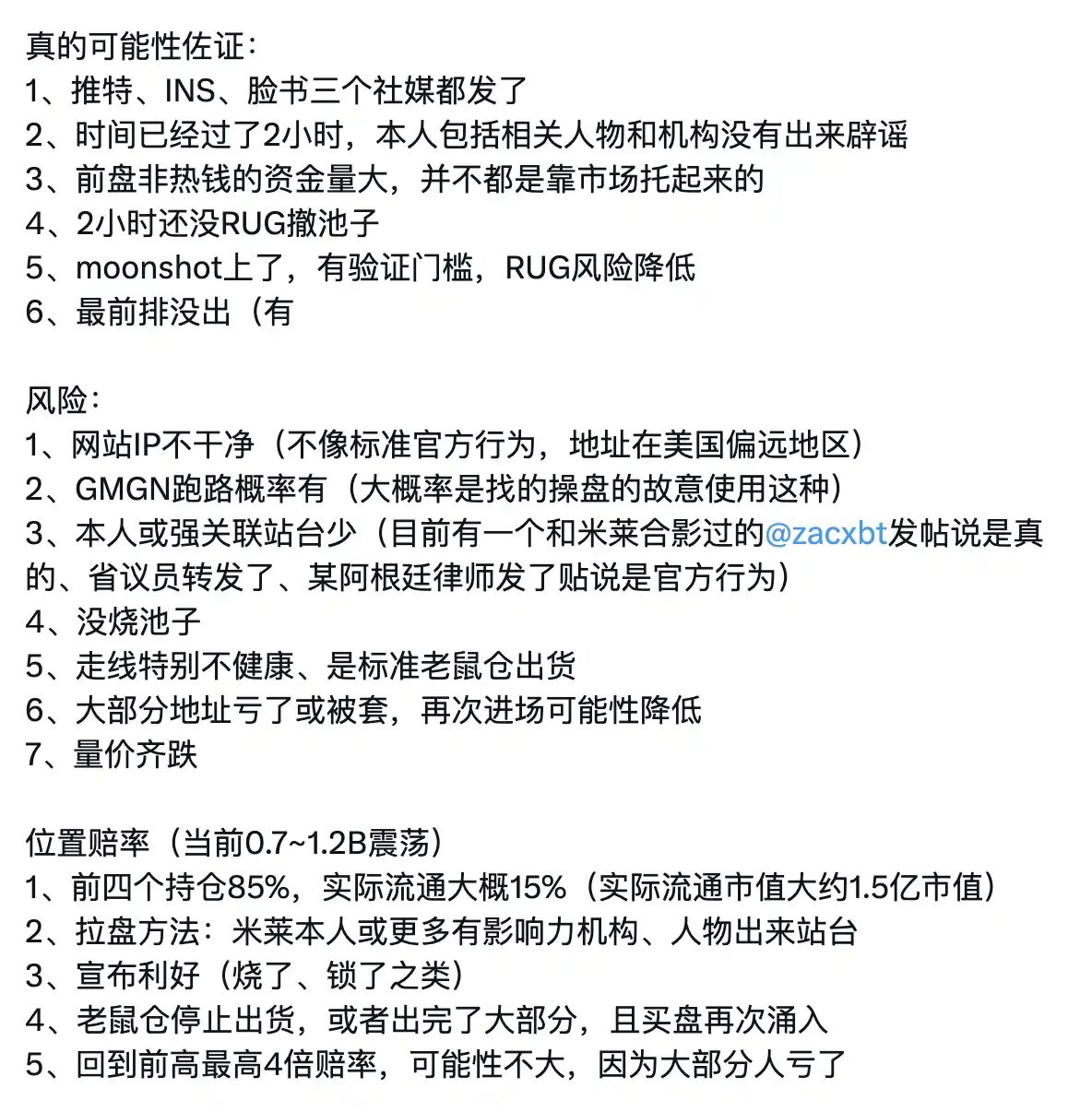
However, despite this, there are still traders analyzing the possibility of LIBRA, stating that no one has come out to refute it, so there may still be positive news to drive up the coin's price.
Blame the President, Team Self-Exposure
But all of this was shattered in Milei's next tweet.
The president claimed to have supported a so-called private entrepreneurial project, but had no association with the project. "I did not understand the details of the project. After understanding, I decided not to continue spreading related information (thus deleting the tweet)."
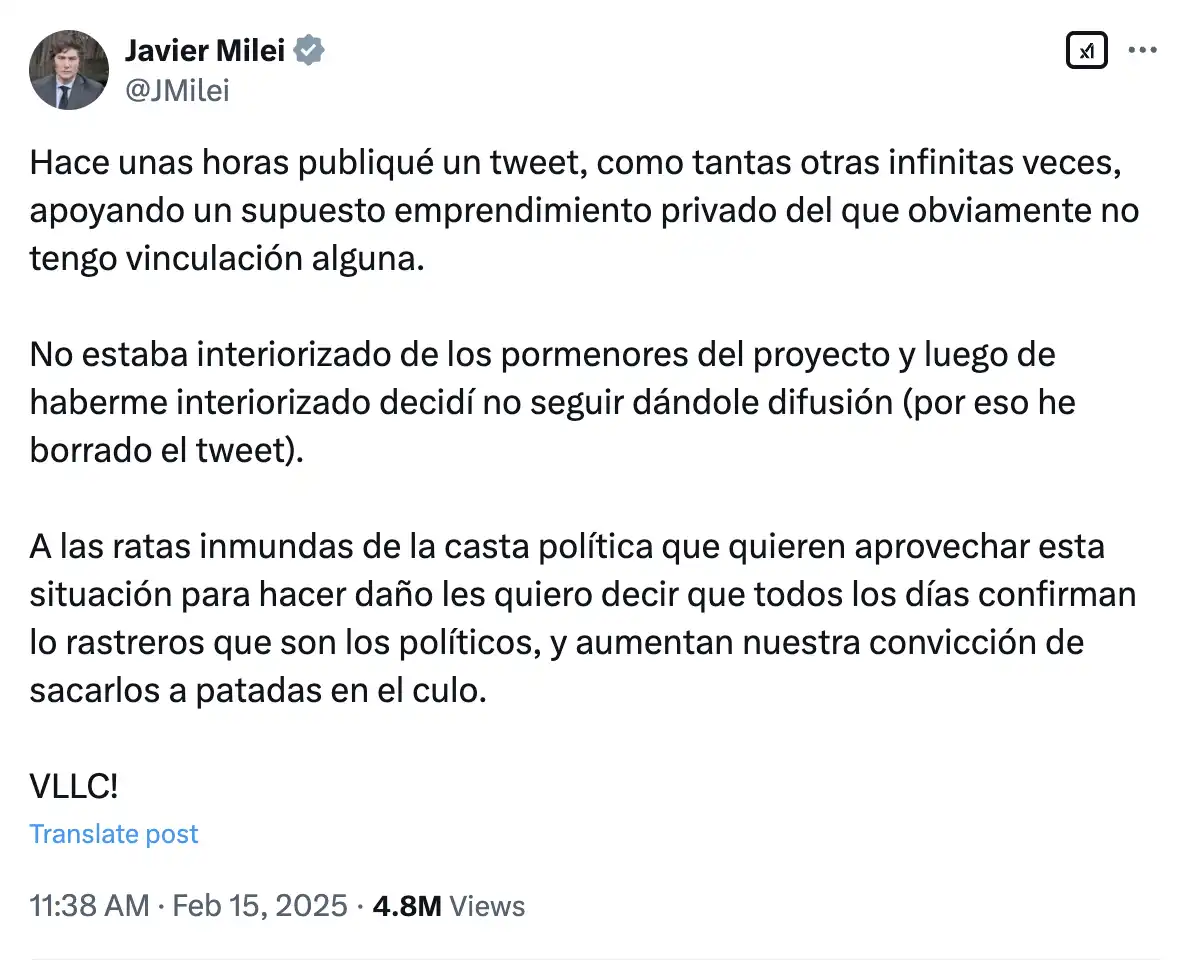
In the midst of the Valentine's Day atmosphere, Milei staged a remarkable scoundrel performance. By this time, LIBRA's market value had plummeted to $450 million. As soon as the tweet was posted, LIBRA's market value immediately plummeted to $200 million.
Even more absurdly, a project actually stepped forward to claim the LIBRA issuance. The Viva la Libertad project's website indicates that the project is a private independent project developed by the KIP Protocol.
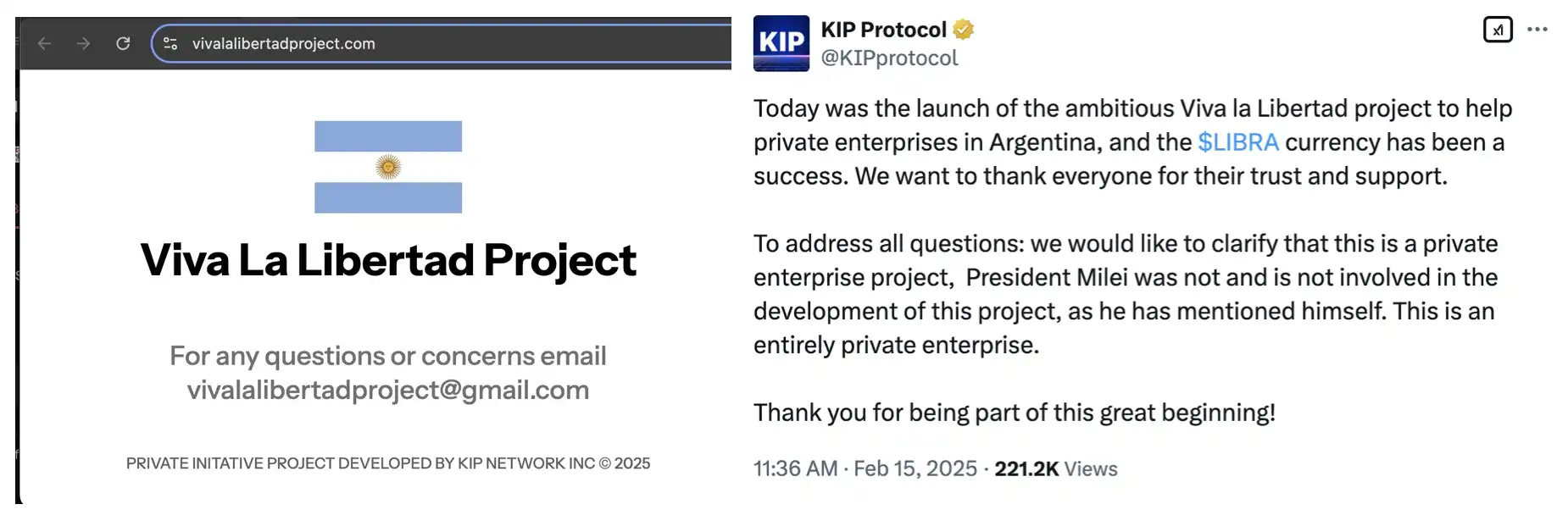
At the moment of LIBRA's collapse, the Web3 AI foundation layer KIP Protocol posted an article stating the launch of the "Viva la Libertad" project, aimed at helping Argentine private enterprises. The success of LIBRA is attributed to everyone's trust and support. It was further stated that President Milei has not been involved in the past or present development of the project, and Viva la Libertad is a privately developed project by the KIP Protocol.

Left: KIP Co-founder Julian, Right: President Milei, Photo Released in October 2024
Subsequently, Julian stated that the Viva la Libertad project funds are still on-chain, with no SOL transferred, and the KIP team is involved in the project, mainly responsible for managing the allocation of funds to the Argentine company, not the token side.
What Are Some Lessons Learned?
Some tweets have pointed out that LIBRA is a scam meticulously crafted to exploit the IQ150 community, mainly because, with the experience of TRUMP in the front and Moonshot in the back, some people suffered losses without carefully examining all the core information about LIBRA and succumbing to FOMO emotions.
For example, at six thirty in the morning, the analytics firm Bubblemaps stated that 82% of LIBRA's total supply is held in a single address, and the tokenomics were not disclosed.
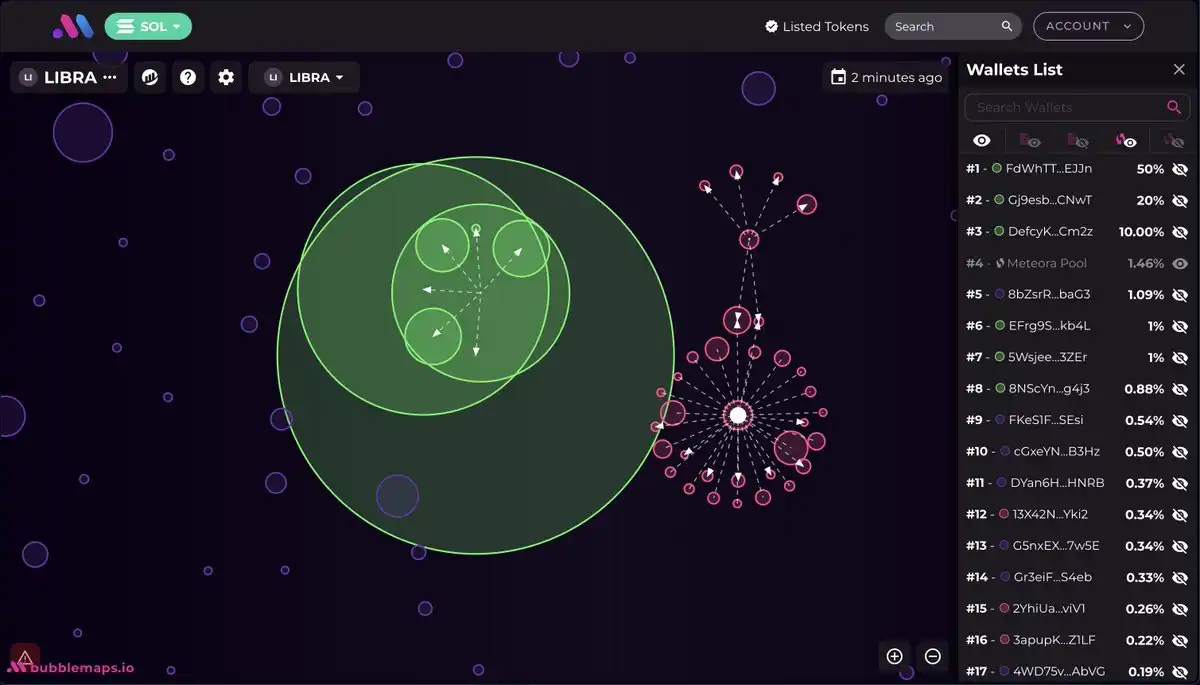
Additionally, LIBRA's minting function can be frozen, the liquidity pool has not been burned and has a high-fee liquidity pool, and there are questionable sources of funds.
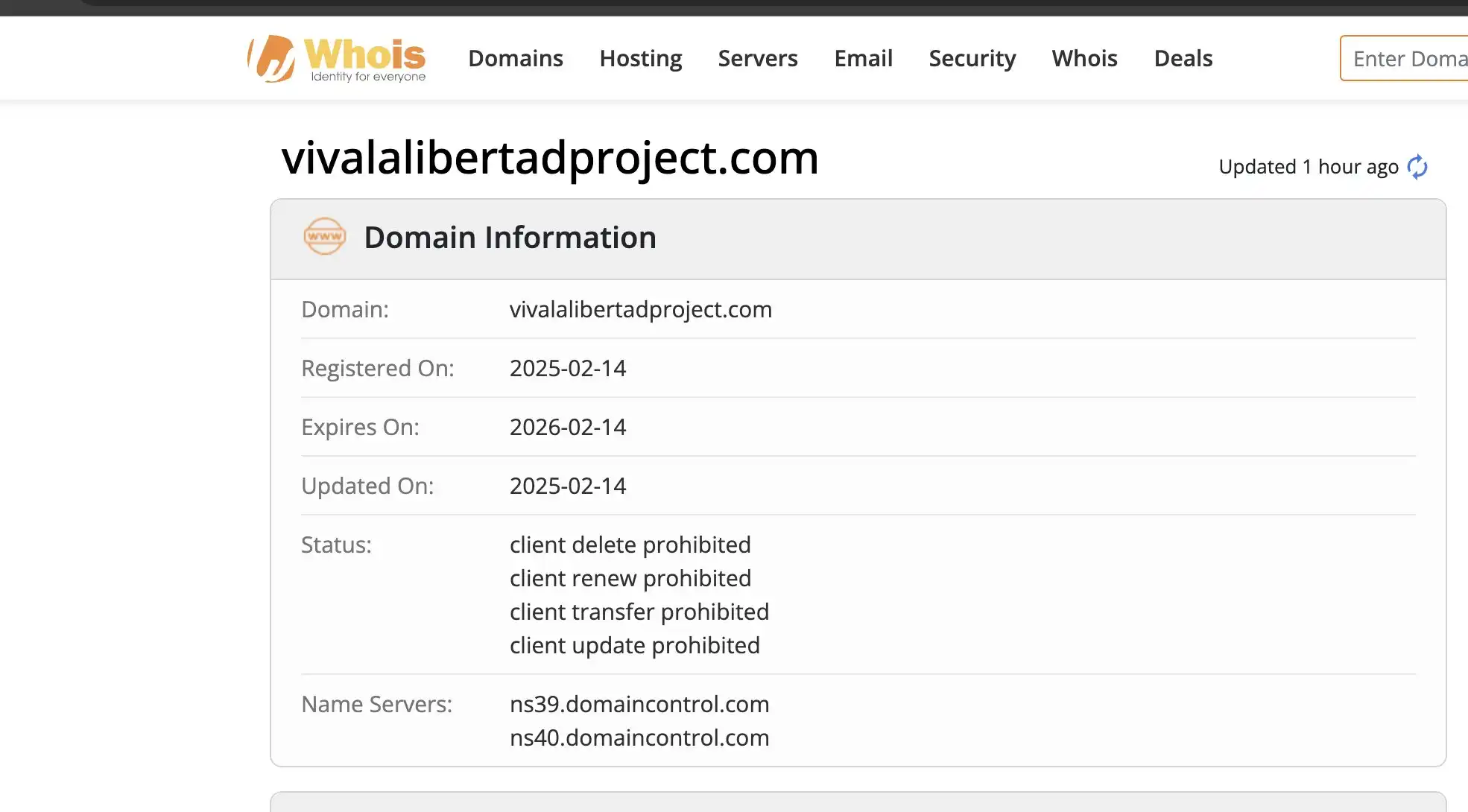
Furthermore, the project's official website is built using Webflow and displays a Gmail address, and no formal information related to "KIP NETWORK INC" could be found, indicating a lack of actual association with token issuance or related business. Although the website is in English, considering the project's background, it should use Spanish, and the domain was also purchased on the same day, raising further doubts about the project's credibility.
The smart ones learned from TRUMP to check if LIBRA has been listed on Moonshot at the first opportunity. Upon finding the contract searchable, many savvy investors dared to go all-in. However, searching the contract does not necessarily mean it has truly reached Moonshot. A few days ago, Moonshot changed its application rules, allowing projects to register on Moonshot, making them searchable by contract address. Only manually searching for the token name on Moonshot will show if it has truly made it to Moonshot.
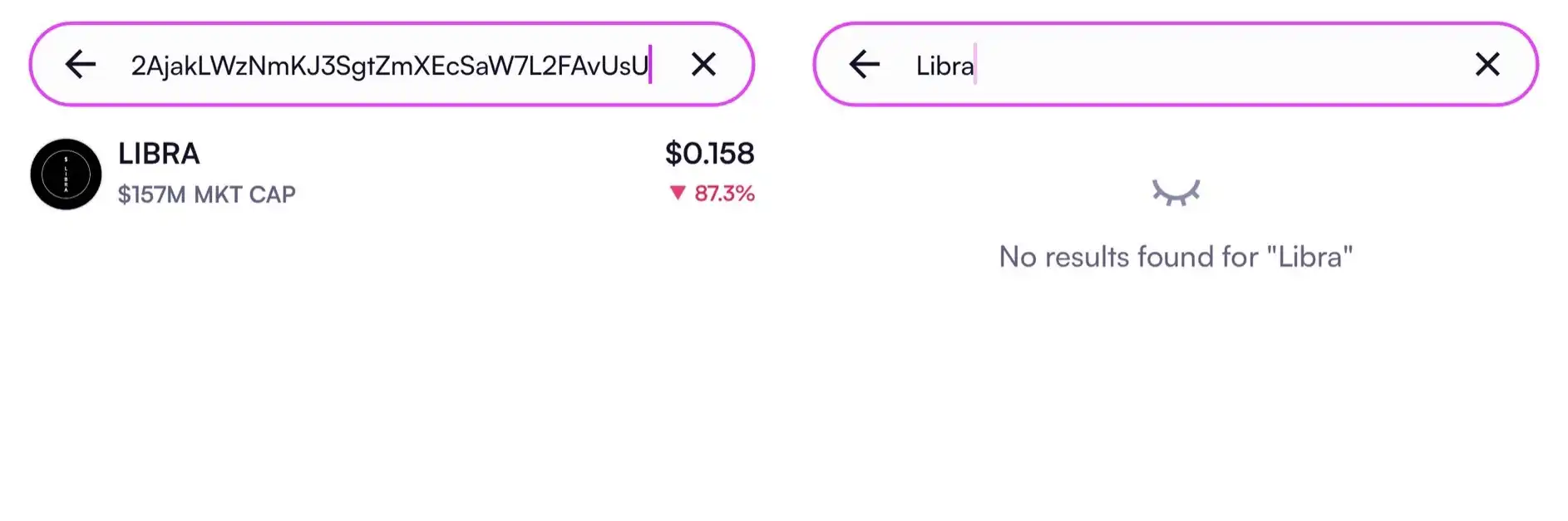
Sometimes making money is a matter of luck. Some people don't like to sleep in, so they caught TRUMP and profited, while others enjoy sleeping in and thus avoided LIBRA.
On January 18, 2025, TRUMP launches a coin, and you make a fortune. Your relatives and friends hear about it and blame you for not notifying them promptly to get rich together. You say, create a small group chat next time there's a presidential coin launch to notify everyone promptly.
On February 15, 2025, the President of Argentina launched a cryptocurrency, and you frantically called your friends to go all in.
On February 15, 2025, you had no friends left.
Although the joke was funny, the loss was painfully real. Here's hoping that next time, your friends will call you, and we'll make it all back!
Lastly, a reminder to all friends: beware of scam attempts after losses.

You may also like

Japan’s Three Megabanks Plan Joint Stablecoin Issuance in Fiscal 2026
MUFG, SMBC, and Mizuho reportedly plan to jointly issue fiat-pegged stablecoins in fiscal 2026, signaling Japan’s growing push into bank-led digital payment infrastructure.

Humanity Discloses H Token Dual-Chain Attack Details, With Losses on Ethereum and BSC Exceeding $36 Million
Humanity said the H token attack across Ethereum and BSC caused more than $36 million in losses after leaked ProxyAdmin keys enabled malicious contract upgrades and token minting.

White House Discusses CLARITY Act With Law Enforcement Ahead of Senate Vote
The White House discussed the CLARITY Act with law enforcement ahead of a Senate vote, focusing on illicit finance risks and developer protections.

$75 billion in foreign capital has fled, and South Korean retail investors have absorbed it all using leverage

Bitcoin Trading Guide 2026: Strategies for Experienced Traders

What Is XAUT and PAXG? Why Tokenized Gold Is Booming in 2026

Cryptocurrency CEXs are flocking to sell US stocks, and traditional brokerages are facing an "uninvited guest."

Will the SpaceX IPO Hurt Bitcoin? Here's What Traders Are Watching
Foreign selling in the South Korean stock market accelerates, with cumulative net sales reportedly reaching $75 billion this year
On June 9, The Kobeissi Letter, citing Goldman Sachs data, reported that global investors are selling South Korean stocks at an unusually rapid pace. In the latest trading session, foreign investors sold about $801 million worth of Kospi constituent stocks again; total foreign outflows last week reached about $10 billion, and the market has been in net foreign selling on nearly every trading day over the past month. According to the data cited in the report, foreign investors have sold about $75 billion worth of South Korean stocks so far this year. Meanwhile, South Korean retail and institutional investors together recorded roughly $69 billion in net buying over the same period, suggesting that the market’s main buying support has come from domestic capital rather than returning overseas funds. The information currently disclosed still mainly comes from The Kobeissi Letter’s retelling and Goldman Sachs data summaries, while public details on the statistical period and the specific definition of “selling” remain relatively limited.

Fortune Warns of Strategy’s Financing Structure Risks as Bitcoin Premium Narrows
Fortune warned that Strategy’s Bitcoin treasury model faces growing financing risks as MSTR’s net asset premium narrows and preferred stock dividend pressure increases.

Ferrari Challenge Le Mans: Carl Moon to Dominate in WEEX Livery

Sahara AI Responds to SAHARA’s Sharp Drop: No Contract or Product Security Issues Found, Internal Investigation Underway
Sahara AI responded to SAHARA’s 60% price drop, saying no token contract or product security issues have been found and an internal investigation is underway.

WEEX Deposit/Withdrawal Dynamic Island: Your Asset Status, Always in Sight
Scaling Crypto Derivatives: The Digital Asset Infrastructure Behind High-Volume Trading
In the fast-moving digital asset ecosystem, derivatives platforms face an extreme architectural test. High-leverage futures markets demand more than just standard security—they require absolute operational precision, zero-latency matching engines, and ironclad structural scalability, all while navigating intense market volatility.
As global platforms scale to meet these demands, the industry is shifting away from rigid, monolithic setups toward a more agile, "decoupled" infrastructure philosophy.
The Blueprint for High-Volume Copy TradingFor elite global exchanges like WEEX (founded in 2018), this architectural choice becomes critical when scaling high-volume retail features like social copy trading. When thousands of users automatically mirror the real-time strategies of elite traders simultaneously, it triggers sudden, monumental spikes in concurrent transactional volume.
To prevent execution latency or settlement bottlenecks during these peak volatility events, a platform's primary engine must remain entirely dedicated to risk management, copy-trade synchronization, and order matching.
The Architectural Rule: New-generation platforms must separate front-end user execution engines from heavy backend infrastructural overhead to eliminate operational friction.
By separating these layers, platforms can maintain complete sovereignty over their trading environments and user experiences while strategically aligning with institutional-grade infrastructure ecosystems. This strategic framework allows modern exchanges to leverage advanced Digital Asset Custody infrastructure such as Cobo’s behind the scenes, ensuring that backend wallet management scales elastically alongside trading spikes.
Capitalizing on Market Momentum and 400× LeverageIn a derivatives arena where platforms offer up to 400× leverage on perpetual contracts, capital efficiency and market agility are core business metrics. To capture market momentum, an exchange needs the ability to rapidly expand its asset offerings, supporting everything from legacy crypto assets to sudden, trending altcoins across a massive library of trading pairs.
Adopting a flexible, scalable Wallet-as-a-Service (WaaS) solution such as Cobo’s could completely rewrite the development timeline for high-growth exchanges. Instead of spending months of engineering capital building out custom backend wallet architectures for every new blockchain network, platforms can deploy localized infrastructure in days.
This agility allows platforms to instantly scale their listings to over a thousand trading pairs without compromising security or delaying time-to-market. It mirrors the exact operational advantages seen during high-velocity market events, similar to how advanced wallet infrastructure empowers platforms during sudden asset surges; allowing exchanges to pass that speed and liquidity directly to their global user base.
A Mature Foundation for GrowthThe synergy between trusted infrastructure ecosystems and global trading platforms represents the natural evolution of a maturing crypto market. As WEEX continues to scale its global spot and derivatives offerings for over 6 million users, adopting robust backend paradigms proves that platforms no longer have to compromise between cutting-edge trading velocity and uncompromised structural security.

Morning Report | BitMine increased its holdings by 126,971 ETH last week; trader Eugene announced his exit from the crypto market

Wang Chuan: How can one not feel anxious after the neighbor Old Wang made thirty times profit by investing in storage stocks? (Seven) - A quarter-century cycle

Get Paid to Onboard? Try WEEX’s New Homepage with Rewards for Registration, Deposit & Trade
WEEX Custom Layout: Build Your Perfect Trading Workspace in Seconds
Japan’s Three Megabanks Plan Joint Stablecoin Issuance in Fiscal 2026
MUFG, SMBC, and Mizuho reportedly plan to jointly issue fiat-pegged stablecoins in fiscal 2026, signaling Japan’s growing push into bank-led digital payment infrastructure.
Humanity Discloses H Token Dual-Chain Attack Details, With Losses on Ethereum and BSC Exceeding $36 Million
Humanity said the H token attack across Ethereum and BSC caused more than $36 million in losses after leaked ProxyAdmin keys enabled malicious contract upgrades and token minting.
White House Discusses CLARITY Act With Law Enforcement Ahead of Senate Vote
The White House discussed the CLARITY Act with law enforcement ahead of a Senate vote, focusing on illicit finance risks and developer protections.
$75 billion in foreign capital has fled, and South Korean retail investors have absorbed it all using leverage
Bitcoin Trading Guide 2026: Strategies for Experienced Traders
What Is XAUT and PAXG? Why Tokenized Gold Is Booming in 2026


