
Bloomberg: Power Theft Exceeds $1 Billion as Malaysia Bitcoin Mining Rigs Overwhelm


Original Article Title: Bitcoin Miners Hunted After Stealing $1 Billion of Electricity From Malaysia Grid
Original Article Authors: Ryan Weeks, Kok Leong Chan, Netty Idayu Ismail, Bloomberg
Original Article Translation: Chopper, Foresight News
In Malaysia's notorious illegal cryptocurrency mining hotspots, a crackdown is underway from the air. Drones hover above rows of shops and abandoned houses, searching for abnormal heat signatures, a telltale sign of illicit mining rig operation. On the ground, law enforcement officers use handheld sensors to detect unusual electricity usage. Sometimes, the tracking methods are more primitive: residents would report strange bird calls, only for the police to discover upon arrival that someone was intentionally playing nature sounds to mask the roar of machines behind closed doors.
These tools together form a mobile surveillance web, aiming to eradicate illegal Bitcoin mining.
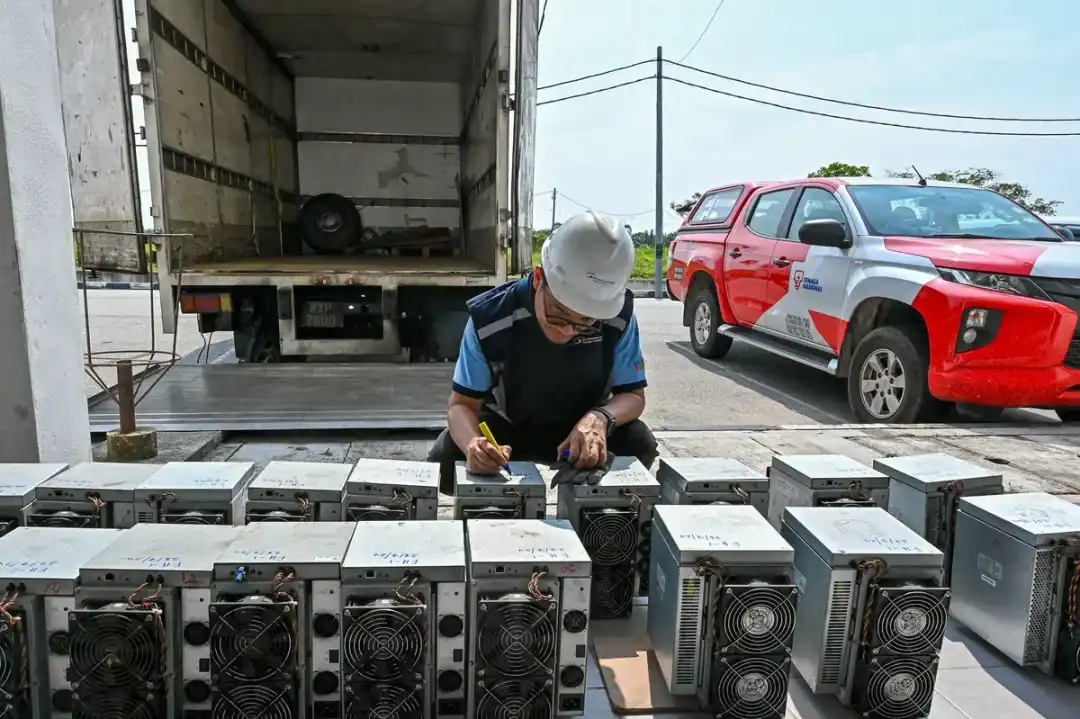
July 2024, an official inspects mining rigs after a Bitcoin mining raid
The tracked mining enterprises act with extreme caution: they frequently move their operations between vacant shop lots and abandoned houses, installing heat insulators to conceal the heat radiation from mining rig operation; at the entrances, they have CCTV cameras, heavy security measures, and broken glass barriers to prevent unauthorized access.
This is the cat-and-mouse game between Malaysian authorities and Bitcoin miners. Over the past five years, Malaysia has uncovered around 14,000 illegal mining hotspots. According to the Ministry of Energy, the state-owned energy company Tenaga Nasional (TNB) has incurred losses of up to $1.1 billion due to electricity theft during this period, and this trend is worsening. In early October of this year, as Bitcoin prices hit a historic high, by that time, authorities had recorded about 3,000 mining-related electricity theft cases.
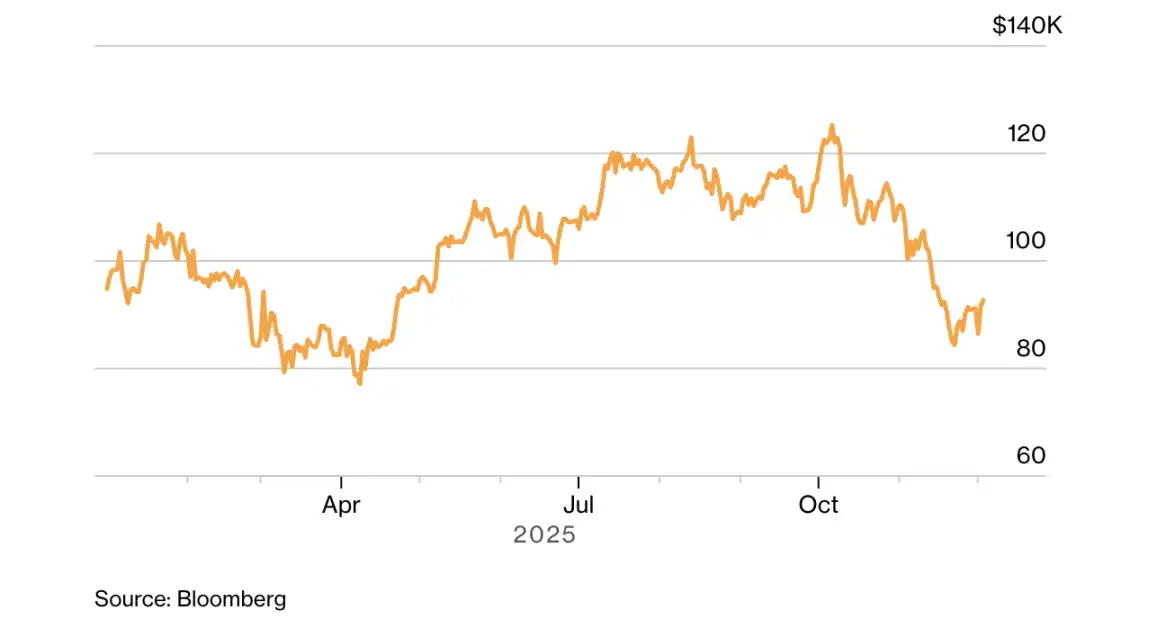
Bitcoin reached a record price of $126,251 in October 2025, after which cryptocurrency prices plummeted
Today, Malaysia is stepping up its enforcement efforts. On November 19, a cross-departmental special committee was established by the government, with members including the Ministry of Finance, the Central Bank of Malaysia, and the National Energy Group, to coordinate a targeted crackdown on illegal mining operators.
「The risk of allowing such behavior is no longer limited to electricity theft,」 said Akmal Nasrullah Mohd Nasir, Deputy Minister of Energy Transition and Water Resources, who also serves as the chairman of the committee, 「These activities may even undermine our power facilities, posing a serious challenge to the power grid system.」
Bitcoin mining is fundamentally a race of computing power: rows of specialized equipment can perform trillions of calculations per second, aiming to successfully validate transactions and earn Bitcoin rewards.
Bitcoin mining is big business. The global electricity consumption of Bitcoin mining now exceeds the total electricity consumption of nations like South Africa or Thailand. According to a report by the Cambridge Centre for Alternative Finance, over 75% of Bitcoin mining activities are currently concentrated in the United States. Malaysia's share in this industry is relatively unclear: as of January 2022, its global hash rate share was 2.5%, but the latest research from the University of Cambridge has not released updated data.
What is evident is that Malaysian miners excel at repurposing various special locations for mining activities.
Overlooking the Strait of Malacca, the ElementX shopping center, a massive complex that was virtually deserted during the COVID-19 pandemic and has since struggled. Today, most of the mall still resembles a construction site, with exposed concrete floors and uncovered wiring. In early 2022, this mall welcomed a peculiar tenant: Bitcoin miners. It wasn't until early 2025 that a TikTok video exposing its mining operation went viral, leading to the eviction of the mining rigs.
Similar covert mining sites also exist in the East Malaysian state of Sarawak, hundreds of miles away. Bloomberg News previously reported that a company named Bityou set up a mining facility in a former logging site. The company did not respond to requests for comment on this article.
In Malaysia, Bitcoin mining is considered legal as long as operators obtain electricity legally and pay taxes as required.
However, Akmal does not agree with this stance. During the first meeting of the special committee on November 25, members discussed "whether to recommend a complete ban on Bitcoin mining."
「Even if the mining operations are compliant, the extreme volatility of the market is still a major challenge,」 he pointed out, 「I believe that currently, there is no mining entity that can be considered a 'successfully operating entity in a legal sense.'」
He further stated that the large number of illegal Bitcoin mining hideouts and the modus operandi of the actors behind the scenes indicate the presence of organized crime.
「These activities are clearly controlled by criminal groups,」 Akmal asserted, 「Based on the mobility of transferring mining rigs between different locations, their modus operandi has formed a fixed pattern.」
btc-miners-hunted-after-stealing-1-billion-power-from-malaysia-grid" target="_blank">Original Article Link
You may also like

Morning Report | BitMine increased its holdings by 126,971 ETH last week; trader Eugene announced his exit from the crypto market

Wang Chuan: How can one not feel anxious after the neighbor Old Wang made thirty times profit by investing in storage stocks? (Seven) - A quarter-century cycle

Cryptocurrency CEXs are flocking to sell US stocks, and traditional brokerages are facing an "uninvited guest."

$75 billion in foreign capital has fled, and South Korean retail investors have absorbed it all using leverage

Japan’s Three Megabanks Plan Joint Stablecoin Issuance in Fiscal 2026
MUFG, SMBC, and Mizuho reportedly plan to jointly issue fiat-pegged stablecoins in fiscal 2026, signaling Japan’s growing push into bank-led digital payment infrastructure.

Humanity Discloses H Token Dual-Chain Attack Details, With Losses on Ethereum and BSC Exceeding $36 Million
Humanity said the H token attack across Ethereum and BSC caused more than $36 million in losses after leaked ProxyAdmin keys enabled malicious contract upgrades and token minting.
White House Discusses CLARITY Act With Law Enforcement Ahead of Senate Vote
The White House discussed the CLARITY Act with law enforcement ahead of a Senate vote, focusing on illicit finance risks and developer protections.

Bitcoin Trading Guide 2026: Strategies for Experienced Traders

What Is XAUT and PAXG? Why Tokenized Gold Is Booming in 2026

Will the SpaceX IPO Hurt Bitcoin? Here's What Traders Are Watching

Foreign selling in the South Korean stock market accelerates, with cumulative net sales reportedly reaching $75 billion this year
On June 9, The Kobeissi Letter, citing Goldman Sachs data, reported that global investors are selling South Korean stocks at an unusually rapid pace. In the latest trading session, foreign investors sold about $801 million worth of Kospi constituent stocks again; total foreign outflows last week reached about $10 billion, and the market has been in net foreign selling on nearly every trading day over the past month. According to the data cited in the report, foreign investors have sold about $75 billion worth of South Korean stocks so far this year. Meanwhile, South Korean retail and institutional investors together recorded roughly $69 billion in net buying over the same period, suggesting that the market’s main buying support has come from domestic capital rather than returning overseas funds. The information currently disclosed still mainly comes from The Kobeissi Letter’s retelling and Goldman Sachs data summaries, while public details on the statistical period and the specific definition of “selling” remain relatively limited.

Fortune Warns of Strategy’s Financing Structure Risks as Bitcoin Premium Narrows
Fortune warned that Strategy’s Bitcoin treasury model faces growing financing risks as MSTR’s net asset premium narrows and preferred stock dividend pressure increases.

Ferrari Challenge Le Mans: Carl Moon to Dominate in WEEX Livery

Sahara AI Responds to SAHARA’s Sharp Drop: No Contract or Product Security Issues Found, Internal Investigation Underway
Sahara AI responded to SAHARA’s 60% price drop, saying no token contract or product security issues have been found and an internal investigation is underway.

WEEX Deposit/Withdrawal Dynamic Island: Your Asset Status, Always in Sight
Scaling Crypto Derivatives: The Digital Asset Infrastructure Behind High-Volume Trading
In the fast-moving digital asset ecosystem, derivatives platforms face an extreme architectural test. High-leverage futures markets demand more than just standard security—they require absolute operational precision, zero-latency matching engines, and ironclad structural scalability, all while navigating intense market volatility.
As global platforms scale to meet these demands, the industry is shifting away from rigid, monolithic setups toward a more agile, "decoupled" infrastructure philosophy.
The Blueprint for High-Volume Copy TradingFor elite global exchanges like WEEX (founded in 2018), this architectural choice becomes critical when scaling high-volume retail features like social copy trading. When thousands of users automatically mirror the real-time strategies of elite traders simultaneously, it triggers sudden, monumental spikes in concurrent transactional volume.
To prevent execution latency or settlement bottlenecks during these peak volatility events, a platform's primary engine must remain entirely dedicated to risk management, copy-trade synchronization, and order matching.
The Architectural Rule: New-generation platforms must separate front-end user execution engines from heavy backend infrastructural overhead to eliminate operational friction.
By separating these layers, platforms can maintain complete sovereignty over their trading environments and user experiences while strategically aligning with institutional-grade infrastructure ecosystems. This strategic framework allows modern exchanges to leverage advanced Digital Asset Custody infrastructure such as Cobo’s behind the scenes, ensuring that backend wallet management scales elastically alongside trading spikes.
Capitalizing on Market Momentum and 400× LeverageIn a derivatives arena where platforms offer up to 400× leverage on perpetual contracts, capital efficiency and market agility are core business metrics. To capture market momentum, an exchange needs the ability to rapidly expand its asset offerings, supporting everything from legacy crypto assets to sudden, trending altcoins across a massive library of trading pairs.
Adopting a flexible, scalable Wallet-as-a-Service (WaaS) solution such as Cobo’s could completely rewrite the development timeline for high-growth exchanges. Instead of spending months of engineering capital building out custom backend wallet architectures for every new blockchain network, platforms can deploy localized infrastructure in days.
This agility allows platforms to instantly scale their listings to over a thousand trading pairs without compromising security or delaying time-to-market. It mirrors the exact operational advantages seen during high-velocity market events, similar to how advanced wallet infrastructure empowers platforms during sudden asset surges; allowing exchanges to pass that speed and liquidity directly to their global user base.
A Mature Foundation for GrowthThe synergy between trusted infrastructure ecosystems and global trading platforms represents the natural evolution of a maturing crypto market. As WEEX continues to scale its global spot and derivatives offerings for over 6 million users, adopting robust backend paradigms proves that platforms no longer have to compromise between cutting-edge trading velocity and uncompromised structural security.

Get Paid to Onboard? Try WEEX’s New Homepage with Rewards for Registration, Deposit & Trade
WEEX Custom Layout: Build Your Perfect Trading Workspace in Seconds
Morning Report | BitMine increased its holdings by 126,971 ETH last week; trader Eugene announced his exit from the crypto market
Wang Chuan: How can one not feel anxious after the neighbor Old Wang made thirty times profit by investing in storage stocks? (Seven) - A quarter-century cycle
Cryptocurrency CEXs are flocking to sell US stocks, and traditional brokerages are facing an "uninvited guest."
$75 billion in foreign capital has fled, and South Korean retail investors have absorbed it all using leverage
Japan’s Three Megabanks Plan Joint Stablecoin Issuance in Fiscal 2026
MUFG, SMBC, and Mizuho reportedly plan to jointly issue fiat-pegged stablecoins in fiscal 2026, signaling Japan’s growing push into bank-led digital payment infrastructure.
Humanity Discloses H Token Dual-Chain Attack Details, With Losses on Ethereum and BSC Exceeding $36 Million
Humanity said the H token attack across Ethereum and BSC caused more than $36 million in losses after leaked ProxyAdmin keys enabled malicious contract upgrades and token minting.


