
$SHELL Oversubscribed by 40x: A Deep Dive into MyShell's Product and Tokenomics


Original Article Title: "$SHELL Oversubscribed by 40 Times, It's Time to Understand MyShell's Product and Tokenomics"
Original Source: Deep Tide TechFlow
Today's focus is on MyShell's token, $SHELL.
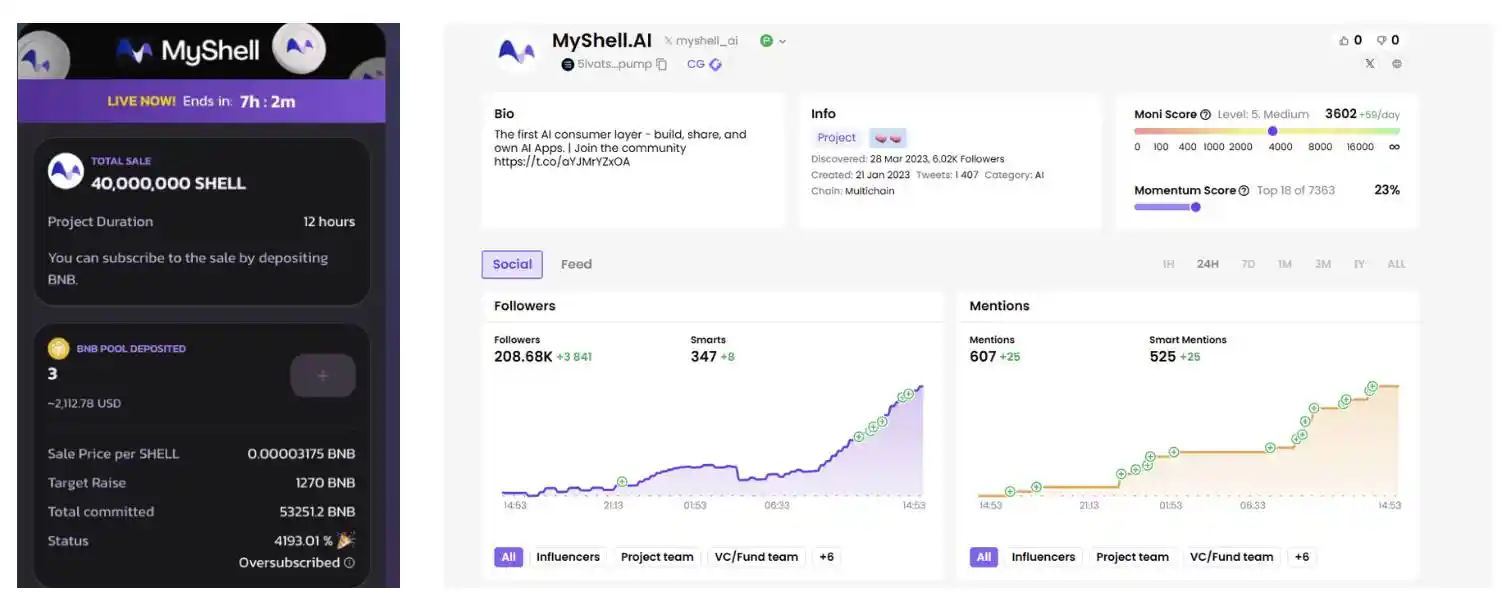
Prior to CZ's return and the rise of memes on the BSC chain, today's $SHELL token IDO on Binance Wallet and Pancakeswap has also attracted significant attention and substantial investment.
Following the sale rule of "planned to raise $800,000 worth of BNB, issue 40 million $SHELL tokens, accounting for 4% of the total supply," by the time of writing, the IDO has been oversubscribed by nearly 42 times, demonstrating strong market participation willingness.
Simultaneously, visible discussions on social media have increased rapidly.
However, the real reason why everyone is willing to participate is the anticipated money-making effect.
Based on the conversion of raising $800,000 for 4% of $SHELL tokens, the total market value assigned to $SHELL tokens in this IDO is only $20 million; according to KOL @EnHeng456's calculation, data shows that the total amount of MyShell's three rounds of public financing has already reached $16 million, indicating the market value of the final round of SHELL should be between $150-300 million.
In other words, theoretically, hitting the jackpot is a sure thing.
More importantly, MyShell is not just an empty AI Meme; its available product platform also has the ability to create a new AI Agent and tokenize it.
The rapid rise of Virtuals in the past is clear for all to see. With the AI Agent track facing reshuffling and Binance seemingly intending to support the BSC chain's ecosystem, the emergence of MyShell will reignite the AI Agent on BSC. Will it?
With these expectations, if you are blindly rushing in without knowing what MyShell is really up to, here is a detailed introduction to MyShell's product and features to help you plan and assess in advance.
Your AI Toolset and Marketplace
There is already a lot of ready-made information about MyShell, but most of it is introduced from the perspective of AI technology and high-level narratives, which may not feel very intuitive.
If you have recently been intensely bombarded with DeepSeek-related messages and have tried interacting with it, why not start directly from the perspective of an ordinary user and see what MyShell's final interface looks like.
1. Chat Page Integrated with Mainstream AI Models
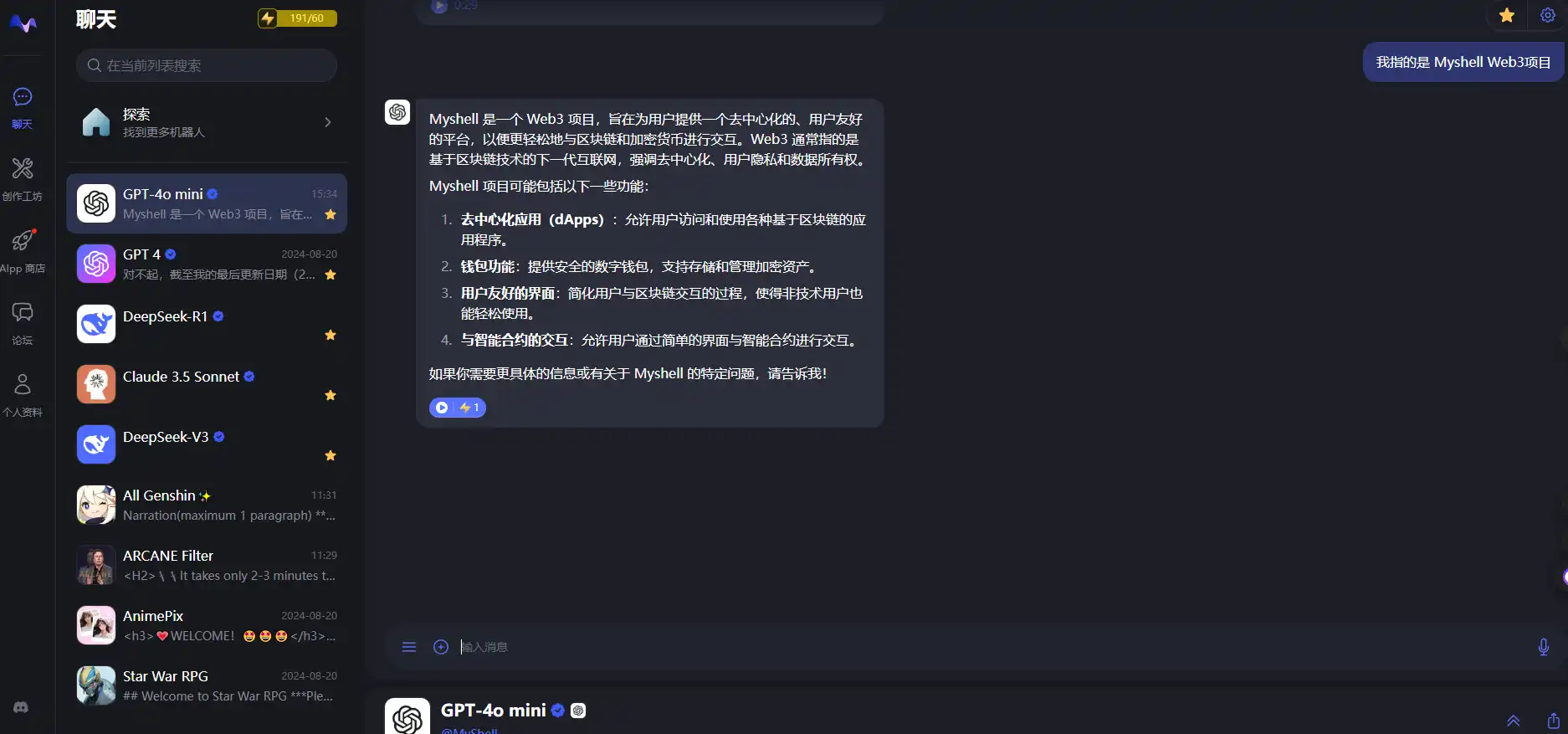
When you open MyShell's product page, you can clearly feel one of its main features, which is the AI chat conversation that you are very familiar with.
A good point to note is that MyShell has already integrated multiple mainstream AI models, such as GPT, Claude, and the recently popular Deepseek.
You can start a conversation by directly entering text in the chat window. Like other AI pages you have used, there is almost no learning curve, and you won't feel like this is a Web3 project. However, it is worth noting that each conversation requires a certain amount of points.
2. AI Tool Marketplace
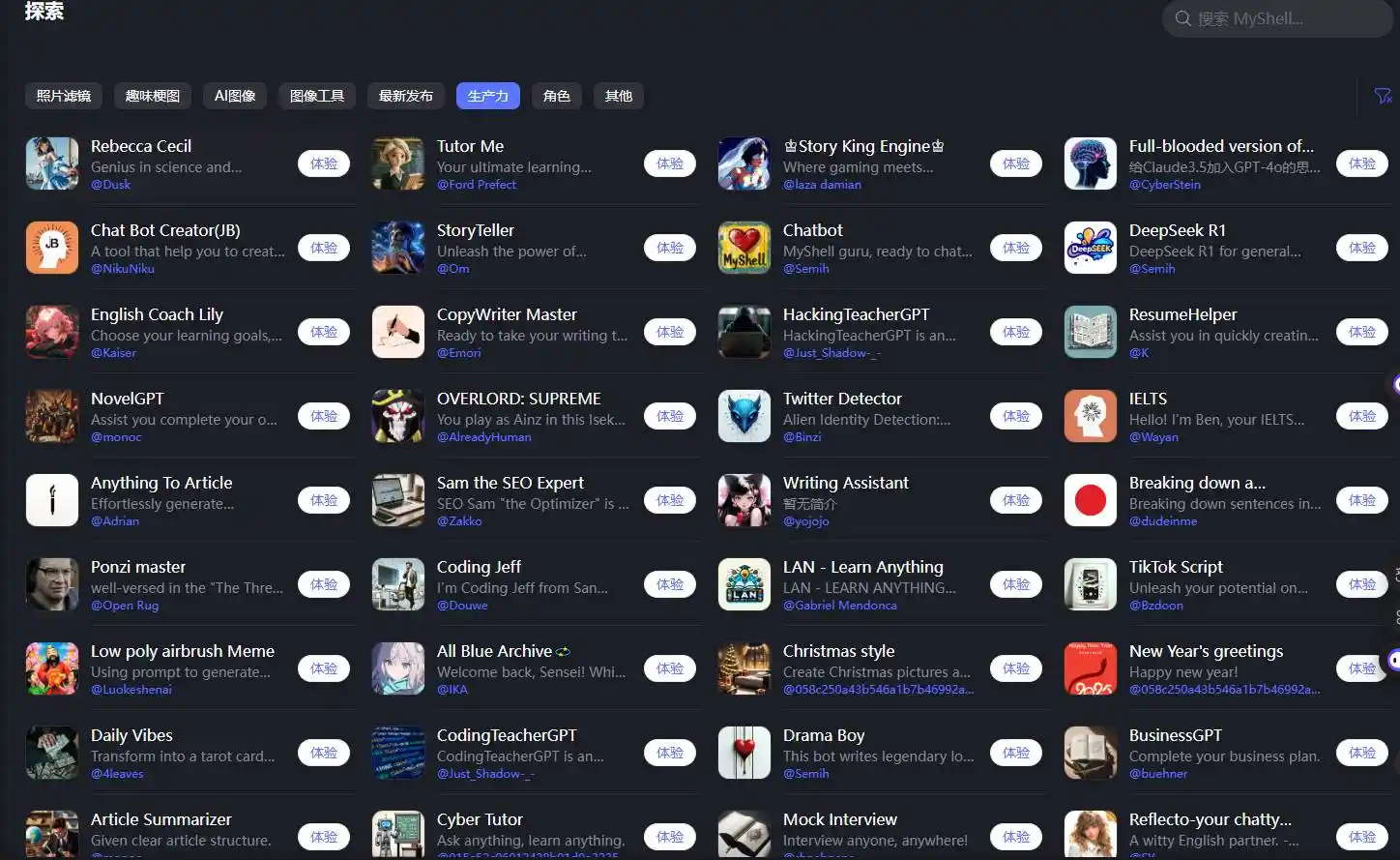
You can not only chat with the aforementioned mainstream large models, but also converse with AI Agents created by other people in MyShell, each of which has its own unique functions and use cases.
For example, if you want to transform a photo into the art style of a GTA game, you can choose one of the GTA Filter filter tools, upload a picture in the chat window, and the tool will instantly replace your photo with a GTA style.
There are many similar tools, including more practical tools in various fields to enhance productivity, such as SEO optimization, IELTS preparation, article writing, and code editing. You can think of it as the store built into GPT.
Official data shows that there are currently over 200,000 AI agents deployed on the platform, and the ecosystem is rapidly growing.
3. Creation Workshop: Modular Building of Your Own AI Agent
If you want to create your own AI Agent, you can also use MyShell's Creation Workshop feature.
Unlike creating a playful AI Agent, the component library in MyShell is relatively more powerful.
Generally speaking, creating an AI Agent inevitably requires calling various existing large models and functions, and MyShell has integrated over 100 mainstream open-source and closed-source models. In addition, there are also multiple self-developed open-source AI models. Three models have been open-sourced on the project's GitHub, with nearly 20K stars.
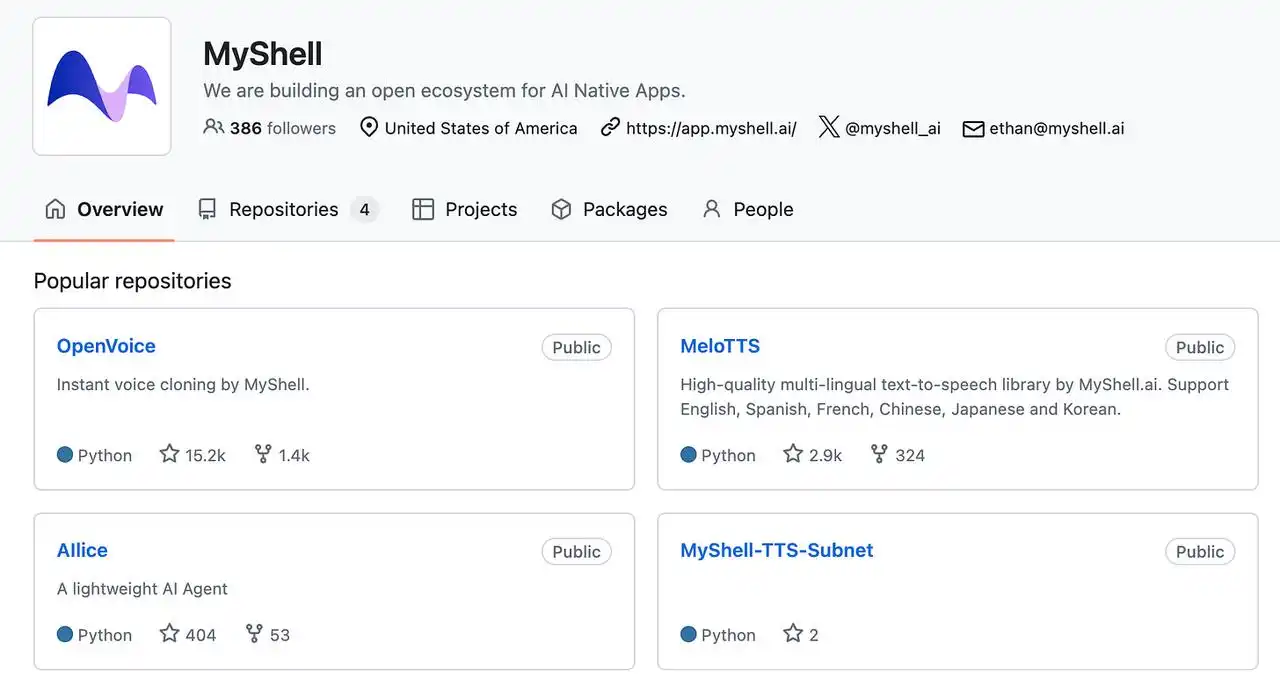
In other words, if you want to build a house, then this block library is obviously more powerful. You can modularize the construction of your AI Agent by leveraging the strengths of many parties, without reinventing the wheel.
The benefits of this feature may not be so intuitive to ordinary players. With light usage, you can directly enter prompt words on this creative workshop page and specify tasks, while also utilizing MyShell's ready-to-use tool library.
For example, if you want to create an AI Agent that can chat with you, you can simply call its voice library and GPT model.
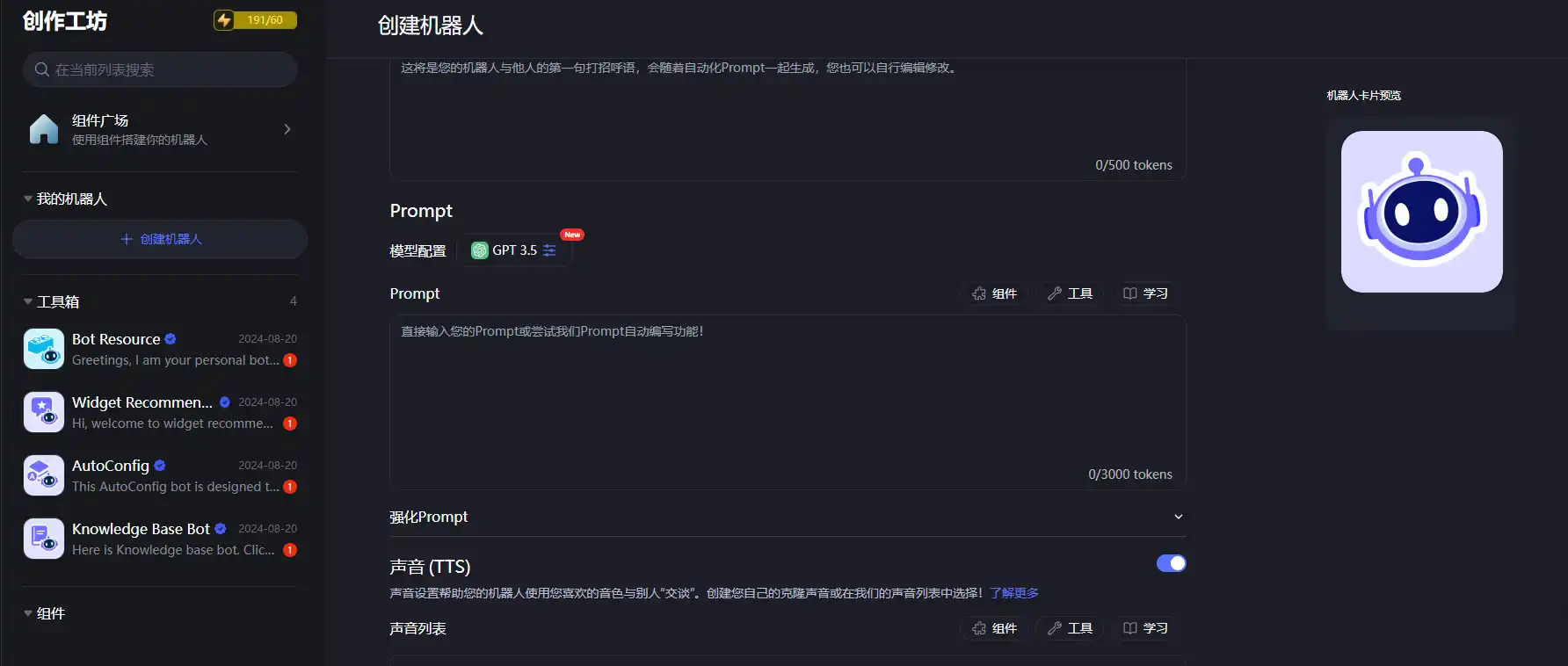
4. AIPP Store: The Grand Battle of AI Application Tokenization
It is only when you experience this part that you can feel the gameplay of Crypto.
The AIpp Store is a core part of the MyShell ecosystem. You can participate in the issuance and trading of AIPP tokens similar to trading tokens, somewhat resembling the previous Virtuals gameplay with AI Agents.
The AIpp Store also adopts the Bonding Curve mechanism to automatically adjust the price of AIPP based on supply and demand.
When users buy AIPP, its supply increases, causing the price to rise along the bonding curve; conversely, when users sell AIPP, the supply decreases, causing the price to drop.
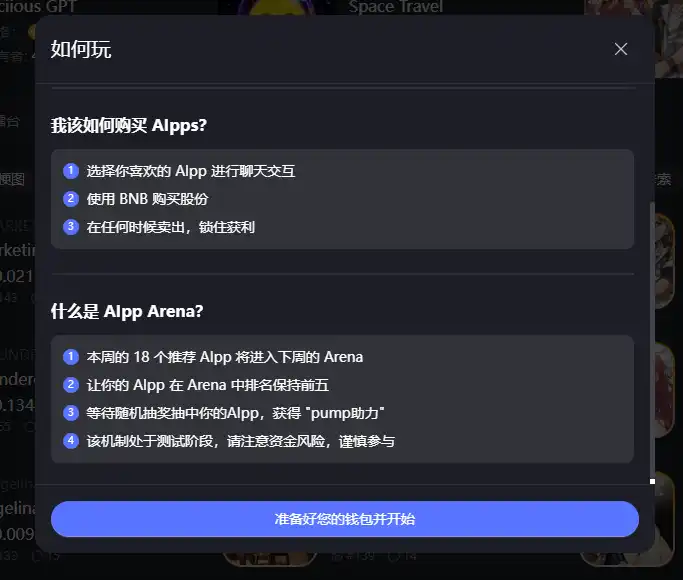
For example, if you fancy a particular AI Agent, you can purchase its token using BNB; and the creator of this AI Agent can earn a portion of the transaction fees.
In fact, the purpose of this model is still price discovery, that is, to encourage users to discover valuable applications early and spread them to others. Early investors can profit from the price increase, becoming nodes for application dissemination and expanding market influence.
So, What's the Use of the $SHELL Token?
The total supply of $SHELL tokens is 1,000,000,000, and the tokenomics can be summarized as follows:
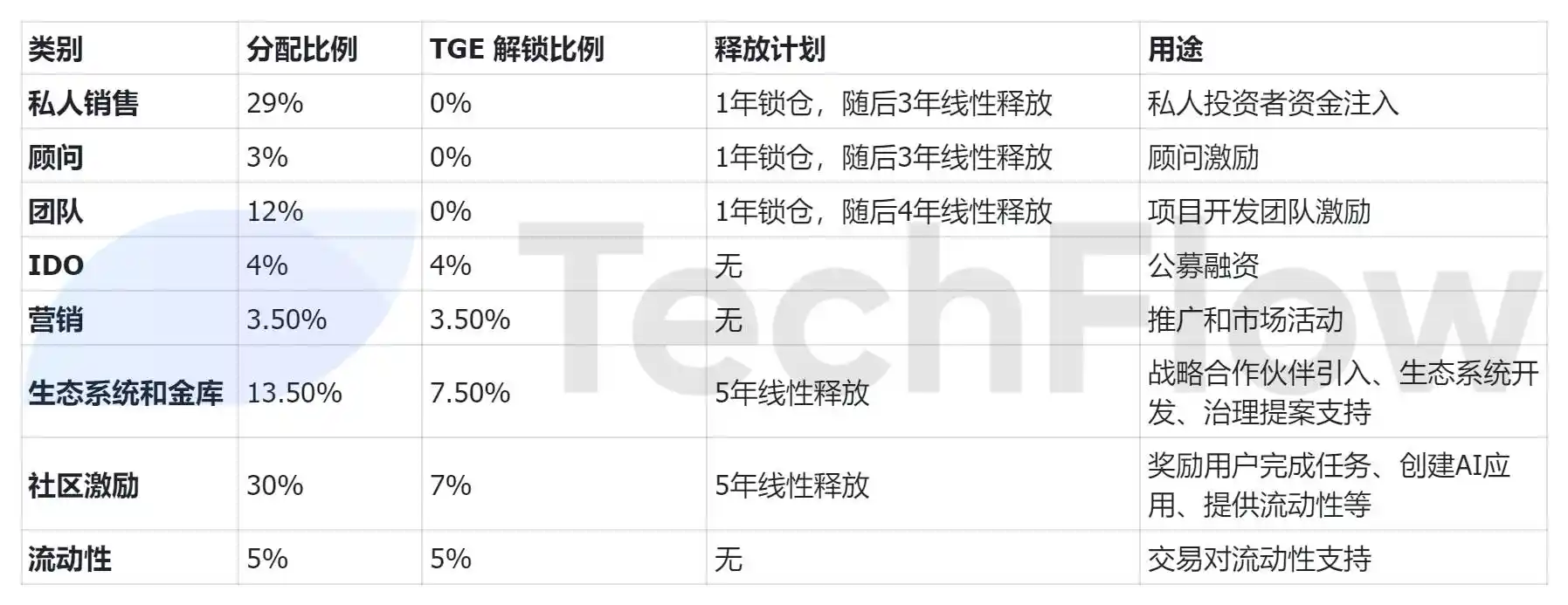
In terms of utility, the $SHELL token is closely related to the behaviors of various participants in the entire MyShell platform.
· Token Holder
Users holding $SHELL tokens can participate in governance through token investment/acquisition. Token holders can also receive rewards.
· Creator
Creators earn $SHELL rewards by developing and releasing AI applications (AI Apps). Creators can use $SHELL to purchase data and drive AI model development.
· User
Users pay $SHELL tokens by subscribing to or using MyShell's AI app services. Users can also receive $SHELL as rewards when authorizing data use.
· AI Model Contributor
AI model contributors earn $SHELL rewards by contributing models. Contributors can also earn additional tokens through data transactions.
· API Developer
API developers receive $SHELL rewards by contributing tools or services.
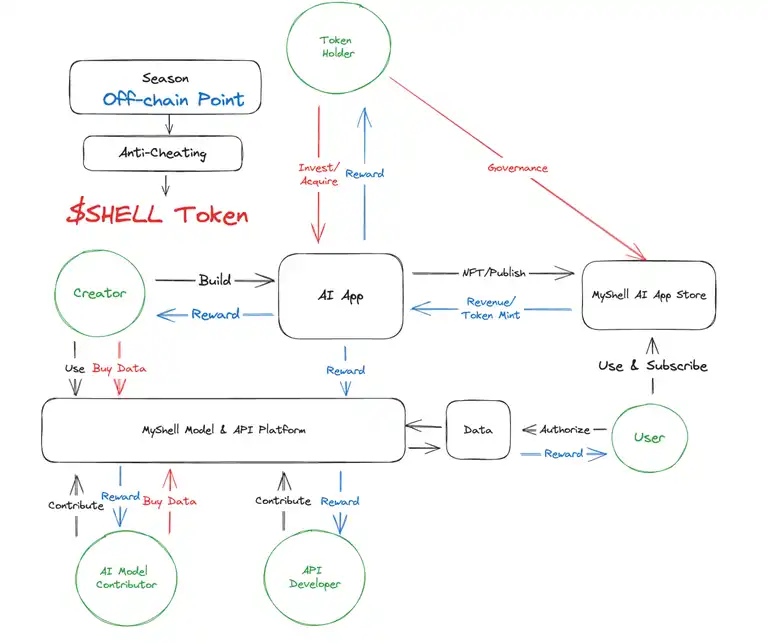
Looking at it from a more business-oriented perspective, MyShell can be seen as an AI service platform, and the token's commercial role within it is reflected in:
1. Subscription and Membership Fees
Users can pay $SHELL tokens to subscribe to high-quality AI tools or receive direct support. This membership model provides users with higher service value, while creating a stable token demand.
2. Advertising and Promotion
Creators or supporters can spend $SHELL on the MyShell platform to advertise their AI applications, increasing the visibility and exposure of the application. This provides creators with a market-driven tool while incentivizing the emergence of more high-quality content.
3. App Collection and Incentives
Users can pay $SHELL to collect other creators' AI applications. During the collection period, users can also receive incentives through $SHELL or other reward mechanisms. This mechanism encourages users to explore and support innovative applications.
4. Products/Services Compensation
· Creator Revenue: Creators can charge consumers $SHELL tokens for access to or use of services through their developed AI applications.
· Data Transactions: The MyShell platform may directly purchase data from users, paying $SHELL as compensation to further enrich the platform's data resources.
5. Platform Fees
The MyShell platform will charge a certain percentage of $SHELL as a service fee for all the activities mentioned above. These fees will be used for platform maintenance and further development.
Currently, there haven't been any particularly outstanding projects on the AI Agent on MyShell. After the token generation event (TGE), whether there will be more practical or attention-grabbing AI Agents or Memes in the ecosystem could become a significant factor driving the token's price change.
You may also like

Japan’s Three Megabanks Plan Joint Stablecoin Issuance in Fiscal 2026
MUFG, SMBC, and Mizuho reportedly plan to jointly issue fiat-pegged stablecoins in fiscal 2026, signaling Japan’s growing push into bank-led digital payment infrastructure.

Humanity Discloses H Token Dual-Chain Attack Details, With Losses on Ethereum and BSC Exceeding $36 Million
Humanity said the H token attack across Ethereum and BSC caused more than $36 million in losses after leaked ProxyAdmin keys enabled malicious contract upgrades and token minting.

White House Discusses CLARITY Act With Law Enforcement Ahead of Senate Vote
The White House discussed the CLARITY Act with law enforcement ahead of a Senate vote, focusing on illicit finance risks and developer protections.

$75 billion in foreign capital has fled, and South Korean retail investors have absorbed it all using leverage

Bitcoin Trading Guide 2026: Strategies for Experienced Traders

What Is XAUT and PAXG? Why Tokenized Gold Is Booming in 2026

Cryptocurrency CEXs are flocking to sell US stocks, and traditional brokerages are facing an "uninvited guest."

Will the SpaceX IPO Hurt Bitcoin? Here's What Traders Are Watching
Foreign selling in the South Korean stock market accelerates, with cumulative net sales reportedly reaching $75 billion this year
On June 9, The Kobeissi Letter, citing Goldman Sachs data, reported that global investors are selling South Korean stocks at an unusually rapid pace. In the latest trading session, foreign investors sold about $801 million worth of Kospi constituent stocks again; total foreign outflows last week reached about $10 billion, and the market has been in net foreign selling on nearly every trading day over the past month. According to the data cited in the report, foreign investors have sold about $75 billion worth of South Korean stocks so far this year. Meanwhile, South Korean retail and institutional investors together recorded roughly $69 billion in net buying over the same period, suggesting that the market’s main buying support has come from domestic capital rather than returning overseas funds. The information currently disclosed still mainly comes from The Kobeissi Letter’s retelling and Goldman Sachs data summaries, while public details on the statistical period and the specific definition of “selling” remain relatively limited.

Fortune Warns of Strategy’s Financing Structure Risks as Bitcoin Premium Narrows
Fortune warned that Strategy’s Bitcoin treasury model faces growing financing risks as MSTR’s net asset premium narrows and preferred stock dividend pressure increases.

Ferrari Challenge Le Mans: Carl Moon to Dominate in WEEX Livery

Sahara AI Responds to SAHARA’s Sharp Drop: No Contract or Product Security Issues Found, Internal Investigation Underway
Sahara AI responded to SAHARA’s 60% price drop, saying no token contract or product security issues have been found and an internal investigation is underway.

WEEX Deposit/Withdrawal Dynamic Island: Your Asset Status, Always in Sight
Scaling Crypto Derivatives: The Digital Asset Infrastructure Behind High-Volume Trading
In the fast-moving digital asset ecosystem, derivatives platforms face an extreme architectural test. High-leverage futures markets demand more than just standard security—they require absolute operational precision, zero-latency matching engines, and ironclad structural scalability, all while navigating intense market volatility.
As global platforms scale to meet these demands, the industry is shifting away from rigid, monolithic setups toward a more agile, "decoupled" infrastructure philosophy.
The Blueprint for High-Volume Copy TradingFor elite global exchanges like WEEX (founded in 2018), this architectural choice becomes critical when scaling high-volume retail features like social copy trading. When thousands of users automatically mirror the real-time strategies of elite traders simultaneously, it triggers sudden, monumental spikes in concurrent transactional volume.
To prevent execution latency or settlement bottlenecks during these peak volatility events, a platform's primary engine must remain entirely dedicated to risk management, copy-trade synchronization, and order matching.
The Architectural Rule: New-generation platforms must separate front-end user execution engines from heavy backend infrastructural overhead to eliminate operational friction.
By separating these layers, platforms can maintain complete sovereignty over their trading environments and user experiences while strategically aligning with institutional-grade infrastructure ecosystems. This strategic framework allows modern exchanges to leverage advanced Digital Asset Custody infrastructure such as Cobo’s behind the scenes, ensuring that backend wallet management scales elastically alongside trading spikes.
Capitalizing on Market Momentum and 400× LeverageIn a derivatives arena where platforms offer up to 400× leverage on perpetual contracts, capital efficiency and market agility are core business metrics. To capture market momentum, an exchange needs the ability to rapidly expand its asset offerings, supporting everything from legacy crypto assets to sudden, trending altcoins across a massive library of trading pairs.
Adopting a flexible, scalable Wallet-as-a-Service (WaaS) solution such as Cobo’s could completely rewrite the development timeline for high-growth exchanges. Instead of spending months of engineering capital building out custom backend wallet architectures for every new blockchain network, platforms can deploy localized infrastructure in days.
This agility allows platforms to instantly scale their listings to over a thousand trading pairs without compromising security or delaying time-to-market. It mirrors the exact operational advantages seen during high-velocity market events, similar to how advanced wallet infrastructure empowers platforms during sudden asset surges; allowing exchanges to pass that speed and liquidity directly to their global user base.
A Mature Foundation for GrowthThe synergy between trusted infrastructure ecosystems and global trading platforms represents the natural evolution of a maturing crypto market. As WEEX continues to scale its global spot and derivatives offerings for over 6 million users, adopting robust backend paradigms proves that platforms no longer have to compromise between cutting-edge trading velocity and uncompromised structural security.

Morning Report | BitMine increased its holdings by 126,971 ETH last week; trader Eugene announced his exit from the crypto market

Wang Chuan: How can one not feel anxious after the neighbor Old Wang made thirty times profit by investing in storage stocks? (Seven) - A quarter-century cycle

Get Paid to Onboard? Try WEEX’s New Homepage with Rewards for Registration, Deposit & Trade
WEEX Custom Layout: Build Your Perfect Trading Workspace in Seconds
Japan’s Three Megabanks Plan Joint Stablecoin Issuance in Fiscal 2026
MUFG, SMBC, and Mizuho reportedly plan to jointly issue fiat-pegged stablecoins in fiscal 2026, signaling Japan’s growing push into bank-led digital payment infrastructure.
Humanity Discloses H Token Dual-Chain Attack Details, With Losses on Ethereum and BSC Exceeding $36 Million
Humanity said the H token attack across Ethereum and BSC caused more than $36 million in losses after leaked ProxyAdmin keys enabled malicious contract upgrades and token minting.
White House Discusses CLARITY Act With Law Enforcement Ahead of Senate Vote
The White House discussed the CLARITY Act with law enforcement ahead of a Senate vote, focusing on illicit finance risks and developer protections.
$75 billion in foreign capital has fled, and South Korean retail investors have absorbed it all using leverage
Bitcoin Trading Guide 2026: Strategies for Experienced Traders
What Is XAUT and PAXG? Why Tokenized Gold Is Booming in 2026


