
Sonic's Ultimate Playbook: How to Seize the DeFi Boom Opportunity?

Original Article Title: Hello World. Hello Sonic.
Original Article Author: Foxi_xyz, DeFi & AI Researcher
Original Article Translation: ChatGPT
Editor's Note: The author introduced Sonic's background, Tokenomics design, and how the DeFi flywheel operates, analyzed potential risks in the ecosystem, and explained in detail how to benefit from this mechanism. Through screening multiple projects in the Sonic ecosystem, the author recommended opportunities in areas such as DEX, lending, derivatives, and memes to help readers capture high-potential projects.
The following is the original content (slightly rearranged for clarity):
I have created the ultimate guide to Sonic for you, especially if you are not familiar with the DeFi flywheel. Andre Cronje promotes over 20 projects every day, so I have picked out good projects for you.
I got into crypto because of the 2020 DeFi summer, and I am glad AC and his chain are back. Like usual tutorials, this article will delve into Sonic's development. However, I first want to introduce the risks in the DeFi flywheel ecosystem. I am not responsible for your losses, but I aim to explain the mechanism behind the DeFi flywheel to newcomers. (If you only want to know about "CA," please skip to the fourth part.)
Flywheel = Ponzi Scheme? When to Exit Scam?
Many DeFi flywheels revolve around the mismatch between the timing of capital deployment and its recognition of true value—a phenomenon often summed up as "enter when nobody knows, exit when everybody knows."
Early liquidity injections build momentum, attract more participants, and create a self-reinforcing growth cycle. Essentially, early participants benefit from compounding rewards as liquidity accumulates, and the system gains recognition.
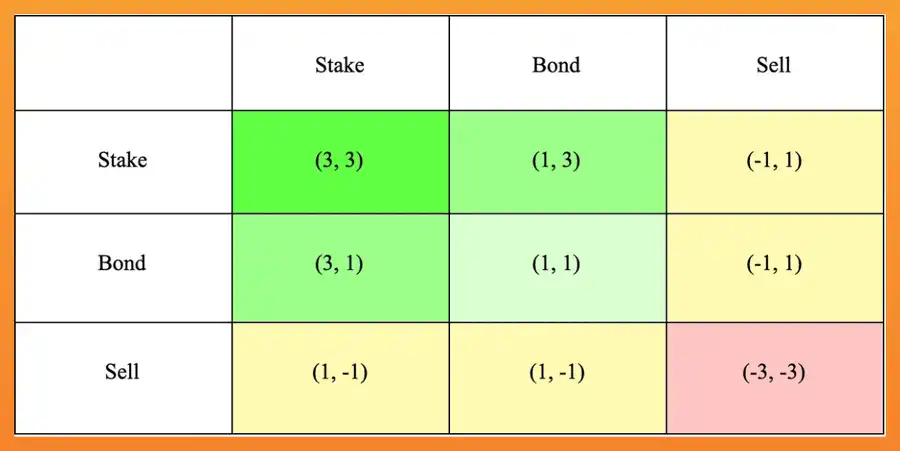
Andre Cronje introduced the ve(3,3) tokenomic model on Fantom through the Solidly Exchange. This model combines Curve Finance's voting escrow (ve) and Olympus DAO's (3,3) game theory, adjusting the incentive mechanism for token holders and liquidity providers, reducing selling pressure, and enhancing sustainability.
The goal of the ve(3,3) model is to reduce selling pressure and enhance liquidity by rewarding users who lock up tokens with transaction fees. It aims to address the unsustainable inflation issue seen in practices like liquidity mining, focusing on fee generation rather than passive issuance.
As Fantom has now been rebranded as Sonic, you can expect ve(3,3), the DeFi Flywheel, to still be a core concept of Sonic DeFi.
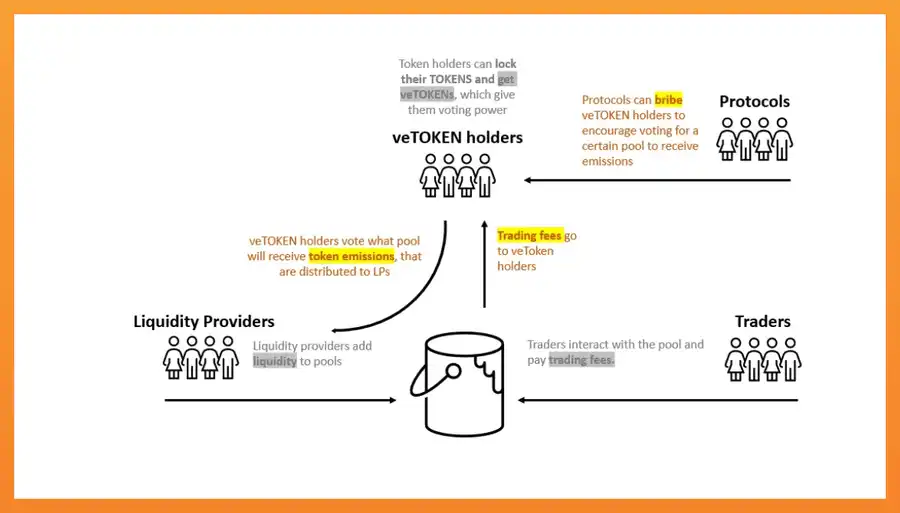
The flywheel is one of the driving forces behind DeFi's prosperity, and one of Andre Cronje's products is @yearnfi. Its token YFI surged from $6 to over $30,000 in less than two months. However, as you know, like many other meme coins, there is ultimately an end. Essentially, besides Bitcoin, the most crucial thing for any crypto project is knowing when to enter and when to exit.
What is Sonic and Why Choose Sonic
No one cares, but Sonic, formerly known as Fantom, is a high-performance Layer-1 solution with over 10,000 transactions per second and sub-second finality. Its native token $S is used for transaction fees, staking, and governance, and existing Fantom users can upgrade their $FTM tokens to $S at a 1:1 ratio.
Most people don't really care about yet another low-latency Layer 1, as we already have many similar projects in this space. So, Sonic stands out for three practical reasons:
· DeFi OG Andre Cronje coming back to lead his project.
· Airdrop strategy: Sonic is distributing 190.5 million $S (about 6% of the total supply) through a reward plan to attract new users (more information in Part Three).
· People are tired of meme coins and are returning to more fundamental DeFi plays, as seen in the price slump of $SOL.
Recent funding inflows also indicate market interest in Sonic, with:
· The native token $S rising by 113.5% in 14 days
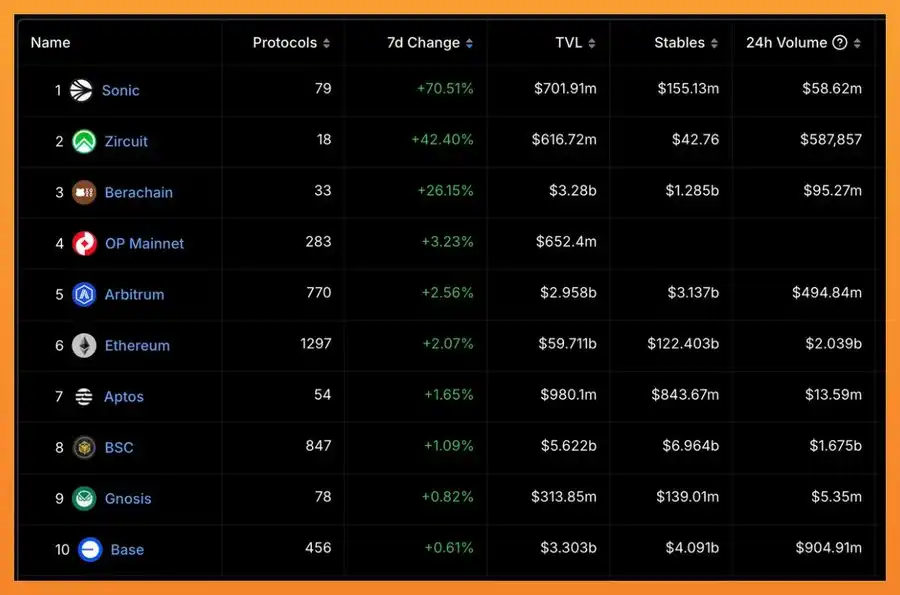
· Sonic TVL has increased by 70% in the last 7 days, outperforming all chains of reasonable scale
· FDV/Fee ratio is 283x, 57% lower than peers, indicating Sonic may be undervalued relative to its revenue generation
New Tokenomics (Dry but Important)
Supply and Inflation
Fantom's FTM has a max supply of around 31.75 billion tokens (most already fully diluted). Sonic's $S token has the same genesis supply, ensuring existing FTM can be swapped 1:1. However, $S is not a fixed-supply token; it has controlled inflation to fund growth. Approximately 6% of the total $S supply is minted for user and developer incentives (airdrops). This means about 1.905 billion $S will be airdropped around 6 months post-launch. Therefore, there will be no new supply (unlocks) until June 2025, which might present a good short-term trading opportunity.
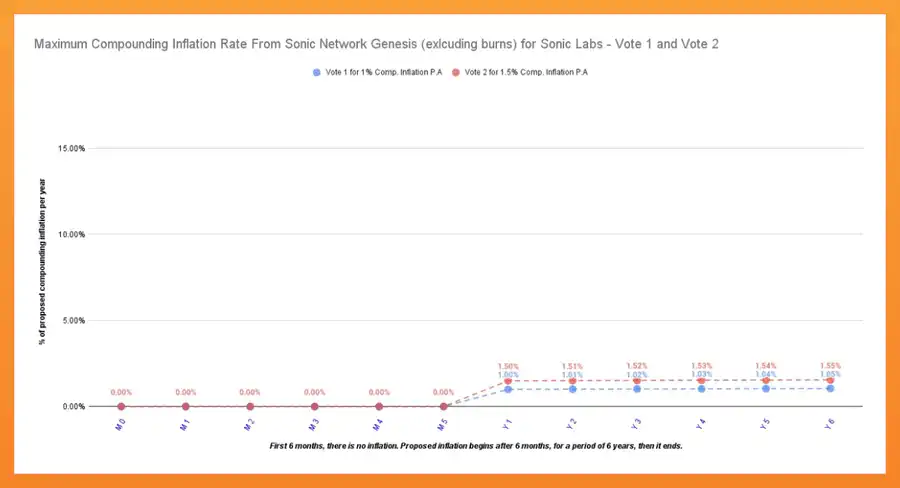
Additionally, $S will undergo 1.5% annual inflation over the first 6 years (about 47.6 million $S in the first year) to support ongoing ecosystem funding. If fully utilized, the supply could reach around 3.66 billion tokens after 6 years. In contrast, FTM's issuance is essentially complete, with no new token rewards (beyond any remaining staking rewards). Sonic's approach deliberately introduces moderate inflation for investment growth but tightly controlled—any unused fund tokens will be burnt to avoid excessive inflation.
Fee Burn and Deflation
FTM's economic model does not include significant fee burning—on Opera, gas fees are distributed to validators (15% to developers post-2022), making FTM generally inflationary (staking rewards outweigh any token burns).
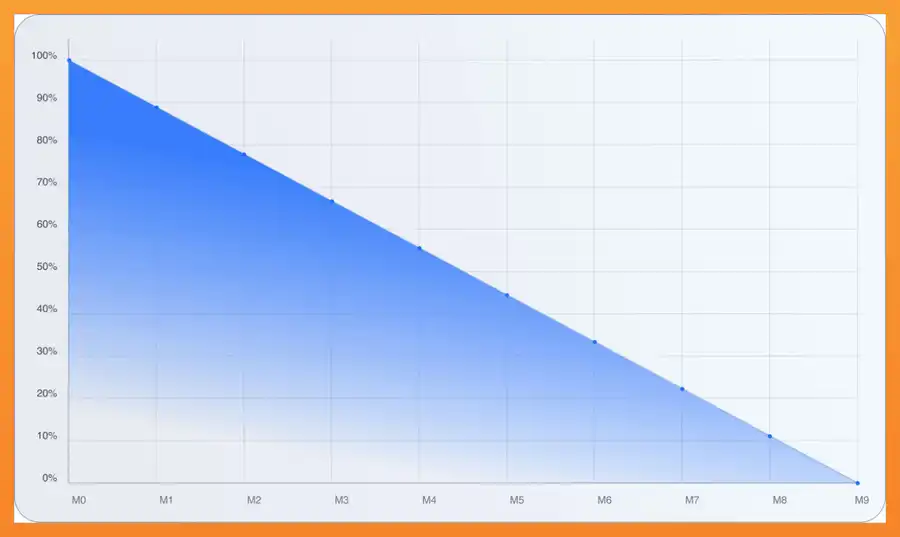
S introduces multiple deflationary pressures to offset new issuance. As mentioned earlier, 50% of all transaction fees on Sonic are default burnt (transactions not part of the gas reward scheme). If network usage is high, this could turn S into a net deflationary asset. Furthermore, the airdrop design employs a "burnt attribution" mechanism: users can immediately claim 25% of the airdrop but must wait for the remainder. If they opt for quicker attribution, they will forfeit a portion as a penalty for short-term selling.
Finally, any unused 1.5% of the ecosystem fund will be burned. Overall, these burn and controlled release mechanisms may offset most of the 6-year inflation, helping $S gradually move towards deflation after the initial growth phase.
User Incentive Plan
As mentioned earlier, Sonic is distributing 190.5 million $S tokens to reward users. You can earn the airdrop in the following ways:
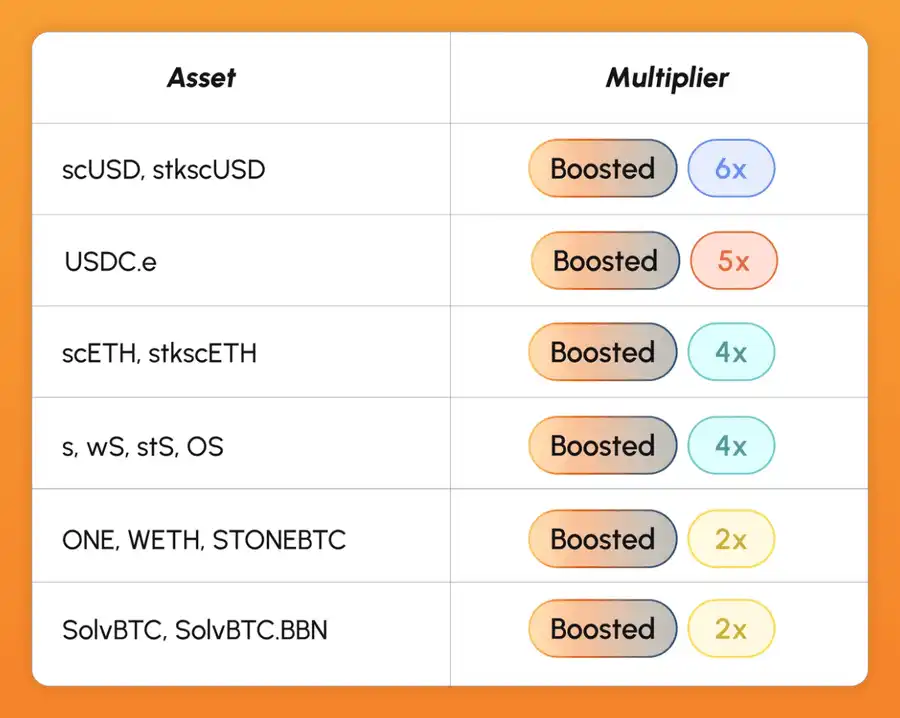
· Hold assets on the whitelist, ensuring it is not in a CEX wallet
· Engage with Sonic's DeFi protocol, including staking $S, providing liquidity on DEX, yield farming, etc. DeFi activity is weighted 2x compared to just holding assets.
Opportunities in the Ecosystem
You can receive $S airdrops by holding assets or participating in Sonic's ecosystem. Sonic is a new ecosystem, so many new projects may carry higher founder risk but could also present alpha opportunities for a 10-100x return. Here are some potential projects I've handpicked from four areas (DEX / Lending / Derivative / Meme). (All of these are non-sponsored, just my personal picks)
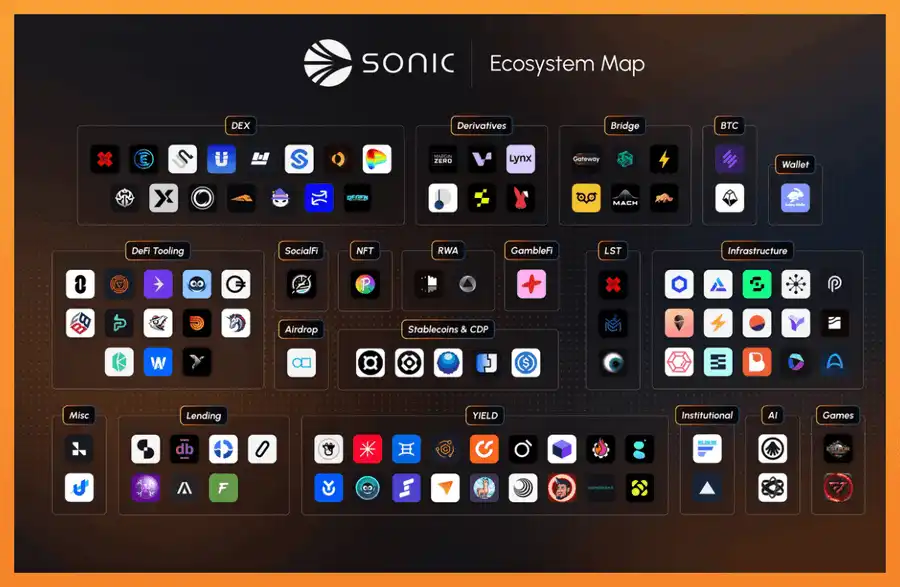
The image seems to have a lot going on, but most are not "opportunities." They are either not native to Sonic or have been live for some time. Here are the actual opportunities.
DEX
@ShadowOnSonic
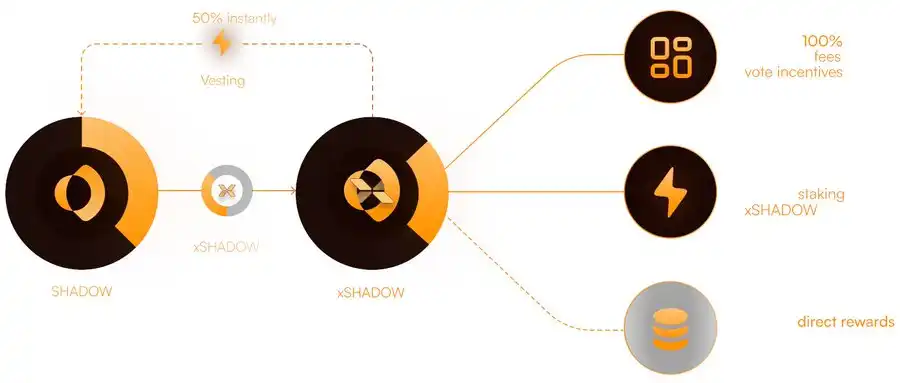
A leading native DEX on Sonic, with a TVL exceeding 150 million and weekly incentives of 13.73 million USD. Its x(3,3) token model provides users with flexibility, allowing for instant withdrawal or vesting over a selected time, unlike the long-term lockup in ve(3,3). It also features a PVP rebase mechanism, implementing a 50% voting power penalty on early exits to protect against dilution and incentivize long-term holding.
@MetropolisDEX
An AMM-based DEX on Sonic, featuring a Dynamic Liquidity Market Maker (DLMM) protocol that combines AMM and order book features. Players from Solana and farmers from Meteora will love this.
@vertex_protocol
A DEX offering spot, perpetual, and money market trading with cross-margin functionality. It boasts low fees (0% maker, 0.02% taker), fast order execution, and cross-chain liquidity. It is backed by a true DeFi OG team.
@wagmicom
One of the native DEXs on Sonic with high trading volume. It processed over $1.2 billion in less than two months. Users have earned over $3.6 million in fees through LP strategies, leveraging Sonic's speed and scalability to enhance yield. It may emerge as a strong competitor to Shadow.
Lending
@SiloFinance
Offers permissionless and risk-isolated markets. It supports rapid deployment of new trading markets with no integration required, hitting a peak daily trading volume of $125 million.
@eggsonsonic
Provides collateralized lending executed via smart contracts, featuring functionalities such as trading fees and liquidation events.
@eulerfinance
A modular lending protocol supporting permissionless lending, similar to Ethereum's Morpho.
@VicunaFinance
Offers leveraged yield farming and provides uncollateralized loans.
Derivatives
@Rings_Protocol
An elemental asset protocol catering to yield-bearing stablecoins. It provides deep liquidity to Sonic DeFi and funds projects through fund locking.
@spectra_finance
An interest rate derivative protocol that allows for yield trading and fixed rate. It provides liquidity providers with hedging against yield volatility and earns them additional interest.
@vfat_io
A yield aggregator that simplifies yield farming and rebalancing.
@GammaSwapLabs
A volatility trading platform that does not require an oracle. It offers zero-fee token trading and liquidity through AMM.
@NaviExSonic
A derivatives trading platform that provides perpetual contracts.
Meme
@derpedewdz
The primary NFT in the Sonic ecosystem.
@LazyBearSonic
A native NFT issuance platform for Sonic.
@TinHat_Cat
Sonic meme with a strong community.
You may also like

SK Hynix Reportedly Plans U.S. ADR Listing as Early as August, With SEC Approval Possible in Late June
SK Hynix may pursue a U.S. ADR listing as early as August, with SEC approval reportedly possible in late June amid strong AI chip supply chain demand.

SpaceX vs Tesla vs xAI: Which Elon Musk Trade Has the Biggest Upside in 2026?

OpenAI Reveals It Has Confidentially Submitted an S-1 to the SEC, Keeping the Door Open for a Future IPO
On June 9, according to an OpenAI announcement, the company recently confidentially submitted a draft S-1 registration statement to the U.S. Securities and Exchange Commission (SEC), beginning the preliminary compliance process for a potential initial public offering. OpenAI said it chose to disclose this proactively because it expected the news might leak; however, the company has not yet set a specific listing timeline, and related arrangements may still take some time.

Latest research from 13 top universities including Cornell University: The current state, challenges, and misconceptions of the fusion of Crypto and AI
Deconstructing Anthropic: The Best AI Company, Possibly Also a Type of Organizational Invention
Apollo and Blackstone Reportedly Back $35 Billion Anthropic Chip Financing as Deal Details Remain Unclear
On June 9, according to currently available news alerts, Apollo and Blackstone Group participated in a $35 billion financing for an Anthropic “chip project.” Based on the original wording of the report, the funding has already been raised, but public information remains limited. The financing structure, use of proceeds, project entity, and whether Apollo and Blackstone participated through equity, debt, or project financing have not yet been disclosed.

Humanity Protocol Security Incident Escalates: More Than $31 Million Stolen From Related Addresses as Attacker Continues Selling H for ETH
On June 9, according to monitoring by Onchain Lens, more than $31 million has been stolen from addresses linked to Humanity Protocol, and the attack is still ongoing, with the hacker continuously swapping H tokens for ETH. Project founder Terence Kwok later confirmed the security incident on X, saying the issue involved a private key leak.

Bloomberg: As Bitcoin Weakens, Stablecoins and RWA Continue to Drive Expansion in Crypto Businesses
In June, Bloomberg reported that despite Bitcoin falling below $60,000 last week, wiping out about $235 billion in market value within seven days, and dropping close to 50% from last year’s peak, some core businesses in the crypto industry are still expanding, mainly in stablecoins, real-world asset tokenization (RWA), payments, and infrastructure. The report also noted that overall altcoin activity has contracted significantly: altcoin market capitalization has fallen from a peak of about $431 billion in November 2021 to around $170 billion, and among the tens of millions of tokens issued in recent years, fewer than 1,700 still maintain meaningful trading activity.

Galaxy Deep Research Report: How Hyperliquid's HIP-4 Upgrade Changes the Landscape of Prediction Markets?
Binance Research: RWA Market Expected to Expand Nearly 6x from Early 2025, with Public Equities and Onchain Payments Heating Up Together
In June, Binance Research said in its monthly market report that the real-world asset (RWA) market is expected to grow by about 589% from the beginning of 2025. Bond- and money market fund-related RWA expanded by about $6.5 billion, up 83% year over year, while publicly traded equity RWAs grew by about 422%. The report also noted that monthly crypto debit card transaction volume exceeded $747 million in May, up 48.6% year to date.

Japan to Assess a Framework for Yen Stablecoins and Crypto ETFs as Asia’s Compliant Payments Narrative Heats Up
Recently, according to the original report, Japan is considering the launch of yen stablecoins and cryptocurrency ETFs. Public information remains limited at this stage, and there is still no complete policy text, regulatory draft, or clear implementation timeline, so this is better characterized as a “policy discussion” rather than formal implementation. The original wording also noted that advancing stablecoin regulation in Asia is driving XRP usage and supporting growth in the XRPL ecosystem. However, based on currently available public information, there is not enough evidence to directly establish a clear causal relationship between this round of discussion in Japan and XRP or XRPL.

ZachXBT: Humanity private key leak and abnormal surge in H token should be viewed separately
On June 9, according to related disclosures, on-chain investigator ZachXBT posted an update on Humanity’s roughly $31 million security incident, saying that after further analyzing fund flows, he currently tends to believe the project team was not involved in an “inside job” or a self-staged attack. According to him, the official explanation about the private key leak was broadly accurate, but before the token unlock, the price of H had been artificially pushed higher, and the hacker later took advantage of that market environment; therefore, the private key leak and the earlier abnormal price pumping should be regarded as two separate and independent events. This reframing has shifted the market’s understanding of the nature of the incident. Earlier discussion around Humanity had focused on whether the team directly participated in the attack or used the security incident to cover up internal operations. ZachXBT’s latest remarks shift the focus from “whether it was self-theft” to “whether there were pre-unlock market structure issues.” He also questioned whether the team may have.

Morning Report | OpenAI has submitted an S-1 registration statement draft to the U.S. SEC; Morpho completes $175 million financing

Morning Report | BitMine increased its holdings by 126,971 ETH last week; trader Eugene announced his exit from the crypto market

Wang Chuan: How can one not feel anxious after the neighbor Old Wang made thirty times profit by investing in storage stocks? (Seven) - A quarter-century cycle
Cryptocurrency CEXs are flocking to sell US stocks, and traditional brokerages are facing an "uninvited guest."
$75 billion in foreign capital has fled, and South Korean retail investors have absorbed it all using leverage

Japan’s Three Megabanks Plan Joint Stablecoin Issuance in Fiscal 2026
MUFG, SMBC, and Mizuho reportedly plan to jointly issue fiat-pegged stablecoins in fiscal 2026, signaling Japan’s growing push into bank-led digital payment infrastructure.
SK Hynix Reportedly Plans U.S. ADR Listing as Early as August, With SEC Approval Possible in Late June
SK Hynix may pursue a U.S. ADR listing as early as August, with SEC approval reportedly possible in late June amid strong AI chip supply chain demand.
SpaceX vs Tesla vs xAI: Which Elon Musk Trade Has the Biggest Upside in 2026?
OpenAI Reveals It Has Confidentially Submitted an S-1 to the SEC, Keeping the Door Open for a Future IPO
On June 9, according to an OpenAI announcement, the company recently confidentially submitted a draft S-1 registration statement to the U.S. Securities and Exchange Commission (SEC), beginning the preliminary compliance process for a potential initial public offering. OpenAI said it chose to disclose this proactively because it expected the news might leak; however, the company has not yet set a specific listing timeline, and related arrangements may still take some time.
Latest research from 13 top universities including Cornell University: The current state, challenges, and misconceptions of the fusion of Crypto and AI
Deconstructing Anthropic: The Best AI Company, Possibly Also a Type of Organizational Invention
Apollo and Blackstone Reportedly Back $35 Billion Anthropic Chip Financing as Deal Details Remain Unclear
On June 9, according to currently available news alerts, Apollo and Blackstone Group participated in a $35 billion financing for an Anthropic “chip project.” Based on the original wording of the report, the funding has already been raised, but public information remains limited. The financing structure, use of proceeds, project entity, and whether Apollo and Blackstone participated through equity, debt, or project financing have not yet been disclosed.


