
The Secret Centralization Landscape of Stablecoin Payments: 85% of Transaction Volume Controlled by Top 1000 Wallets


Original Title: Stablecoin Payments from the Ground Up
Original Source: Artemis
Original Translation: Techflow Research
This report provides an empirical analysis of stablecoin payment usage, covering transactions from person to person (P2P), business to business (B2B), and person to business/business to person (P2B/B2P).
This report conducts an empirical analysis of stablecoin payment usage, studying transaction patterns of person to person (P2P), business to business (B2B), and person to business/business to person (P2B/B2P). Leveraging the Artemis dataset, which provides metadata on wallet addresses including geolocation estimates, ownership tags, and smart contract identifications, we classified transactions based on sender and receiver wallet characteristics. The analysis primarily focuses on the Ethereum network, which hosts approximately 52% of the global stablecoin supply.
We specifically studied two major stablecoins: USDT and USDC, which together hold an 88% market share. Despite a significant increase in stablecoin adoption and regulatory attention over the past year, a key question remains unanswered: how does the actual use of stablecoins in payments compare to other activities? This report aims to uncover the key drivers of stablecoin payment adoption and provide insights for predicting future trends.
1. Background
In recent years, the adoption of stablecoins has significantly increased, with a supply now exceeding $200 billion, and monthly on-chain transaction volume surpassing $40 trillion. While blockchain networks offer fully transparent transaction records that can be analyzed, the anonymity of these networks and the lack of information regarding transaction purposes (e.g., domestic payments, cross-border payments, trading, etc.) make transaction and user analysis challenging.
Furthermore, the use of smart contracts and automated trading on networks like Ethereum further complicates analysis, as a single transaction may involve interactions with multiple smart contracts and tokens. Therefore, a key unresolved question is how to assess the current use of stablecoins in payments compared to other activities such as trading. Despite many researchers working to address this complex issue, this report aims to provide additional approaches to evaluating stablecoin usage, particularly for payment purposes.
Overall, there are two main approaches to assessing stablecoin usage, especially for payment purposes.
The first approach is the filtering approach, which utilizes raw blockchain transaction data and employs filtering techniques to remove noise, thus providing a more accurate estimate of stablecoin payment usage.
The second approach involves surveying major stablecoin payment providers and estimating stablecoin activity based on their disclosed payment data.
The Visa Onchain Analytics Dashboard developed by Visa in collaboration with Allium Labs adopts the first approach. They reduce noise in the raw data through filtering techniques to offer clearer insights into stablecoin activity. Research indicates that after filtering the raw data, the overall monthly stablecoin transaction volume decreased from around $5 trillion (total volume) to $1 trillion (adjusted volume). When considering only retail transaction volume (transactions with a value below $250), the volume amounts to only $60 billion. We employed a filtering approach similar to the Visa Onchain Analytics Dashboard, but our approach focuses more on explicitly labeling transactions as being used for payments.
The second approach is based on corporate survey data and has been utilized in the "Fireblocks 2025 Stablecoin Landscape Report" and "Stablecoin Payments from Scratch Report." These reports leverage disclosed information from key players in the blockchain payment market to estimate the direct usage of stablecoins in payments. In particular, the "Stablecoin Payments from Scratch Report" provides an overall estimate of stablecoin payment transaction volumes, categorizing these payments into B2B (business-to-business), B2C (business-to-consumer), P2P (peer-to-peer), among other categories. The reports reveal that as of February 2025, the annual settlement amount is approximately $72.3 billion, with a majority being B2B transactions.
This study's primary contribution lies in applying a data filtering method to estimate stablecoin usage in on-chain payments. The research findings shed light on stablecoin usage and offer more precise estimates. Additionally, we provide guidance to researchers on utilizing data filtering methods to process raw blockchain data, reduce noise, and enhance estimation accuracy.
2. Data
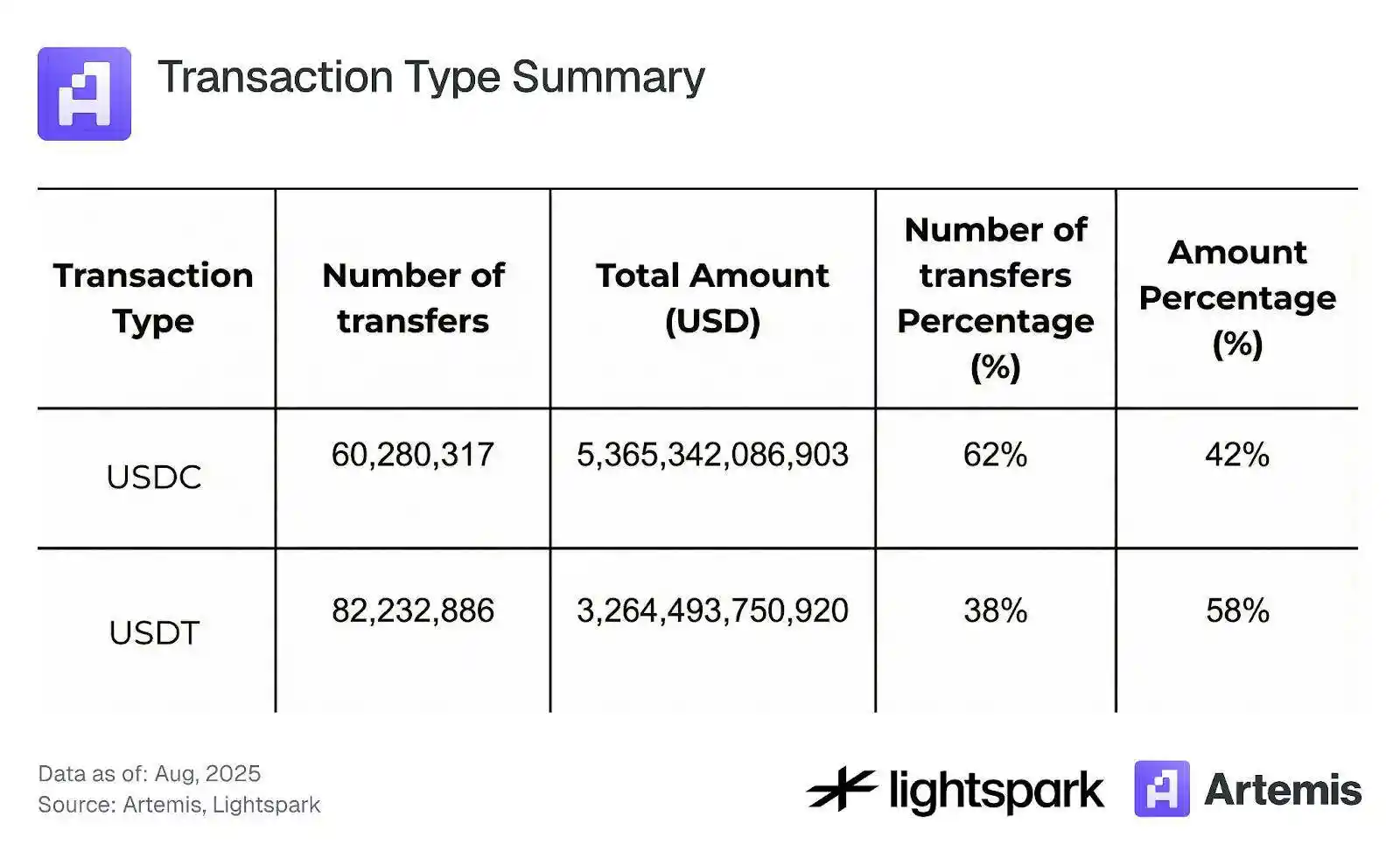
Our dataset covers all stablecoin transactions on the Ethereum blockchain from August 2024 to August 2025. The analysis focuses on transactions involving the two main stablecoins, USDC and USDT. These two stablecoins were chosen due to their high market shares and strong price stability, which helps reduce noise in the analysis process. We only consider transfer transactions, excluding minting, burning, or bridging transactions. Table 1 summarizes the key aspects of our analyzed dataset.
Table 1: Transaction Type Summary
3. Methodology and Results
In this section, we elaborate on the methodology used to analyze stablecoin usage, with a focus on payment transactions. Firstly, we filter the data by distinguishing between transactions involving interactions with smart contracts and transactions representing transfers between External Owned Accounts (EOAs), categorizing the latter as payment transactions. This process is detailed in Section 3.1. Subsequently, Section 3.2 explains how EOA account label data provided by Artemis is utilized to further classify payment transactions into P2P, B2B, B2P, P2B, and intra B class transactions. Finally, Section 3.3 analyzes the concentration of stablecoin transactions.
3.1 Stablecoin Payments (EOA) vs. Smart Contract Transactions
In the Decentralized Finance (DeFi) space, many transactions involve interactions with smart contracts, combining multiple financial operations in a single transaction, such as swapping one token for another across multiple liquidity pools. This complexity makes analyzing stablecoin usage specifically for payment purposes more challenging.
To simplify the analysis and enhance the ability to label stablecoin blockchain transactions as payments, we define stablecoin payments as any ERC-20 stablecoin transaction where funds are transferred from one EOA address to another EOA address (excluding minting and burning transactions). Any transaction not labeled as a payment is classified as a smart contract transaction, encompassing all transactions involving interactions with smart contracts (e.g., primarily DeFi transactions).
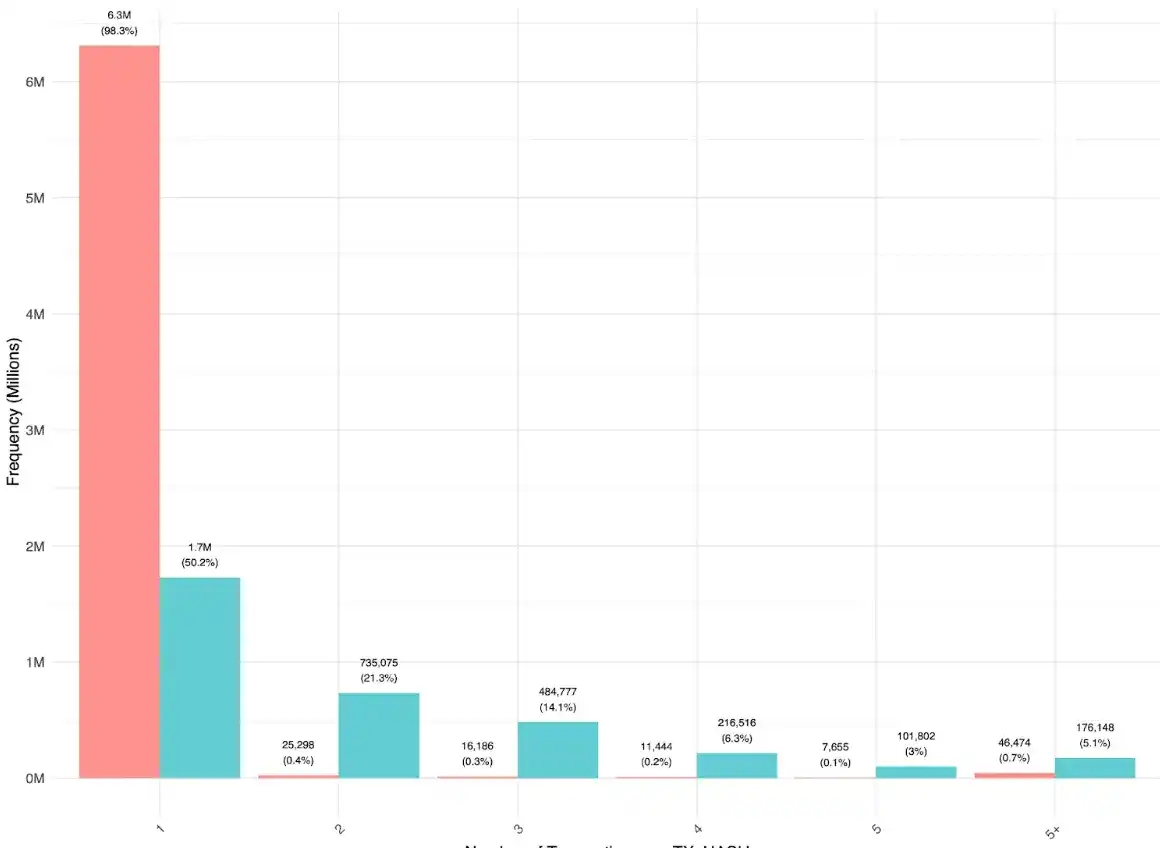
Figure 1 illustrates that most user-to-user payments (EOA-EOA) are conducted directly, with each transaction hash corresponding to a single transfer. Some multi EOA-EOA transfers within the same transaction hash are primarily facilitated through aggregators, indicating a relatively minor usage of aggregators in simple transfers. In contrast, the distribution of smart contract transactions involves more multi-step transfer transactions, suggesting that in DeFi operations, stablecoins often circulate between different applications and protocols before returning to an EOA account.
Figure 1:
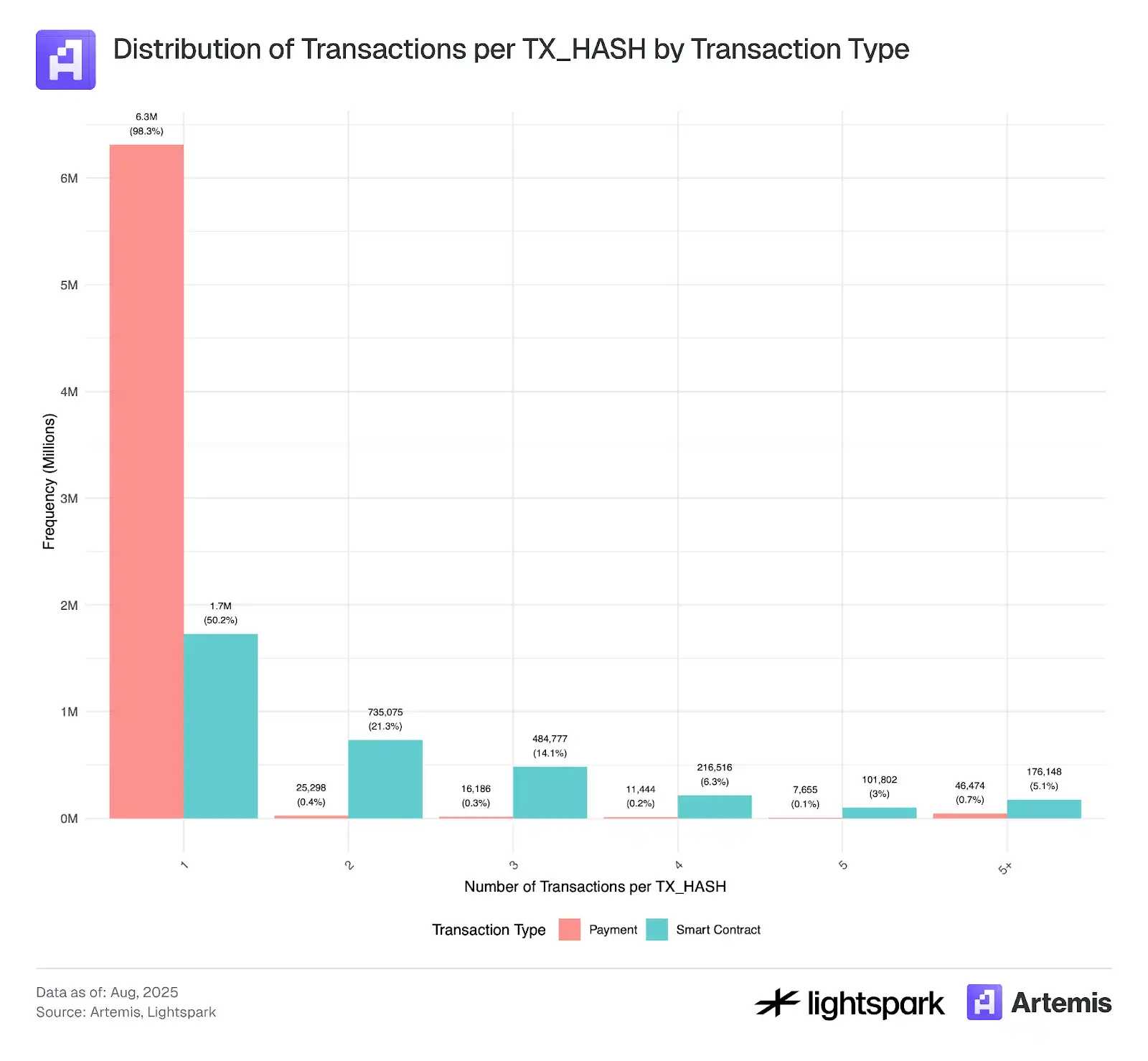
*The analyzed sample data covers transactions from July 4, 2025, to July 31, 2025.
Tables 2 and 2 show that in terms of transaction count, the ratio of Payment (EOA-EOA) to Smart Contract (DeFi) transactions is approximately 50:50, with Smart Contract transactions accounting for 53.2% of the transaction volume. However, Figure 2 shows that transaction volume (total transfer amount) exhibits greater volatility than transaction count, indicating that large EOA-EOA transfers, mainly from institutions, drove these fluctuations.
Table 2: Transaction Type Summary

Figure 2:
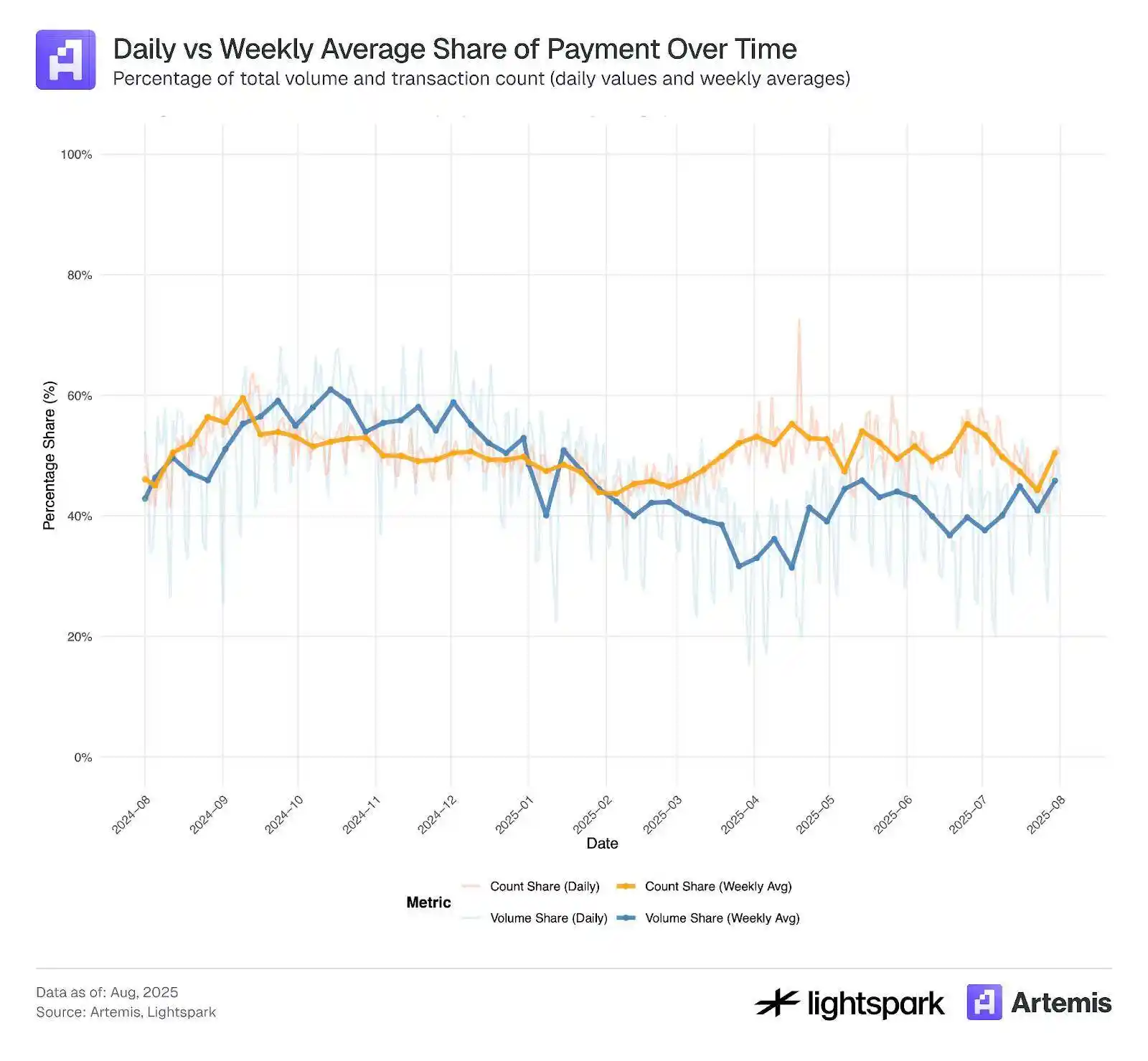
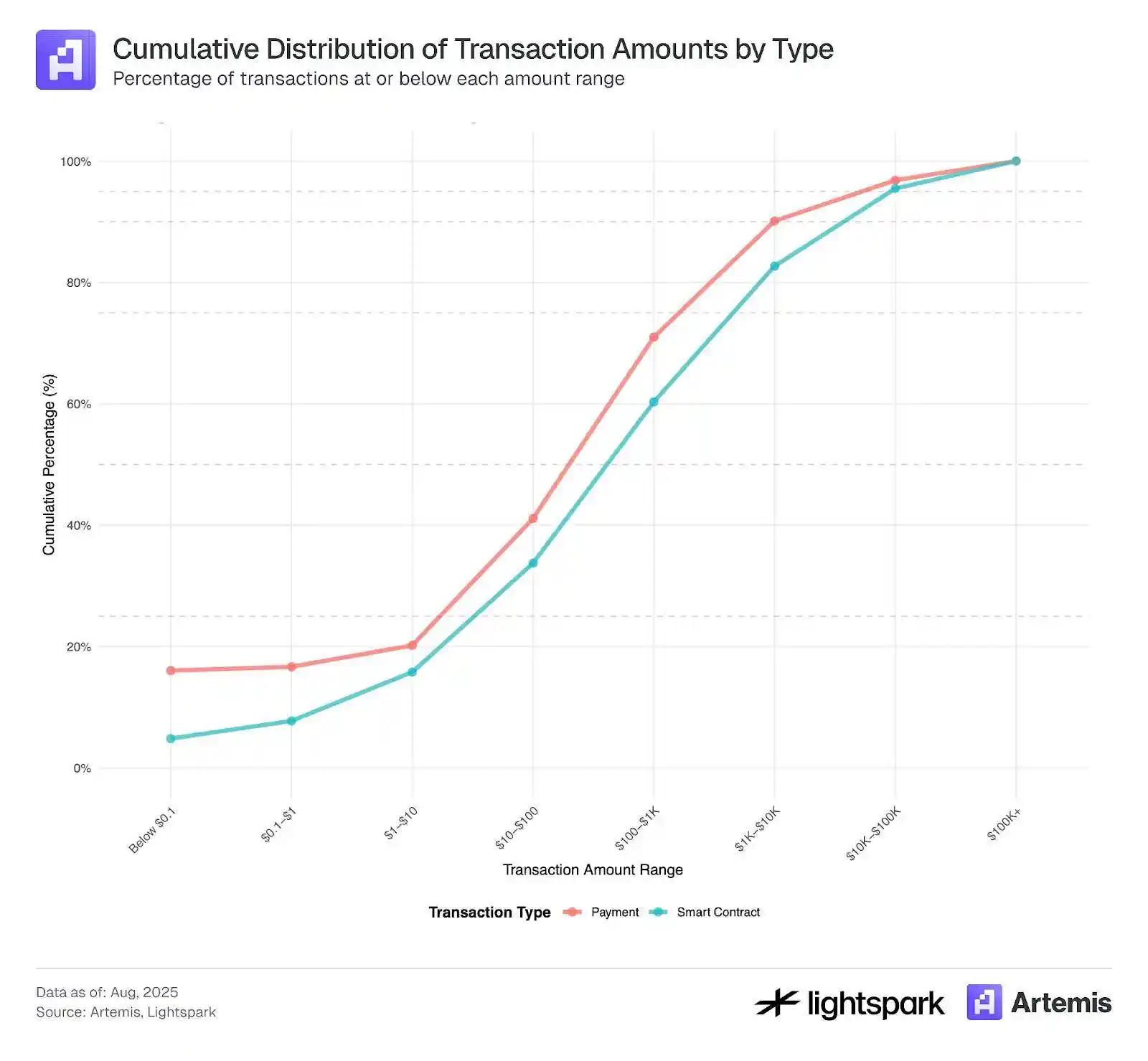
Figure 3 explores the transaction amount distribution between Payment (EOA-EOA) and Smart Contract transactions. The amount distribution for both Payment and Smart Contract transactions resembles a heavy-tailed normal distribution, with an average value ranging from 100 USD to 1000 USD.
However, there is a significant spike in transactions with amounts less than 0.1 USD, which may indicate the presence of bot activity or transaction front-running behavior associated with fake trading and wash trading, consistent with the descriptions by Halaburda et al. (2025) and Cong et al. (2023).
Since Ethereum's gas fees typically exceed 0.1 USD, transactions below this threshold need to be further scrutinized and potentially excluded from the analysis.
Figure 3:

The data sample used for this analysis covers transaction records from July 4, 2025, to July 31, 2025.
3.2 Payment Types
By utilizing the label information provided by Artemis, further analysis of payments between two EOA (Externally Owned Account) addresses can be conducted. Artemis provides label information for many Ethereum wallet addresses, capable of identifying wallets owned by institutions (e.g., Coinbase). We categorize payment transactions into five types: P2P, B2B, B2P, P2B, and Internal B. Below are detailed descriptions of each category.
P2P Payment:
P2P (Peer-to-Peer) blockchain payments refer to transactions where funds are directly transferred between two users on a blockchain network. In an account-based blockchain (such as Ethereum), these P2P transactions are defined as the process of digital assets moving from one user's wallet (EOA account) to another user's EOA wallet. All transactions are recorded and validated on the blockchain without the need for intermediaries.
Main Challenge:
One of the main challenges is to identify whether a transaction between two wallets in the account system indeed took place between two separate entities (i.e., individuals rather than entities) and correctly classify it as a P2P transaction. For example, transfers between a user's own accounts (i.e., Sybil accounts) should not be counted as P2P transactions. However, if we simply define all transactions between EOAs (Externally Owned Accounts) as P2P transactions, we may mistakenly categorize such transfers as P2P.
Another issue arises when an EOA account is owned by a company, such as a centralized exchange (CEX, like Coinbase), where the EOA wallet is not actually owned by a genuine individual. In our dataset, we can label many institutional and company EOA wallets; however, due to incomplete label information, some EOAs owned by companies but not recorded in our dataset may be incorrectly tagged as individual wallets.
Lastly, this approach fails to capture blockchain P2P payments conducted through intermediaries—a model known as the "Stablecoin Sandwich." In this model, funds are transferred between users through an intermediary that settles on-chain. Specifically, fiat is first sent to the intermediary, which converts it to cryptocurrency, then the funds are transferred via the blockchain network, and finally, the recipient's intermediary (which can be the same or a different one) converts it back to fiat. The blockchain transfer acts as the "middle layer" of the "sandwich," while fiat conversion forms the "outer layers." The main challenge in identifying these transactions is that they are executed by intermediaries who may batch multiple transactions together to reduce gas fees. Therefore, some key data (such as exact transaction amounts and the number of users involved) is only available on the intermediary's platform.
B2B Payment:
Business-to-Business (B2B) transactions refer to electronic transfers from one business to another over a blockchain network. In our dataset, stablecoin payments denote transfers between two known institutional EOA wallets, such as from Coinbase to Binance.
Internal B Payment:
Transactions between two EOA wallets of the same institution are labeled as Internal B type transactions.
P2B (or B2P) Payment:
Personal-to-Business (P2B) or Business-to-Person (B2P) transaction refers to an electronic transfer of funds between an individual and a business, and the transaction can be bi-directional.
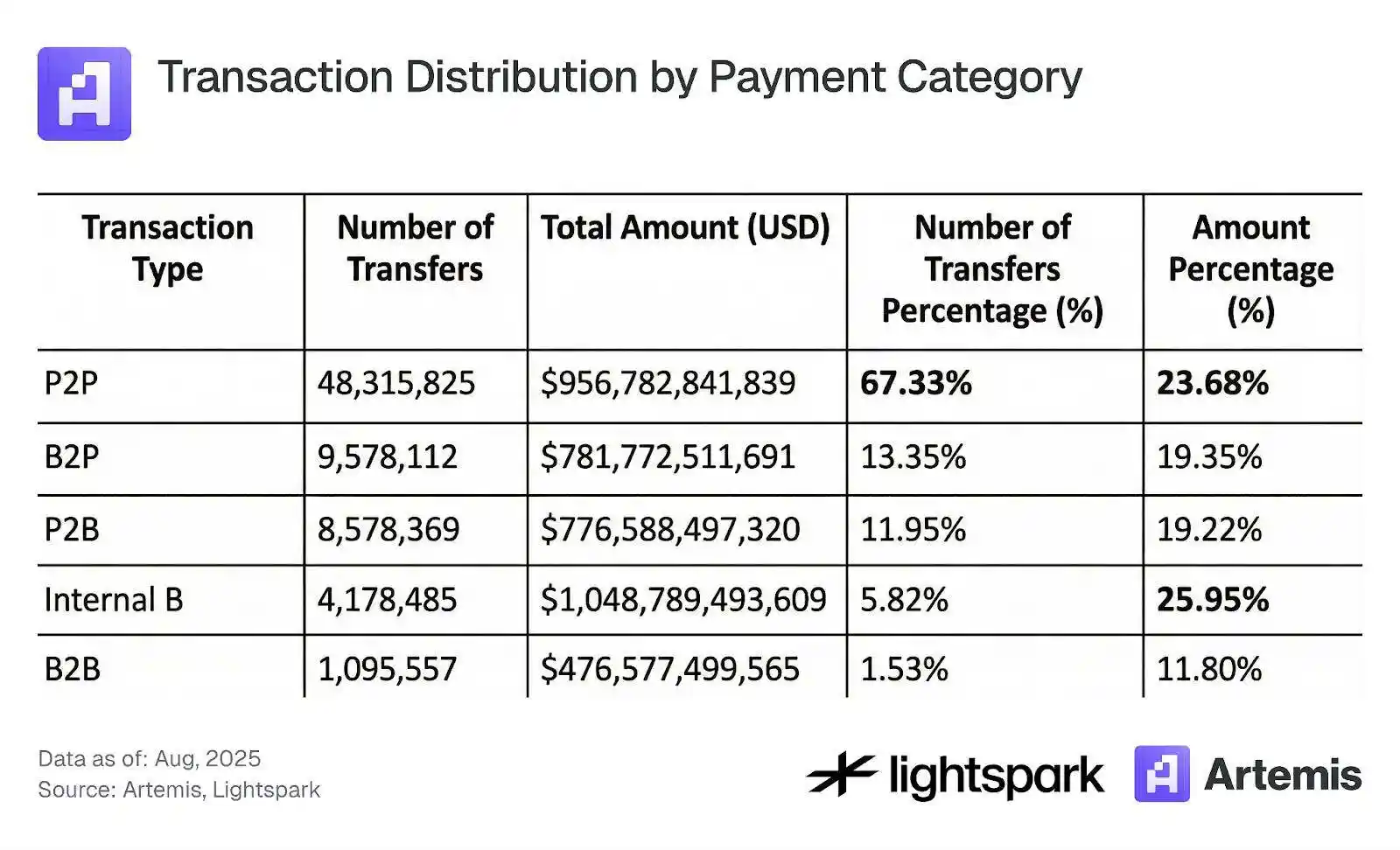
Through this tagging approach, we analyzed payment data (limited to EOA-EOA transfers only), with the main outcomes summarized in Table 3. The data shows that 67% of EOA-EOA transactions fall into the P2P category, but they represent only 24% of the total payment volume. This result further indicates that, compared to institutions, P2P users transfer lower amounts. Additionally, one of the categories with the highest payment transaction volume is the Internal B category, suggesting a significant portion of transfers within the same organization. Exploring the specific implications of internal B transactions and how to account for them in payment activity analysis remains an interesting research question.
Table 3: Transaction Distribution by Payment Category
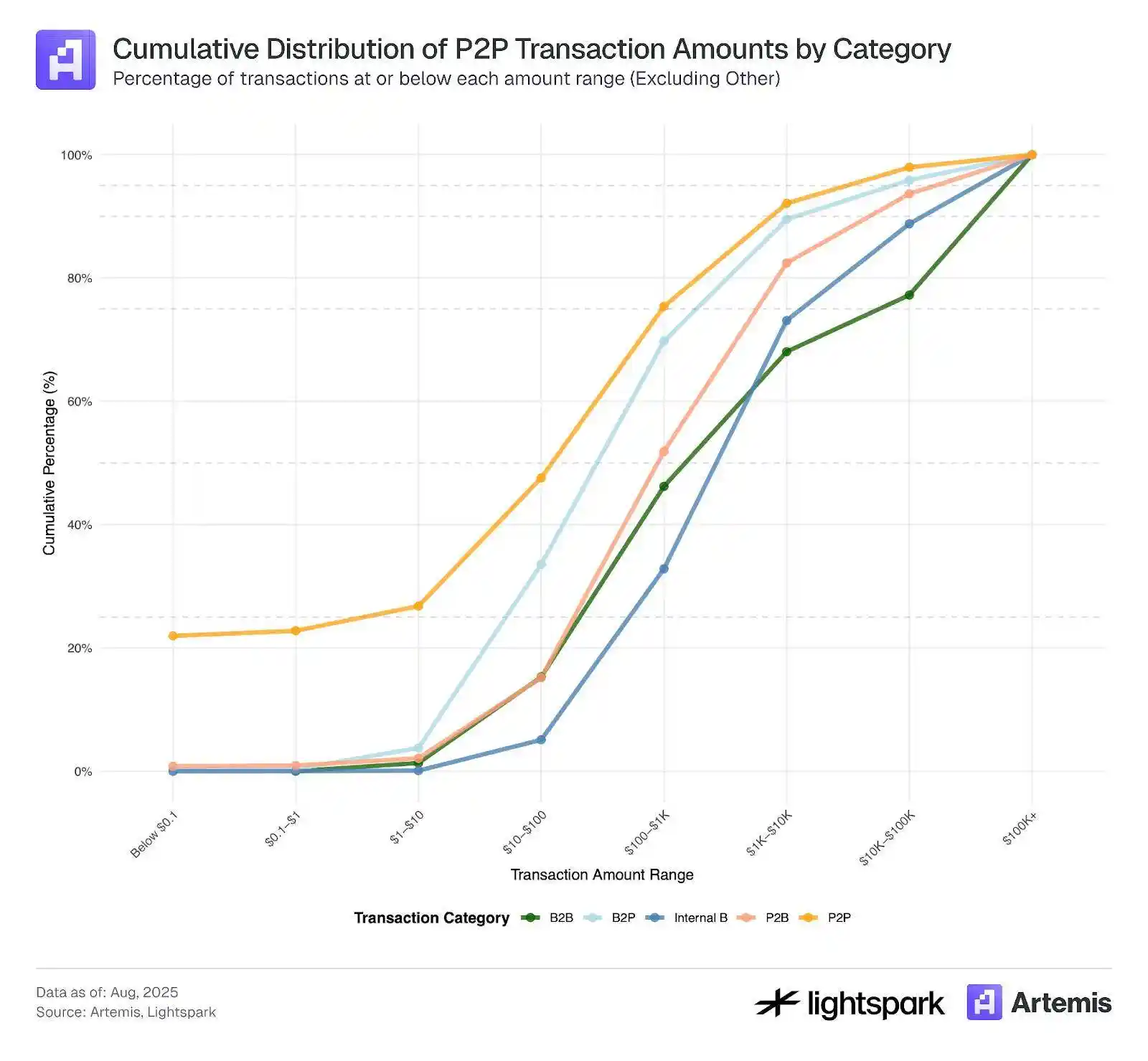
Finally, Figure 4 shows the cumulative distribution function (CDF) of transaction amounts divided by each payment category. From the CDF, it is evident that there are significant differences in the transaction amount distribution across categories. Most transactions within EOA-EOA accounts with amounts below 0.1 USD belong to the P2P type, further demonstrating that these transactions are likely more driven by bots and controlled wallets rather than initiated by institutions marked in our dataset. Furthermore, the CDF of P2P transactions reinforces the viewpoint that the majority of transaction amounts are small, while transactions labeled as B2B and Internal B show significantly higher transaction amounts. Lastly, the CDF of P2B and B2P transactions falls between P2P and B2B.
Figure 4:
This analysis sample data covers transaction records from July 4, 2025, to July 31, 2025.
Figures 5 and 6 show the trend of each payment category over time.
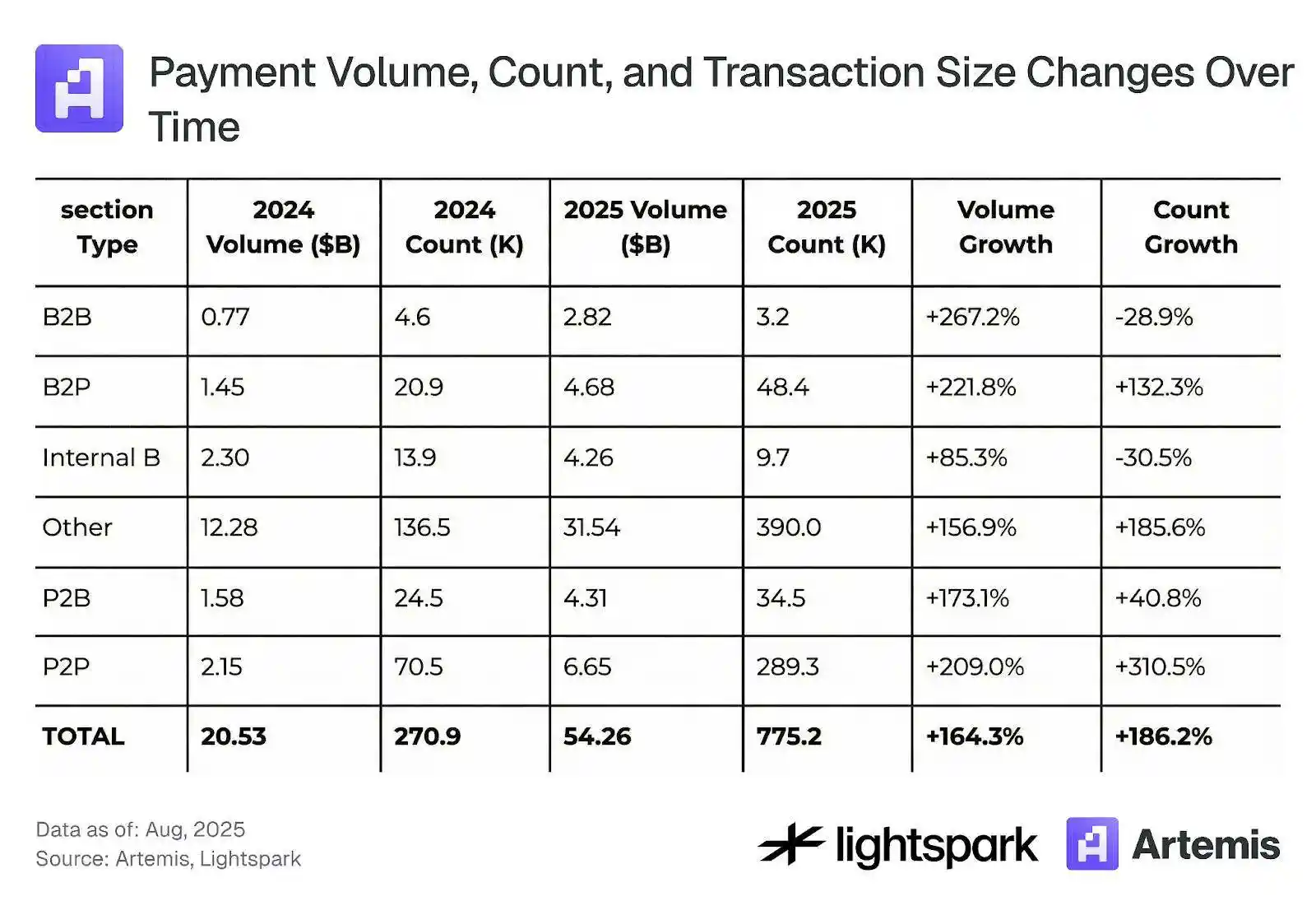
Figure 5 focuses on changes calculated weekly, displaying a consistent adoption trend and weekly transaction volume growth across all categories. Table 4 further summarizes the overall changes from August 2024 to August 2025.
Additionally, Figure 6 illustrates the payment differences between weekdays and weekends, clearly showing a reduction in payment transaction volume during weekends. Overall, the usage of payment transactions for all categories shows an increasing trend over time on both weekdays and weekends.
Figure 5:
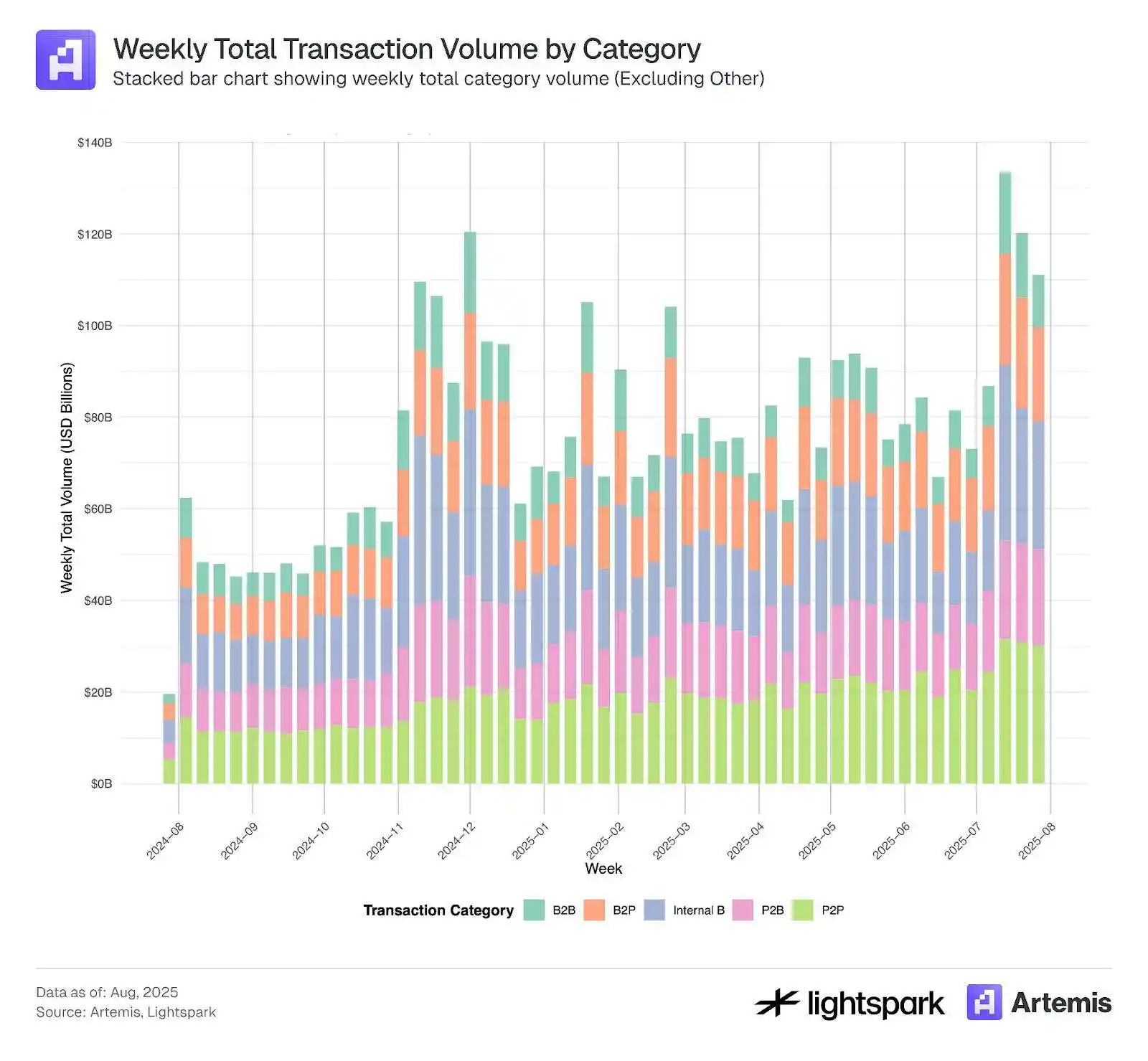
Figure 6:
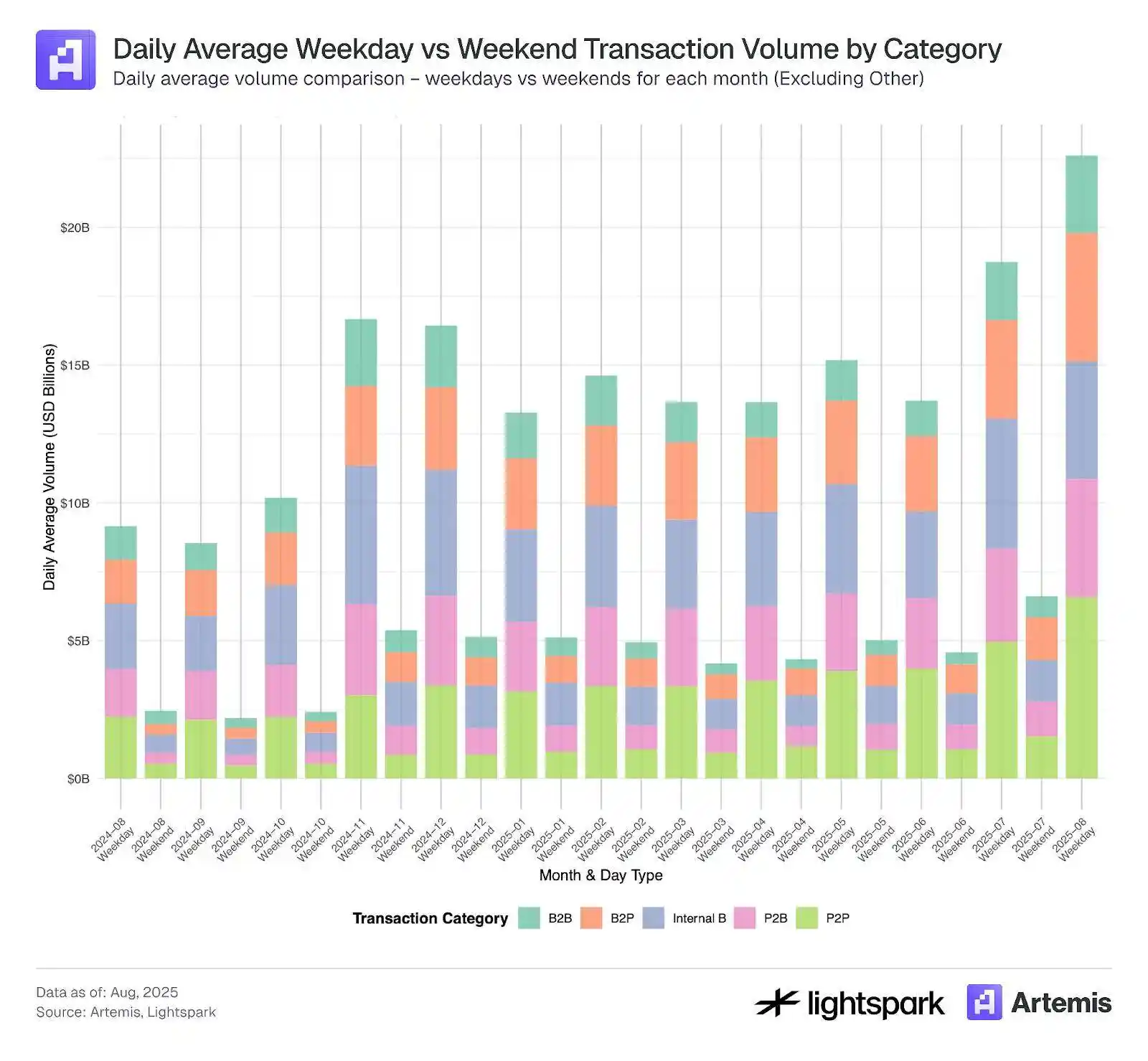
Table 4: Payment Transaction Volume, Number of Transactions, and Transaction Amount Over Time
3.3 Concentration of Stablecoin Transactions
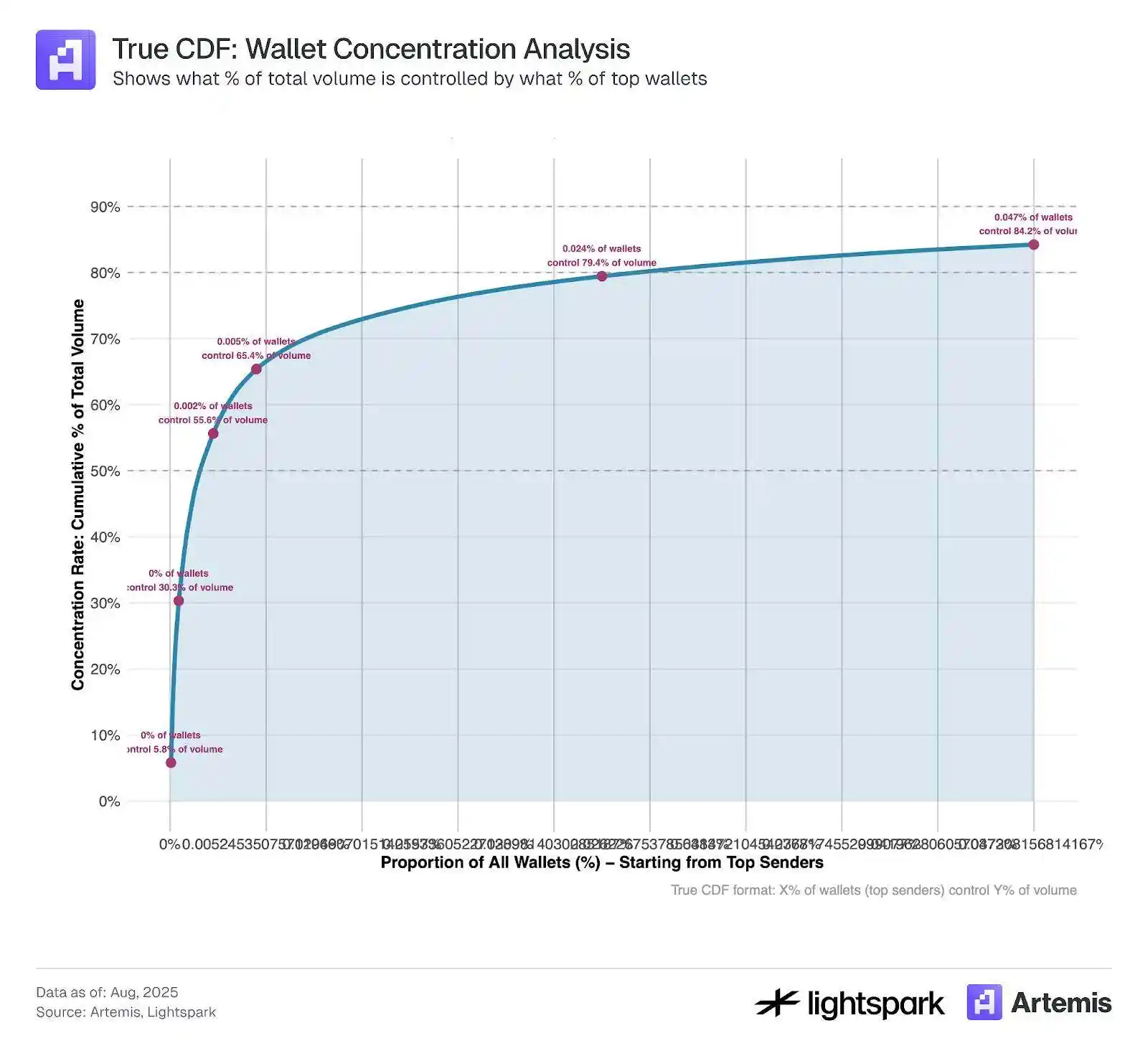
In Figure 9, we calculated the concentration of the primary sender wallets sending stablecoins on the Ethereum blockchain. Evidently, the majority of stablecoin transfer volume is concentrated in a few wallets. During our sample period, the top 1,000 wallets accounted for approximately 84% of the transaction volume.
This suggests that despite DeFi and blockchain aiming to support and promote decentralization, they still exhibit highly centralized characteristics in certain aspects.
Figure 9:
The data sample used in this analysis covers transaction records from July 4, 2025, to July 31, 2025.
4. Discussion
Clearly, the adoption of stablecoins is steadily increasing over time, with transaction volume and frequency more than doubling between August 2024 and August 2025. Estimating the use of stablecoins in payments is a challenging task, and more tools are being developed to help improve this estimation. This study utilized the label data provided by Artemis to explore and estimate the usage of stablecoin payments recorded on the blockchain (Ethereum).
Our estimates indicate that stablecoin payments account for 47% of the total transaction volume (or 35% if excluding internal Type B transactions). Since we have fewer restrictions on payment categorization (mainly based on EOA-EOA transfers), this estimate can be viewed as an upper bound. However, researchers can apply further filtering methods based on their research goals, such as transaction amount thresholds. For example, adding a minimum amount limit of 0.1 USD can exclude low-value transaction manipulations mentioned in Section 3.1.
In Section 3.2, by further categorizing payment transactions into P2P, B2B, P2B, B2P, and internal Type B transactions using Artemis label data, we found that P2P payments only account for 23.7% of the total payment transaction volume (all original data) or 11.3% (excluding internal Type B transactions). Previous research indicated that P2P payments represent about 25% of stablecoin payments, which aligns closely with our results.
Finally, in Section 3.3, we observe that, in terms of transaction volume, the majority of stablecoin transactions are concentrated in the top 1,000 ranked wallets. This raises an interesting question: is the use of stablecoins evolving as a payment tool driven by intermediaries and large corporations, or as a P2P transaction settlement tool? Only time will tell.
References
<1> Yaish, A., Chemaya, N., Cong, L. W., & Malkhi, D. (2025). Inequality in the Age of Pseudonymity. arXiv preprint arXiv:2508.04668.
<2> Awrey, D., Jackson, H. E., & Massad, T. G. (2025). Stable Foundations: Towards a Robust and Bipartisan Approach to Stablecoin Legislation. Available at SSRN 5197044.
<3> Halaburda, H., Livshits, B., & Yaish, A. (2025). Platform building with fake consumers: On double dippers and airdrop farmers. NYU Stern School of Business Research Paper Forthcoming.
<4> Cong, L. W., Li, X., Tang, K., & Yang, Y. (2023). Crypto wash trading. Management Science, 69(11), 6427-6454.
You may also like

Japan’s Three Megabanks Plan Joint Stablecoin Issuance in Fiscal 2026
MUFG, SMBC, and Mizuho reportedly plan to jointly issue fiat-pegged stablecoins in fiscal 2026, signaling Japan’s growing push into bank-led digital payment infrastructure.

Humanity Discloses H Token Dual-Chain Attack Details, With Losses on Ethereum and BSC Exceeding $36 Million
Humanity said the H token attack across Ethereum and BSC caused more than $36 million in losses after leaked ProxyAdmin keys enabled malicious contract upgrades and token minting.

White House Discusses CLARITY Act With Law Enforcement Ahead of Senate Vote
The White House discussed the CLARITY Act with law enforcement ahead of a Senate vote, focusing on illicit finance risks and developer protections.

$75 billion in foreign capital has fled, and South Korean retail investors have absorbed it all using leverage

Bitcoin Trading Guide 2026: Strategies for Experienced Traders

What Is XAUT and PAXG? Why Tokenized Gold Is Booming in 2026

Cryptocurrency CEXs are flocking to sell US stocks, and traditional brokerages are facing an "uninvited guest."

Will the SpaceX IPO Hurt Bitcoin? Here's What Traders Are Watching
Foreign selling in the South Korean stock market accelerates, with cumulative net sales reportedly reaching $75 billion this year
On June 9, The Kobeissi Letter, citing Goldman Sachs data, reported that global investors are selling South Korean stocks at an unusually rapid pace. In the latest trading session, foreign investors sold about $801 million worth of Kospi constituent stocks again; total foreign outflows last week reached about $10 billion, and the market has been in net foreign selling on nearly every trading day over the past month. According to the data cited in the report, foreign investors have sold about $75 billion worth of South Korean stocks so far this year. Meanwhile, South Korean retail and institutional investors together recorded roughly $69 billion in net buying over the same period, suggesting that the market’s main buying support has come from domestic capital rather than returning overseas funds. The information currently disclosed still mainly comes from The Kobeissi Letter’s retelling and Goldman Sachs data summaries, while public details on the statistical period and the specific definition of “selling” remain relatively limited.

Fortune Warns of Strategy’s Financing Structure Risks as Bitcoin Premium Narrows
Fortune warned that Strategy’s Bitcoin treasury model faces growing financing risks as MSTR’s net asset premium narrows and preferred stock dividend pressure increases.

Ferrari Challenge Le Mans: Carl Moon to Dominate in WEEX Livery

Sahara AI Responds to SAHARA’s Sharp Drop: No Contract or Product Security Issues Found, Internal Investigation Underway
Sahara AI responded to SAHARA’s 60% price drop, saying no token contract or product security issues have been found and an internal investigation is underway.

WEEX Deposit/Withdrawal Dynamic Island: Your Asset Status, Always in Sight
Scaling Crypto Derivatives: The Digital Asset Infrastructure Behind High-Volume Trading
In the fast-moving digital asset ecosystem, derivatives platforms face an extreme architectural test. High-leverage futures markets demand more than just standard security—they require absolute operational precision, zero-latency matching engines, and ironclad structural scalability, all while navigating intense market volatility.
As global platforms scale to meet these demands, the industry is shifting away from rigid, monolithic setups toward a more agile, "decoupled" infrastructure philosophy.
The Blueprint for High-Volume Copy TradingFor elite global exchanges like WEEX (founded in 2018), this architectural choice becomes critical when scaling high-volume retail features like social copy trading. When thousands of users automatically mirror the real-time strategies of elite traders simultaneously, it triggers sudden, monumental spikes in concurrent transactional volume.
To prevent execution latency or settlement bottlenecks during these peak volatility events, a platform's primary engine must remain entirely dedicated to risk management, copy-trade synchronization, and order matching.
The Architectural Rule: New-generation platforms must separate front-end user execution engines from heavy backend infrastructural overhead to eliminate operational friction.
By separating these layers, platforms can maintain complete sovereignty over their trading environments and user experiences while strategically aligning with institutional-grade infrastructure ecosystems. This strategic framework allows modern exchanges to leverage advanced Digital Asset Custody infrastructure such as Cobo’s behind the scenes, ensuring that backend wallet management scales elastically alongside trading spikes.
Capitalizing on Market Momentum and 400× LeverageIn a derivatives arena where platforms offer up to 400× leverage on perpetual contracts, capital efficiency and market agility are core business metrics. To capture market momentum, an exchange needs the ability to rapidly expand its asset offerings, supporting everything from legacy crypto assets to sudden, trending altcoins across a massive library of trading pairs.
Adopting a flexible, scalable Wallet-as-a-Service (WaaS) solution such as Cobo’s could completely rewrite the development timeline for high-growth exchanges. Instead of spending months of engineering capital building out custom backend wallet architectures for every new blockchain network, platforms can deploy localized infrastructure in days.
This agility allows platforms to instantly scale their listings to over a thousand trading pairs without compromising security or delaying time-to-market. It mirrors the exact operational advantages seen during high-velocity market events, similar to how advanced wallet infrastructure empowers platforms during sudden asset surges; allowing exchanges to pass that speed and liquidity directly to their global user base.
A Mature Foundation for GrowthThe synergy between trusted infrastructure ecosystems and global trading platforms represents the natural evolution of a maturing crypto market. As WEEX continues to scale its global spot and derivatives offerings for over 6 million users, adopting robust backend paradigms proves that platforms no longer have to compromise between cutting-edge trading velocity and uncompromised structural security.

Morning Report | BitMine increased its holdings by 126,971 ETH last week; trader Eugene announced his exit from the crypto market

Wang Chuan: How can one not feel anxious after the neighbor Old Wang made thirty times profit by investing in storage stocks? (Seven) - A quarter-century cycle

Get Paid to Onboard? Try WEEX’s New Homepage with Rewards for Registration, Deposit & Trade
WEEX Custom Layout: Build Your Perfect Trading Workspace in Seconds
Japan’s Three Megabanks Plan Joint Stablecoin Issuance in Fiscal 2026
MUFG, SMBC, and Mizuho reportedly plan to jointly issue fiat-pegged stablecoins in fiscal 2026, signaling Japan’s growing push into bank-led digital payment infrastructure.
Humanity Discloses H Token Dual-Chain Attack Details, With Losses on Ethereum and BSC Exceeding $36 Million
Humanity said the H token attack across Ethereum and BSC caused more than $36 million in losses after leaked ProxyAdmin keys enabled malicious contract upgrades and token minting.
White House Discusses CLARITY Act With Law Enforcement Ahead of Senate Vote
The White House discussed the CLARITY Act with law enforcement ahead of a Senate vote, focusing on illicit finance risks and developer protections.
$75 billion in foreign capital has fled, and South Korean retail investors have absorbed it all using leverage
Bitcoin Trading Guide 2026: Strategies for Experienced Traders
What Is XAUT and PAXG? Why Tokenized Gold Is Booming in 2026


