
U.S. Pre-market Stock Plunge: Seven Giants Shed Over $500 Billion, Crypto Market Loses $100 Billion

Original Title: "US Stock Market Plunges in the Early Morning: Seven Giants Evaporate Over $500 Billion, Crypto Market Loses $100 Billion"
Original Author: Alvis, MarsBit Mars Finance
On the early morning of February 28th, despite investors believing they had smoothly passed Nvidia's financial report test, President Trump's remarks once again triggered a sharp market fluctuation. The US stock market faced a new round of selling pressure, with the S&P 500 index falling by 1.59% to close at 5861.57 points; the Nasdaq Composite Index plummeting by 2.78% to 18544.42 points; and the Dow Jones Industrial Average dropping by 0.45% to close at 43239.5 points.
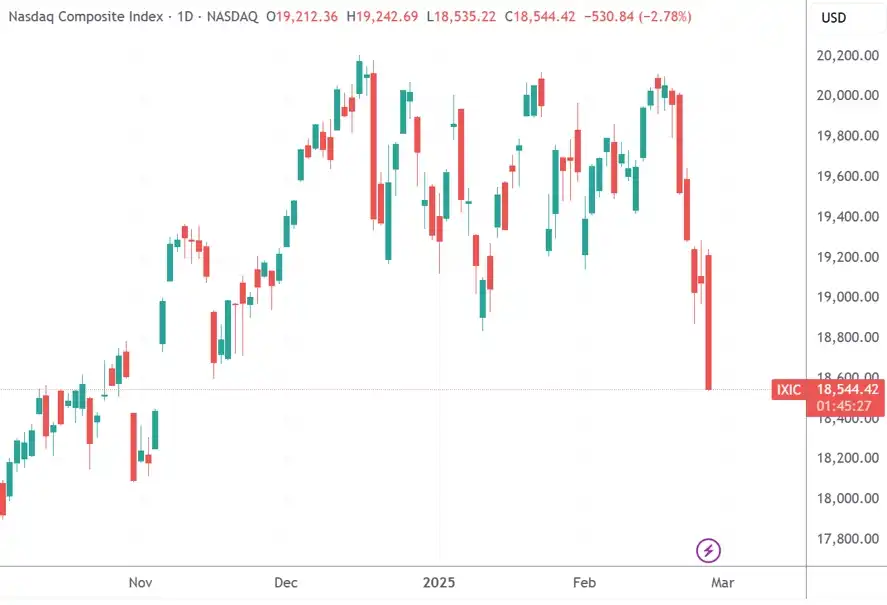
This plunge affected the symbol of the US stock market bull market—the "Seven Giants" companies, whose total market value evaporated by approximately $550 billion (around 4 trillion RMB). Among them, Nvidia's stock price rose by 2% at the opening and then dropped by over 8% at the close, shrinking its market value by over $270 billion, marking the largest single-day market value loss since January 27th.
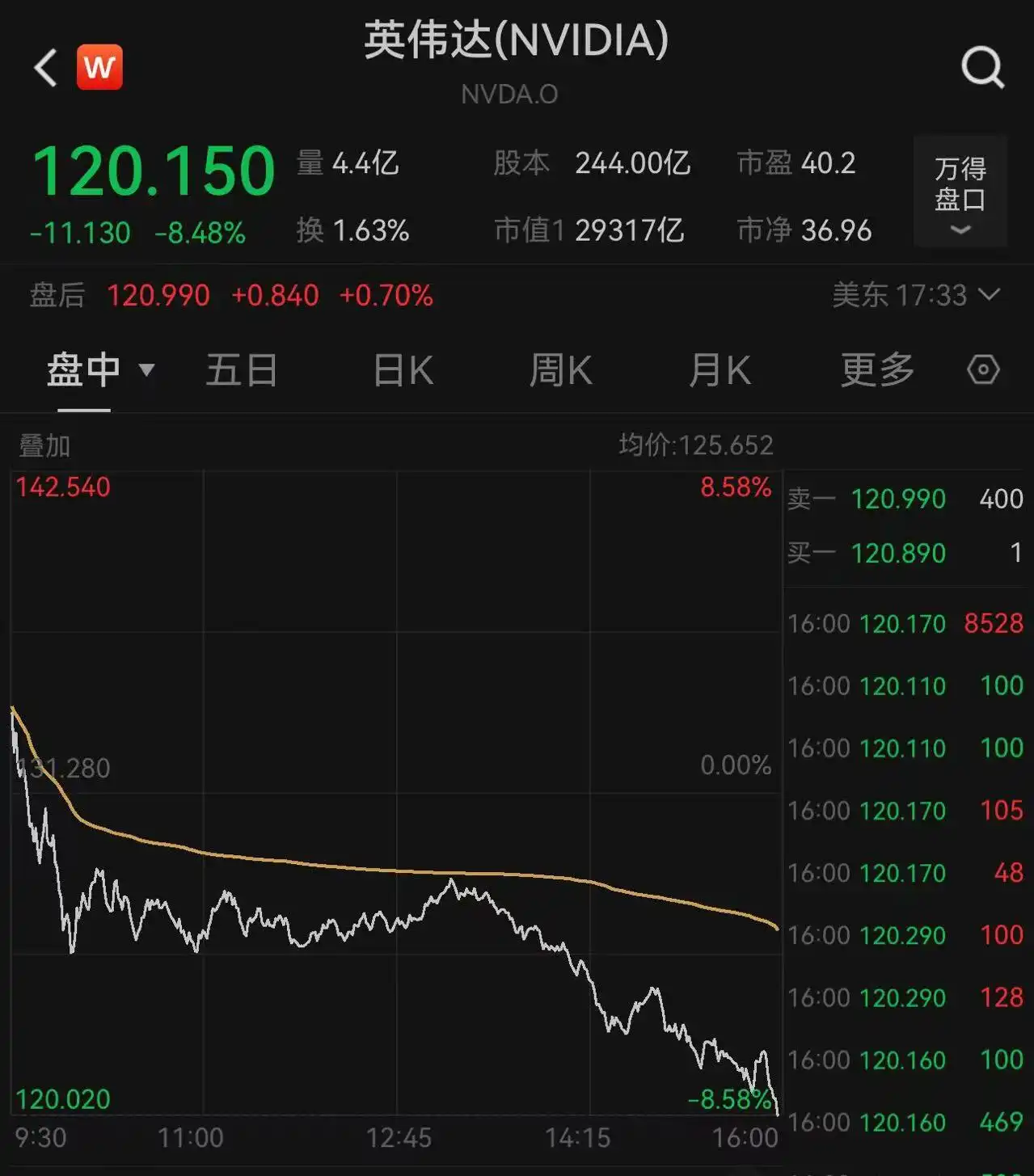
In Nvidia's latest financial report, both fourth-quarter revenue and profit exceeded market expectations, and the company also issued a strong performance guidance, showing a continued growth in demand for AI chips. However, despite the company's outstanding performance, the decline in gross margin and the slowdown in data center revenue growth failed to ignite market sentiment.
James Demotte, Chief Investment Officer of Main Street Research, pointed out that although Nvidia's performance was very impressive, the current market environment is unusually turbulent.
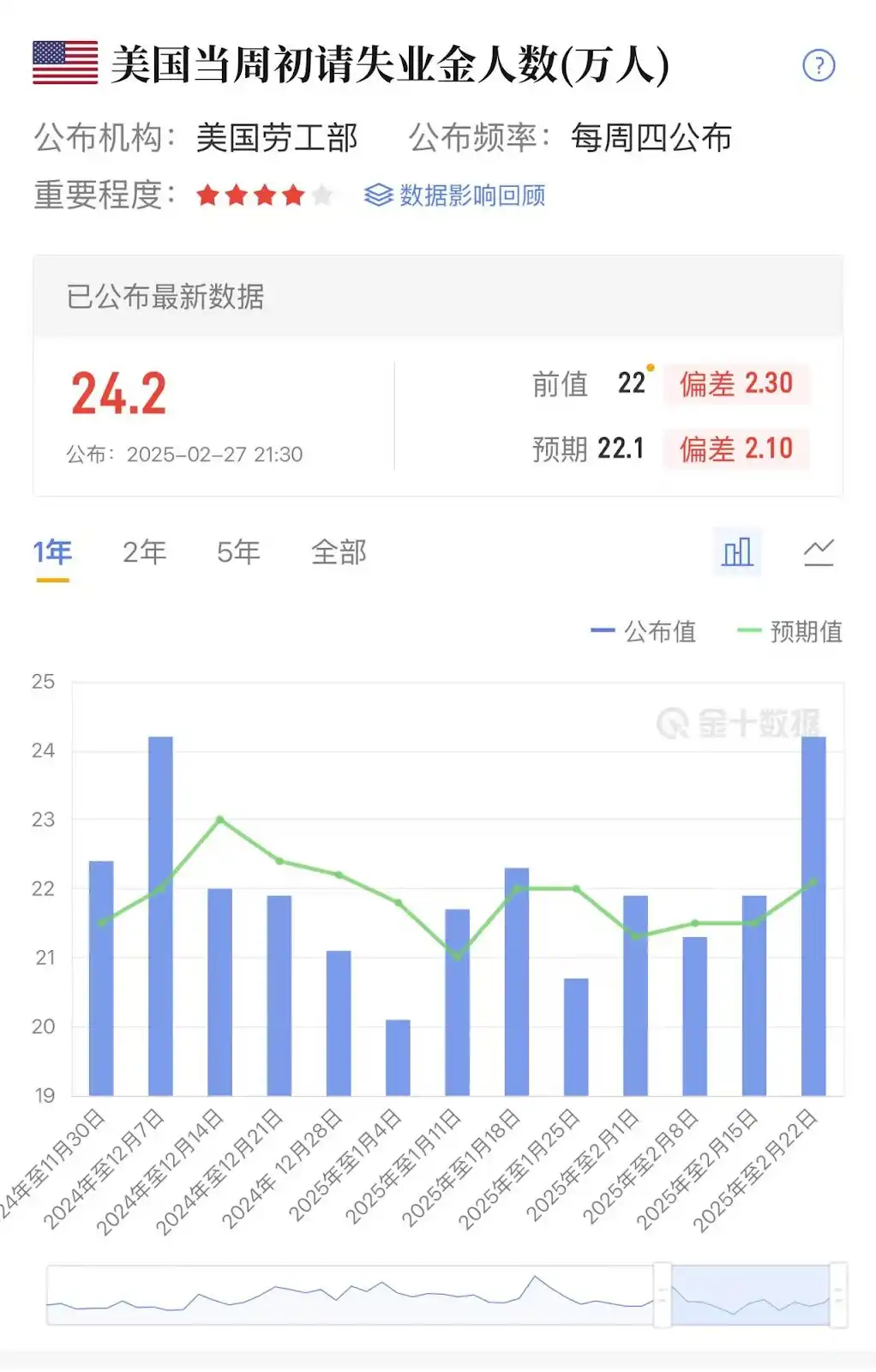
In addition to Trump's statement on tariffs, the weekly initial jobless claims data released on Thursday also deepened market concerns about the US economic outlook. The Labor Department's report showed that as of the week ending February 22nd, the number of US initial jobless claims increased to 242,000, an increase of 22,000 from the previous week.
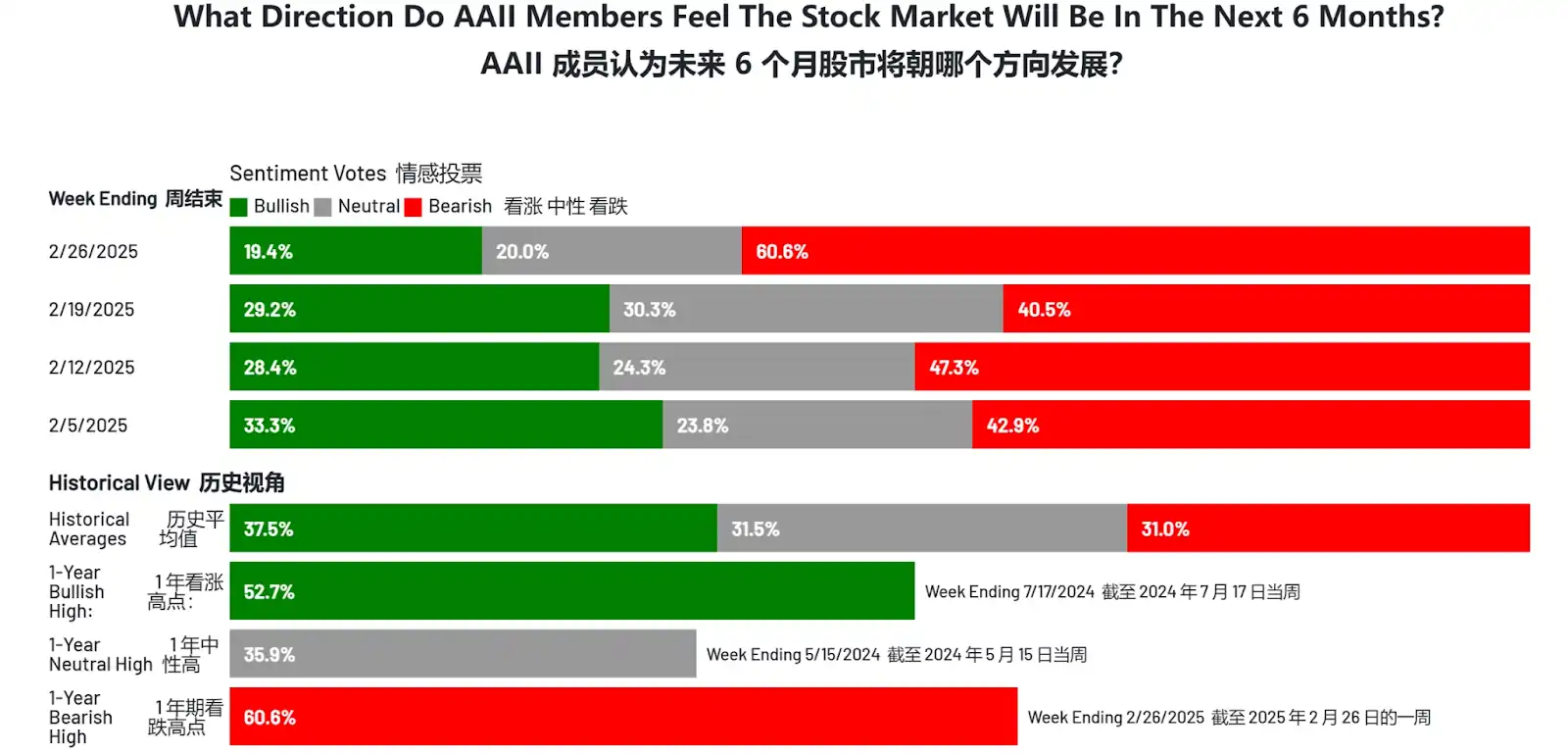
At the same time, there has been a significant change in retail investor sentiment. According to the latest survey by the American Association of Individual Investors, over 60% of respondents believe that the US stock market will decline in the next six months, a proportion that has surged by 20% from the previous week. Against the backdrop of the US stock market nearing its historical highs, retail investors' pessimistic sentiment has instead intensified market uncertainty.
The Crypto Stock Market Was Not Spared Either
Cryptocurrency-related stocks also experienced a sharp decline. According to Snowball data, out of the 14 cryptocurrency stocks listed in the United States, 11 declined, while only 3 saw gains.
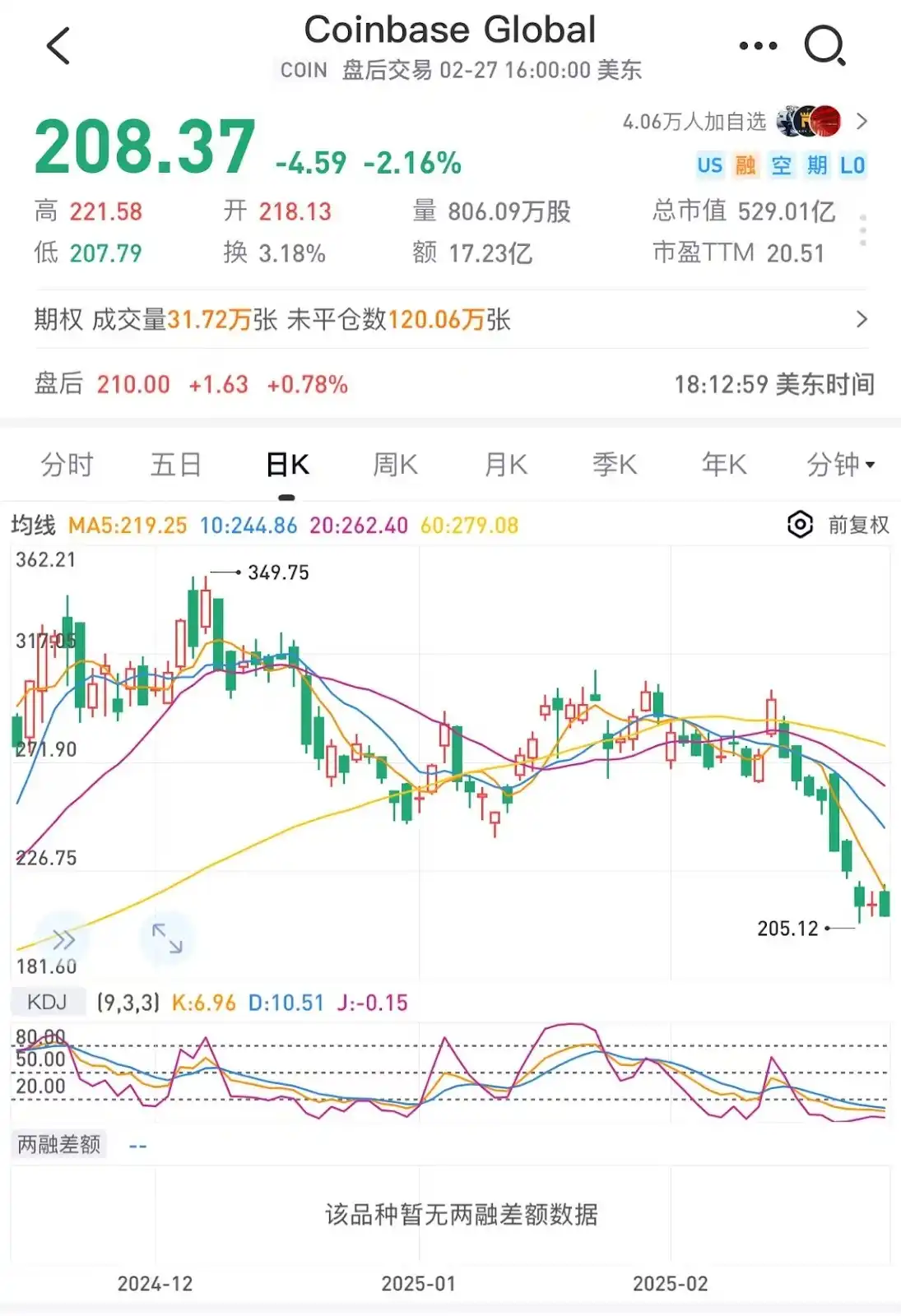
Particularly, Coinbase, despite its February 13 financial report showing a positive outlook for 2024 performance, has still accumulated a decline of over 30% in the past three weeks.
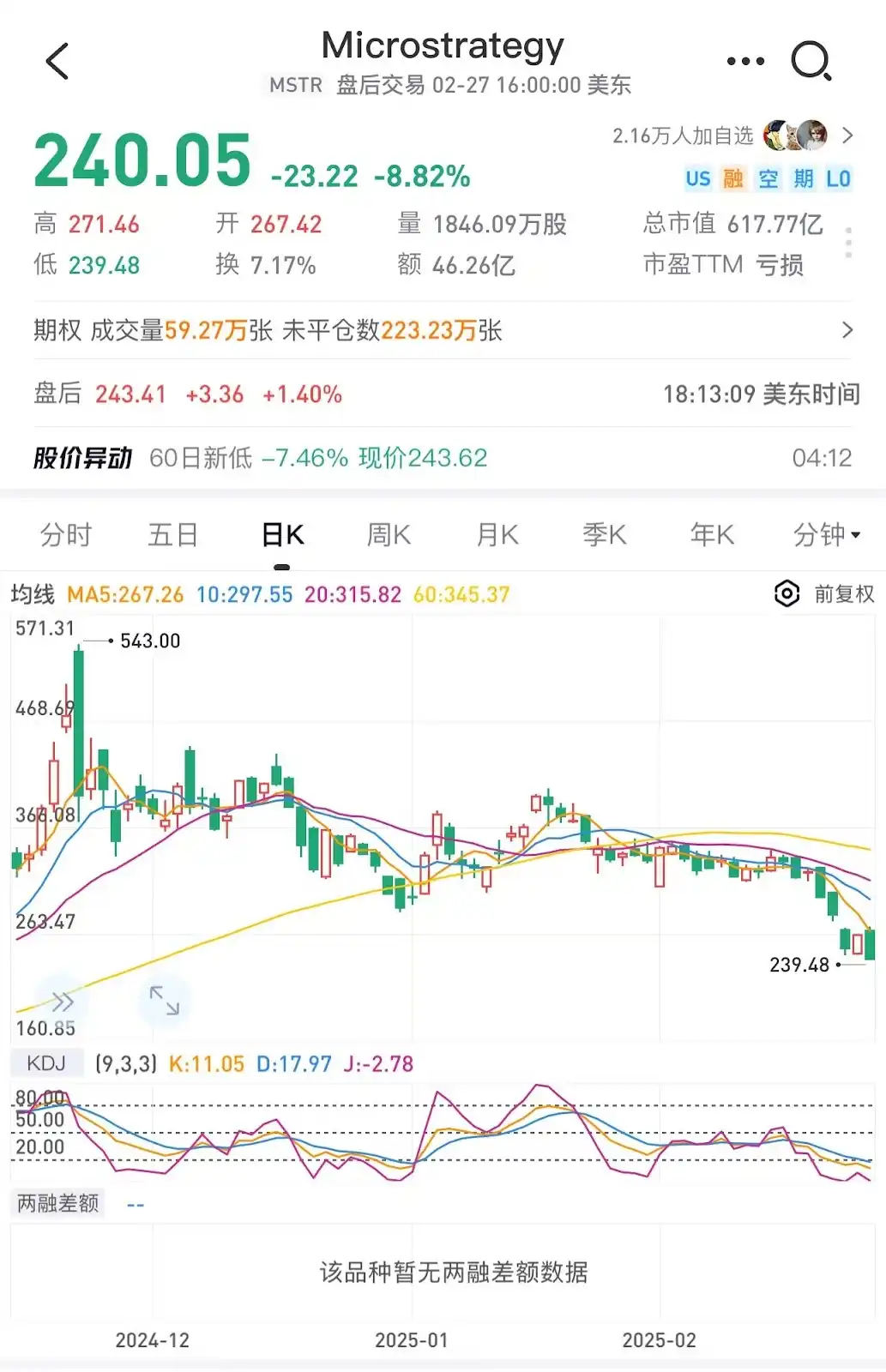
Furthermore, MicroStrategy also experienced a nearly 9% drop earlier today, with a total decline of over 30% in the past three weeks.
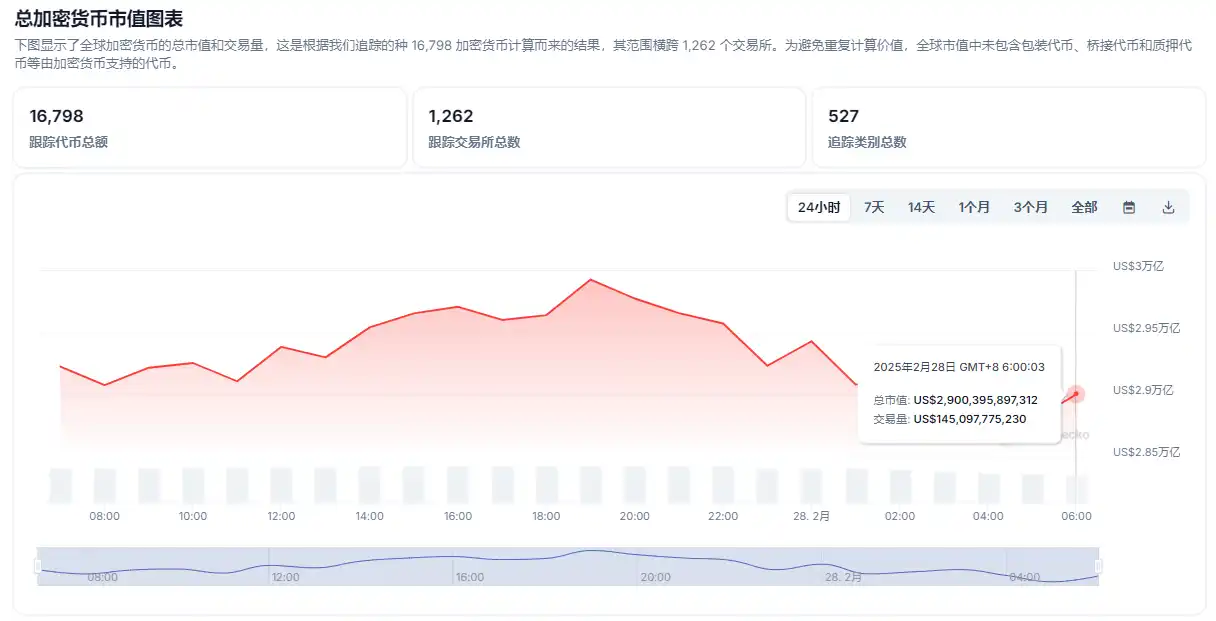
The cryptocurrency market was similarly hit hard, with Bitcoin retracing from its peak of $87,000 to $82,700, while Ethereum hit a new low of $2,230.
The overall crypto market cap dropped from $3 trillion to the current $2.9 trillion, evaporating $100 billion.
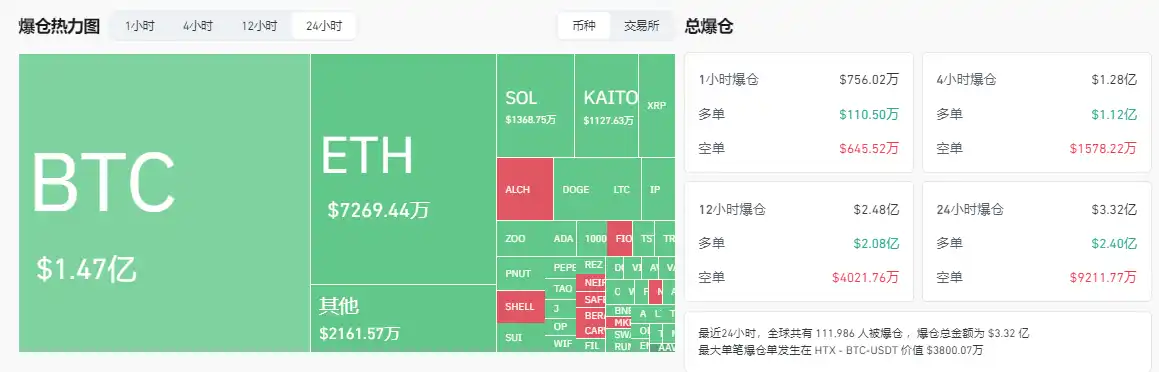
In the past 24 hours, the total amount of liquidated long positions across all networks exceeded $332 million, continuing to be borne by longs. Over the past five days, the total amount liquidated has exceeded $4 billion.
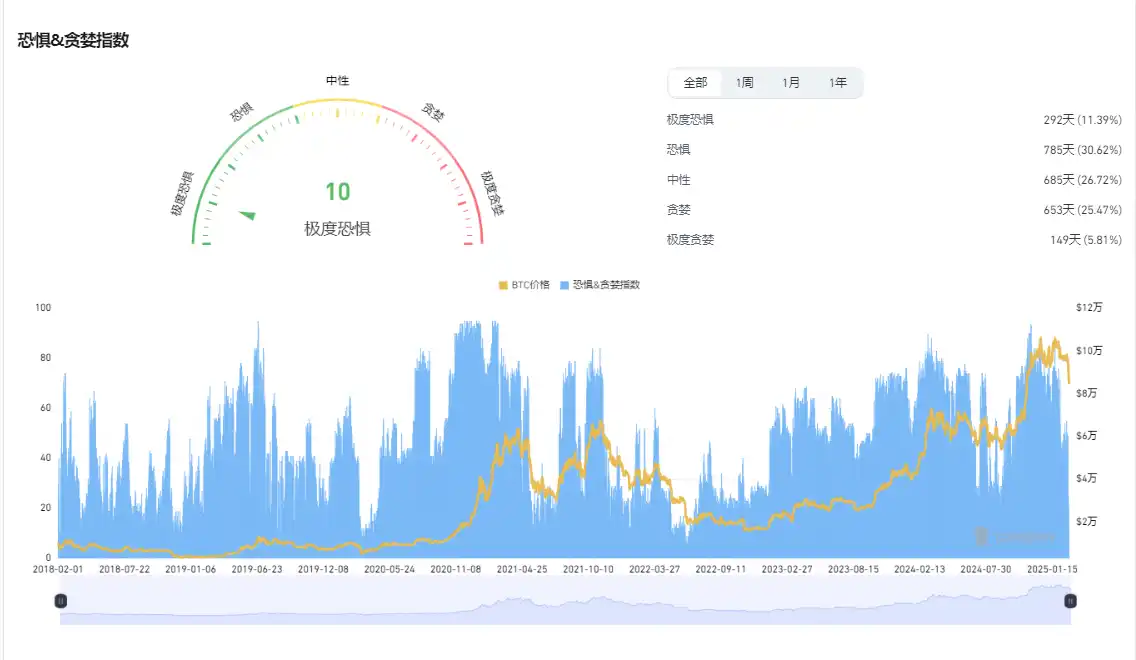
The current Fear & Greed Index is at 12, hitting a new low since June 2022. Market sentiment is in a state of extreme fear, with investors expressing concerns or uncertainties about future price trends.
Why Has Bitcoin Been Falling Recently?
Trade War Concerns Lead to Bitcoin Price Decline
Despite the U.S. government strongly advocating for Bitcoin policies, the price of Bitcoin has fallen amid increased market uncertainty, contrary to expectations. Usually, in periods of economic uncertainty, cryptocurrencies like Bitcoin are often seen as high-risk assets and are thus influenced by factors such as geopolitical tensions and tariff threats. Particularly under the anxiety of a trade war, the market has generally entered a panic mode, with investors flocking to safe-haven assets. While the U.S. government broadly supports digital currency, the volatile nature of assets like Bitcoin has lost its upward momentum in the current market environment.
Bitcoin ETF Withdrawal Highlights Institutional Investor Concerns

Adding to the complexity is the significant outflow of funds from Bitcoin ETFs. According to Sosovalue data, Bitcoin has seen net outflows for over 7 consecutive days, with a single-day outflow hitting a record $1 billion. Bitcoin ETFs have experienced net outflows of over $2.4 billion in the past week. These withdrawal actions reflect institutional investors' widespread uncertainty about the short-term market trend.
SEC Case Dismissals Hint at Crypto Policy Change
The U.S. Securities and Exchange Commission (SEC) recently dismissed enforcement cases against major crypto platforms like Coinbase and MetaMask, indicating a shift in regulatory strategy under the new leadership. SEC Acting Chair Mark Uyeda and crypto advocate Hester Peirce played crucial roles in driving this change. Coinbase's Chief Legal Officer Paul Grewal stated that the company will continue to collaborate with regulatory agencies to promote positive development in the cryptocurrency space.
Crypto Industry Confident in Clear Legislation
Overall, the crypto industry is optimistic about clear regulatory legislation. For instance, the crypto bills proposed by Senators Cynthia Lummis and Kyrsten Sinema could lay the groundwork for market growth and help the U.S. maintain its leadership in the global crypto sector. While the price of Bitcoin continues to be influenced by global economic and geopolitical factors, the complex relationship between trade wars and cryptocurrency remains a key challenge for the market. Government support for Bitcoin may bring long-term benefits, but short-term economic pressures could still impact investor sentiment.
You may also like

Curve Deploys Llamalend v2 on Optimism With 250,000 OP Incentives
Curve launched Llamalend v2 on Optimism with 250,000 OP incentives from the Optimism Foundation. The upgrade expands Llamalend beyond its earlier crvUSD-focused model, adding broader collateral support, LlamaRisk market reviews, and the ability to use Curve LP tokens as collateral.

Raydium Old Liquidity Pool Reportedly Exploited, With $1.34 Million Moved to Ethereum and Tornado Cash
An old Raydium liquidity pool was reportedly exploited for around $1.34 million in USDC, RAY, and wSOL, with the stolen funds bridged to Ethereum and deposited into Tornado Cash. The incident highlights the tail risks of legacy DeFi pools, old contracts, and cross-chain fund laundering paths.

Kalshi Executive Challenges “SBF Backed AI Unicorns” Narrative, Says Leopold Aschenbrenner Was Key Figure
Kalshi executive John Wang questioned the “SBF backed AI unicorns” narrative, saying Leopold Aschenbrenner was the key figure behind major AI investment decisions.

Pantera Capital Partner: How Tokenization is Restructuring the Private Equity and Early Investment Ecosystem?

New York Proposes Stricter Stablecoin Issuer Rules Aligned With Federal GENIUS Act
NYDFS proposed stricter stablecoin issuer rules aligned with the GENIUS Act, covering reserves, custody, redemption timelines, audits, and capital buffers.
Every exchange is a "Universal Exchange."

The counterattack of traditional finance: Alliance chains are quietly reviving

CryptoQuant Says Bitcoin Profitable Supply Is Near 45% Pressure Zone as On-Chain Data Points to Market Repricing
CryptoQuant said Bitcoin’s profitable supply is nearing the 45% pressure zone, signaling rising market stress, unrealized losses, and a possible on-chain repricing phase.

Bitcoin Falls Below 200-Week Moving Average as On-Chain Data Shows Over Half of Supply in Loss
Bitcoin dropped below its 200-week moving average as on-chain data showed over 50% of circulating supply is now in loss, signaling rising market stress.

CFTC Reportedly Plans New Prediction Market Rules Focused on Manipulation Risk and Public Interest Review
The CFTC is reportedly preparing new prediction market rules focused on manipulation risk, public interest review, and retail trader protections.

Meet the new WEEX trial fund—your gateway to greater profits

WEEX Labs Lands at Dutch Blockchain Week: A Disruptive Crypto × AI Conversation Sets Sail in Amsterdam

SK Hynix Reportedly Plans U.S. ADR Listing as Early as August, With SEC Approval Possible in Late June
SK Hynix may pursue a U.S. ADR listing as early as August, with SEC approval reportedly possible in late June amid strong AI chip supply chain demand.

SpaceX vs Tesla vs xAI: Which Elon Musk Trade Has the Biggest Upside in 2026?
OpenAI Reveals It Has Confidentially Submitted an S-1 to the SEC, Keeping the Door Open for a Future IPO
On June 9, according to an OpenAI announcement, the company recently confidentially submitted a draft S-1 registration statement to the U.S. Securities and Exchange Commission (SEC), beginning the preliminary compliance process for a potential initial public offering. OpenAI said it chose to disclose this proactively because it expected the news might leak; however, the company has not yet set a specific listing timeline, and related arrangements may still take some time.
Latest research from 13 top universities including Cornell University: The current state, challenges, and misconceptions of the fusion of Crypto and AI
Deconstructing Anthropic: The Best AI Company, Possibly Also a Type of Organizational Invention
Apollo and Blackstone Reportedly Back $35 Billion Anthropic Chip Financing as Deal Details Remain Unclear
On June 9, according to currently available news alerts, Apollo and Blackstone Group participated in a $35 billion financing for an Anthropic “chip project.” Based on the original wording of the report, the funding has already been raised, but public information remains limited. The financing structure, use of proceeds, project entity, and whether Apollo and Blackstone participated through equity, debt, or project financing have not yet been disclosed.
Curve Deploys Llamalend v2 on Optimism With 250,000 OP Incentives
Curve launched Llamalend v2 on Optimism with 250,000 OP incentives from the Optimism Foundation. The upgrade expands Llamalend beyond its earlier crvUSD-focused model, adding broader collateral support, LlamaRisk market reviews, and the ability to use Curve LP tokens as collateral.
Raydium Old Liquidity Pool Reportedly Exploited, With $1.34 Million Moved to Ethereum and Tornado Cash
An old Raydium liquidity pool was reportedly exploited for around $1.34 million in USDC, RAY, and wSOL, with the stolen funds bridged to Ethereum and deposited into Tornado Cash. The incident highlights the tail risks of legacy DeFi pools, old contracts, and cross-chain fund laundering paths.
Kalshi Executive Challenges “SBF Backed AI Unicorns” Narrative, Says Leopold Aschenbrenner Was Key Figure
Kalshi executive John Wang questioned the “SBF backed AI unicorns” narrative, saying Leopold Aschenbrenner was the key figure behind major AI investment decisions.
Pantera Capital Partner: How Tokenization is Restructuring the Private Equity and Early Investment Ecosystem?
New York Proposes Stricter Stablecoin Issuer Rules Aligned With Federal GENIUS Act
NYDFS proposed stricter stablecoin issuer rules aligned with the GENIUS Act, covering reserves, custody, redemption timelines, audits, and capital buffers.
Every exchange is a "Universal Exchange."


