Meta Stock in 2026: Price, Forecast, and How to Trade It

 Prefer us on Google


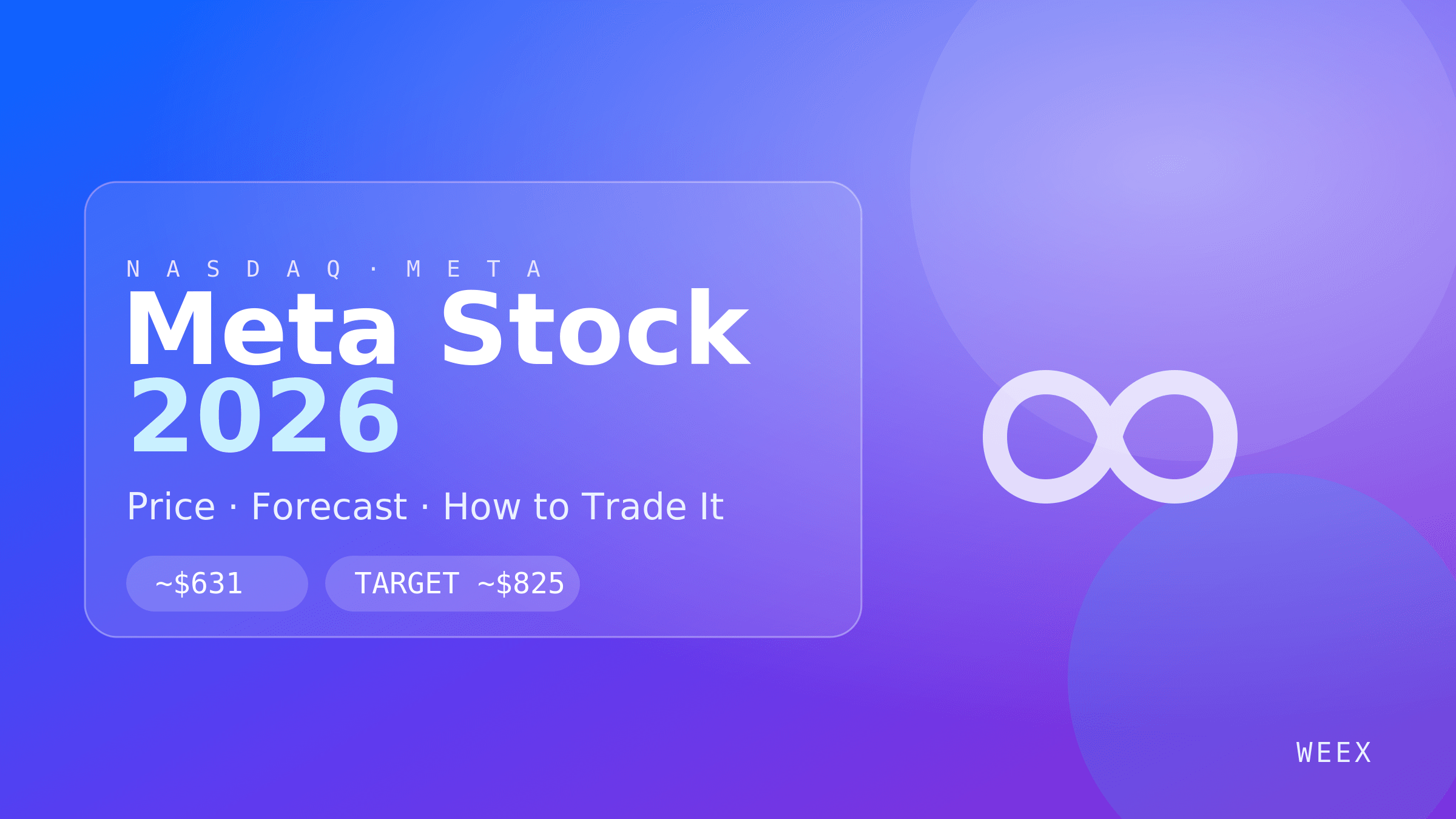
Meta stock trades near $630 in early July 2026, up sharply on the day yet still down for the year as Wall Street argues over one number: how much Mark Zuckerberg should spend on AI. This guide covers where Meta stock sits now, why it fell despite strong earnings, what analysts forecast, and how crypto-native traders can get Meta stock exposure without a brokerage account.
Meta Platforms (NASDAQ: META) remains one of the largest companies on earth, with a market value around $1.56 trillion. But 2026 has been a tug-of-war between a cash-generating advertising machine and a capital-spending program large enough to make even bullish investors flinch.
Meta Stock at a Glance: Price and Key Numbers
As of July 9, 2026, Meta stock closed near $631, having risen about 4.7% that session. The shares have swung inside a wide 52-week band, and the stock is down roughly 13% year to date even after recent strength.
| Metric | Value (early July 2026) |
|---|---|
| Price | ~$631 |
| 52-week range | ~$520 – $796 |
| Market cap | ~$1.56 trillion |
| Annual dividend | $2.10 ($0.525/quarter) |
| Dividend yield | ~0.36% |
| Next earnings | July 29, 2026 |
| Analyst consensus | Buy / Strong Buy |
The dividend is small and clearly not the reason anyone owns this stock. Meta is a growth and cash-flow story, and its payout yields well under half a percent — a signal that management would rather reinvest than return cash.
Why Meta Stock Is Down Year to Date Despite Strong Earnings
The core tension is capex. Meta raised its 2026 capital-expenditure guidance to roughly $115 billion to $135 billion, a jump of nearly 73% over the about $72 billion it spent in 2025. That money is going into AI infrastructure — data centers, chips, and power, including a planned $10 billion data center in Alberta, Canada.
The market's discomfort is not about whether the ad business works. Q1 2026 revenue beat estimates and earnings came in well ahead of forecasts. The worry is timing: investors are being asked to fund a massive build-out today against returns that are hard to pin down. When spending accelerates faster than the visible payback, multiples compress — which is most of the story behind the year-to-date decline.
The more important point for anyone weighing Meta stock: the debate is about return on AI spend, not about a broken core business. Advertising still funds everything, and AI-driven ad targeting is already contributing to that strength.
Is Meta Stock a Good Buy in 2026?
Wall Street leans bullish. Across roughly 63 to 66 analysts, the consensus rating sits at Buy to Strong Buy, with an average 12-month price target in the low-to-mid $800s and a spread that runs from around $660 on the low end to over $1,100 at the high end.
| Analyst view | Figure |
|---|---|
| Consensus rating | Buy / Strong Buy |
| Average 12-month target | ~$825 – $843 |
| Low target | ~$660 |
| High target | ~$1,117 |
| 2026 EPS estimate | ~$32.81 |
| 2026 revenue estimate | ~$253 billion |
Analysts model earnings and revenue growth in the mid-teens percent range for the year. A price target is a forecast, not a promise, and the very wide range here — a gap of more than $450 between the low and high — tells you the disagreement is real. Bulls see AI extending Meta's ad dominance; bears see years of heavy spending before the returns show up.
The Bull and Bear Case for META
The stock's next move depends on which of these narratives the market chooses to price.
| Bull case | Bear case |
|---|---|
| Ad revenue keeps beating estimates | Capex of $115B–$135B pressures free cash flow |
| AI improves targeting and engagement | Payback timeline on AI is unclear |
| Mid-teens earnings growth forecast | Regulatory and competitive pressure persists |
| Dominant reach across its app family | Reality Labs losses continue |
What experienced holders watch is the gap between capex guidance and free-cash-flow commentary on each earnings call. The July 29 report is the next test: if management can tie the AI spend to concrete revenue or efficiency gains, the capex fear eases. If not, expect the volatility to continue.
How to Get Meta Stock Exposure as a Crypto Trader
Traders who live inside crypto accounts increasingly want equity exposure without opening a separate brokerage or dealing with market hours. That demand created tokenized US stocks — blockchain tokens designed to track a real share's price, typically backed 1:1 by stock held with a regulated custodian and tradable around the clock.
Meta is one of the names available in this format. Meta Platforms Tokenized Stock (METAON), issued by Ondo and listed on WEEX in February 2026, is a USDT-settled token that mirrors Meta's economic exposure — including dividend reinvestment — for non-US users who cannot easily access US brokerage accounts.
The trade-off matters and is easy to underestimate. Tokenized stocks give you economic exposure, not legal share ownership: no voting rights, and the value depends on the issuer and custodian honoring the peg. Liquidity on tokenized equities is also usually far thinner than on the real Nasdaq listing, so spreads and slippage can be worse — especially when US markets are closed. Treat a tokenized version as a price-tracking instrument with counterparty risk, not as a perfect substitute for the underlying share.
Bottom Line on Meta Stock
Meta stock in 2026 is a high-quality business trading at a discount to its own recent highs because the market is unsure how to value an enormous AI bet. The advertising engine is strong, analysts are broadly positive, and the July 29 earnings report is the near-term catalyst. The single biggest variable is whether Meta's $115 billion-plus in AI spending starts to look like an investment rather than a leak. For crypto-native traders, tokenized versions like METAON offer a way to track Meta stock 24/7 — as long as you understand you are holding a price proxy, not the real equity.
Frequently Asked Questions
1. What is Meta stock trading at right now?
Meta stock traded near $631 as of July 9, 2026, within a 52-week range of roughly $520 to $796. Prices move constantly, so check a live quote before acting on any figure.
2. Is Meta stock a good buy in 2026?
Analyst consensus is Buy to Strong Buy, with an average 12-month target in the low-to-mid $800s. That is a bullish view, not a guarantee — the wide target range reflects genuine disagreement over how quickly Meta's AI spending pays off. Do your own research and size positions to your risk tolerance.
3. Why is Meta stock down this year?
Meta is down roughly 13% year to date mainly because of its AI capital spending, guided at $115 billion to $135 billion for 2026 — up nearly 73% from 2025. Investors are funding a large build-out today against returns that are hard to time, which has weighed on the multiple despite strong earnings.
4. Does Meta stock pay a dividend?
Yes, but it is small. Meta pays about $2.10 per share annually ($0.525 quarterly), for a yield near 0.36%. The stock is owned for growth, not income.
5. When is Meta's next earnings date?
Meta's next quarterly earnings report is scheduled for July 29, 2026. It is the key near-term catalyst, especially for commentary linking AI capex to returns.
6. Can I trade Meta stock on a crypto exchange?
You cannot trade the actual Nasdaq share on a crypto exchange, but you can trade a tokenized version such as METAON on WEEX, which tracks Meta's price and settles in USDT. It offers economic exposure and 24/7 access, without the voting rights or legal ownership of a real share.
Risk Warning
Meta stock and its tokenized versions are volatile and can result in partial or total loss of capital. Equities carry market, regulatory, and company-specific risk; a single earnings miss or a shift in AI-spending sentiment can move the price sharply. Tokenized stocks add further layers: counterparty and custody risk tied to the token issuer, thinner liquidity and wider spreads than the underlying listing, potential de-pegging, and no legal shareholder rights. Leverage, where offered, magnifies both gains and losses. Never invest more than you can afford to lose, and confirm that any product is available and legal in your region before trading.
Disclaimer: For informational purposes only. Not financial advice. Any activities, rewards, campaigns, or promotions mentioned do not constitute an offer, solicitation, or recommendation to buy, sell, or trade crypto assets. Crypto assets are highly volatile and may lose value. WEEX services, products, or campaigns may not be available in all regions. Users are responsible for complying with applicable local laws before participating.
Disclaimer: This content is provided for general branding and informational purposes only and doesn't constitute financial, investment, legal, or tax advice. Any events, rewards, online events, or related information mentioned herein should not be considered a recommendation, solicitation, or invitation to purchase, sell, trade, or otherwise deal in any crypto assets or to use any services. Crypto assets are highly volatile and may result in loss. WEEX services and online events may not be available in all regions and are subject to applicable laws, regulations, and eligibility requirements. You are responsible for ensuring that your use of WEEX services complies with local laws and for carefully assessing the risks before participating in any crypto-related activities.
You may also like
How to Set the Right Trailing Stop Percentage
A trailing stop helps you ride a crypto trend while automatically locking in gains as price moves in…
Trailing Stop vs Stop Loss: What’s the Difference
This guide breaks down the trailing stop and the classic stop-loss so you can choose the right order…

What Is a Trailing Stop Order? A Beginner’s Guide
A trailing stop is a dynamic exit tool that moves up with the market to protect gains and…

Copy Trading Platforms Compared: Which One Is Right for You?
The right copy trading platform depends on your experience, the markets you want to mirror (spot, futures, DeFi),…
Copy Trading Risks You Should Know Before You Start
Copy trading makes it easy to mirror the moves of experienced traders, but convenience can hide real risk.…

How to Choose the Right Trader to Copy
Copy trading lets you mirror another trader’s positions automatically, but the right choice hinges on more than a…

What is Roundhill Memory ETF Tokenized ETF (Ondo)(DRAMON) Coin? Everything You Need to Know Before Trading DRAMON/USDT
This guide explains what DRAMON is, how Ondo tokenizes the Roundhill Memory ETF exposure, how it works on-chain,…
Oil Trading Rewards: Share $100,000 Bonus on WEEX
WEEX is running a limited-time oil and energy trading campaign with a $100,000 reward pool. This guide explains…
Is Tangem Safe? Security Features Explained
Tangem is a card-based hardware wallet that stores your private keys inside a certified secure chip and signs…

SafePal vs Ledger: Which Wallet Should You Choose
Hardware wallets protect private keys off the internet, reducing the chance of remote hacks. This guide compares SafePal…
How to Set Up and Use SafePal Wallet? A Complete Beginner’s Guide
This beginner-friendly guide explains how to set up the SafePal app and S1 hardware wallet, create or import…
What Is SafePal Wallet? A Complete Beginner’s Guide
SafePal is a beginner-friendly crypto wallet brand that offers both a hardware wallet and a mobile software wallet…
Is Your Trailing Stop Costing You Money? Common Mistakes to Avoid
Have you noticed that after setting a trailing stop, you often get shaken out just before the real…
What Is Copy Trading? A Beginner’s Guide
Copy trading lets you automatically mirror another trader’s positions in real time. You choose a trader to follow,…
How to Set Up a DCA Strategy for Crypto
Dollar-cost averaging (DCA) helps crypto investors spread buys over time to reduce timing risk. This guide shows how…
What is Credo Technology Group Holding Tokenized Stock (Ondo)(CRDOON) Coin? Everything You Need to Know Before Trading CRDOON/USDT
This article explains what Credo Technology Group Holding Tokenized Stock (Ondo) (CRDOON) is, how it works, who stands…
Is DCA a Good Strategy for Beginners?
Short answer: for most beginners, DCA (dollar-cost averaging) is a sensible starting point—simple, steady, and less stressful—though it…
Does DCA Actually Work? What the Data Shows
DCA (dollar-cost averaging) means investing a fixed amount on a set schedule, regardless of price. This article looks…
What is Astera Labs Tokenized Stock (Ondo)(ALABON) Coin? Everything You Need to Know Before Trading ALABON/USDT
This article explains what Astera Labs Tokenized Stock (Ondo) (ticker: ALABON) is, how tokenized stocks work, where to…
USA Rare Earth Stock (USAR): Bull Case, Risks, and the 2028 Bet
USA Rare Earth stock (USAR) explained — what the company does, why shares slumped in 2026, the Round Top bull case, the MP Materials lawsuit, and key risks.
USAR Stock Price Prediction: Can USA Rare Earth Reclaim $40?
USAR stock price prediction: USA Rare Earth trades near $19 vs a $36–$39 analyst target. Bull case, bear case, and 2026–2030 scenarios.
Costco Stock (COST): Price, Forecast, and Is It a Buy in 2026
Costco stock (COST) trades near $915–950 in July 2026 at ~48x earnings. See the latest price, analyst forecast, dividend, and how to buy.
SK Hynix Stock: Inside the AI Memory Giant's Nasdaq Debut
SK Hynix stock lists on Nasdaq July 10 as SKHY in the biggest ADR debut ever. Price, 2026 forecast, HBM bull/bear case, and how to buy.
Risks of Shorting Bitcoin You Should Know Before You Trade
Shorting can look simple: you profit when price falls. But the bitcoin short is different from buying because…
Shorting Bitcoin vs Buying Put Options: What’s the Difference
This guide breaks down two ways to express a bearish view on BTC: opening a bitcoin short with…
Prismevm (PP) Airdrop on WEEX: How to Unlock New User Rewards
This guide explains what Prismevm (PP) is, how the Prismevm (PP) airdrop on WEEX works, and a simple,…
How to Short Bitcoin: Methods and Platforms Compared
A bitcoin short lets you profit if BTC falls. This guide explains how to short bitcoin using futures,…
What Is Dollar-Cost Averaging (DCA)? A Beginner’s Guide
Dollar-cost averaging (DCA) is a simple strategy: invest a fixed amount on a fixed schedule, no matter the…
What Does It Mean to Short Bitcoin? A Beginner’s Guide
Shorting is the opposite of buying. Instead of hoping Bitcoin goes up, you take a bitcoin short to…
How to Join GROVE Airdrop and Unlock 50,000 USDT Rewards
The GROVE airdrop marks Grove Finance’s token debut on WEEX with a clear, rules-based campaign that rewards deposits,…
How to Set the Right Trailing Stop Percentage
A trailing stop helps you ride a crypto trend while automatically locking in gains as price moves in…
Trailing Stop vs Stop Loss: What’s the Difference
This guide breaks down the trailing stop and the classic stop-loss so you can choose the right order…
What Is a Trailing Stop Order? A Beginner’s Guide
A trailing stop is a dynamic exit tool that moves up with the market to protect gains and…
Copy Trading Platforms Compared: Which One Is Right for You?
The right copy trading platform depends on your experience, the markets you want to mirror (spot, futures, DeFi),…
Copy Trading Risks You Should Know Before You Start
Copy trading makes it easy to mirror the moves of experienced traders, but convenience can hide real risk.…
How to Choose the Right Trader to Copy
Copy trading lets you mirror another trader’s positions automatically, but the right choice hinges on more than a…